Let’s Talk About Spells in Witchy Shops

Shops catering to the  magical community use to be like rare unicorns – hard to find a good one and often expensive. But also often necessary for information, community, and finding hard to source products. Then the internet came. Now you can get almost anything through Amazon or the magic of Google. This diminishes the need for in person shops and the community. No longer must you travel to get spell candles or rare herbs. With a few clicks of a button and your credit card, it can be delivered to you. Which is awesome.

A lot of people reading this weren’t really consumers with purchasing power when the internet was in it’s infancy. Some of you may have never lived without the internet at all. That’s not me making a snide remark. I’m actually really happy about that. The internet is an amazing thing. I’m a huge fan.

A few months back there was a fuss about people using glamours in their image graphics. And that lead to some discussion on spells used in businesses. But the discussion was largely covered up by people clamoring about spells to counter said glamours. Now, the specifics of that event I won’t get into because there’s a lot more context about it hidden in there and none of it touches the point of this post.

People have always used spells in their shops and businesses. No, seriously, go back and read that again. People have always used spells in their shops and businesses. Always.

Twenty years ago, as a baby witch, I wandered into local witchy shops and there were spells to entice business, to encourage buys, to spend money, to bring in wealth, to protect, and to turn away thieves. When I was able to drive and expand my circle, I found more shops that did the same thing. And they’re fine. They’re rarely the sort of spells that will interfere with your own magic and they’re rarely going to make you buy something that you didn’t want or need. Most often, they’re kind of like that friend that eggs you on when you’re on the fence about buying something. They mean well (but they also want your money).

Some stores had aggressive spells. Store owners would curse thieves or turn away problematic clientele. Some even did spells to keep out people who weren’t witchy or of their own coven. Spells to curse or turn people against competitors, belittle those who don’t agree with them, curse troublesome customers, and a whole host of other nasty things. Usually though, these sorts of aggressive spells were the kind that annoyed and irked if you weren’t looking for them. Often going in those stores left you with a headache or buying something you didn’t want or need. Impulse buys were common and the spells are intrusive.

When the internet came, these spells were less obvious. No longer can you see the chicken feet tied behind the door but instead there’s spells taped to the back of the monitor or keyboard. Clever folks will lace invisible words in their images or in their website’s HTML. And that’s still OK. It’s no different than those witchy shop spells of before.

So here’s the moral gray zone right now. There’s a lot of spells you can use in your shops and stores that help your business but at what point do you say “hey, this isn’t cool?” And you, as a consumer, what kind of spells are you willing to accept and what spells aren’t you willing to deal with?

I’ll be blatantly honest here: I use spells to encourage people to buy things they want or need if they can afford it. I do spells to encourage people to look at my items (but not necessarily buy them) and I do spells to keep away potential problematic customers for both our sakes’. Oh, there’s a whole host of spells to bring money, wealth, prosperity, and so on too, but those aren’t directed at my clients specifically. They’re general.

Don’t get me wrong. I’m clever. I know plenty of ways to make customers buy things. But that’s not the kind of shop I want to run and that’s not the kind of witch I want to be.

So the TL;DR is this: witchy shop always have and always will use magic to draw in customers. It’s how those spells work and what their purpose is that’s important to consider here. Are these spells the kind to encourage you to spend your rent money or are they the kind to say “hey, maybe next week, OK?”

A Rambling About Curses

As a witch who is (somewhat) active in the community, I’m always prepared to deal with being hexed or cursed. It’s inevitable that I say something that someone somewhere doesn’t like or just my mere existence annoys them.

By and large, curses do nothing to me. I set up active protections against them with various fail safes and often the curses don’t even touch me.

But sometimes I let them.

Why the hell would I do that? That’s easy. I want to see what they’ll do. I want to see how far someone is actually going to go. I want to see how my protections alter, break, or mutilate the curse from it’s original form to what it actually does. I want to test my skills and meet somewhat head-on the person who wants to ruin my life.

The most honest answer is because they usually aren’t worth my time. Why would I go out of my way to answer what is, essentially, a minor inconvenience? Annoying, sure, but not worth me devoting time and energy to. There are always assholes in the world and most of them aren’t worth the time they think they’re worth.

If a curse slips through one of the openings I leave then I usually notice in a day or two that the effects have started. The effects are usually very minimal – shit breaking randomly, inability to get anything done despite attempts otherwise, and so on. It’s the kind of day where you say fuck it and go back to bed. It’s the magical equivalent of having to drive someone to the airport on short notice. You’re not mad about having to drive said person but you’d rather stay in your sweats and watch the last three episodes of your Netflix marathon.

I do have lines that I don’t allow to be crossed. For example, a curse might be more insidious than expected – often because the caster is a malicious piece of shit rather than doing something they feel is right or just. If a curse begins to act in a more serious manner or begins to hurt other people in my family rather than simply mildly inconveniencing me, then I destroy them. Just bouncing the spells back at them isn’t enough. I might actually break out the cursing materials and give them a taste of their own spells. And my curses rarely miss.

Keep in mind this: I actually would do considerable mundane harm to an enemy if there weren’t legal restrictions otherwise. I’m not afraid to say that. So when the debate “you shouldn’t cast a spell to do something you wouldn’t do without magic” I can actually answer, “but I actually would.” I am aware of that less-attractive side of myself. I acknowledge it and use it as needed.

It’s something to consider though. Why are you being cursed and how would you deal with those curses without your protections? How would you deal with that person if they decided to use non-magical means to hurt you? Don’t you want to see what they attempted to do? Sure, you can use divination but curses can be written to not be divined.

Curses are most often weakest after they’ve taken effect. People don’t think to protect the curse from being dismantled. They assume the curse will cause enough damage without taking that step. It’s like sending out heavy artillery without having ground troops to protect it – foolish and once destroyed, you’re fucked because you’ve pulled out the big guns and lost.

Maybe I’m just not a nice person or maybe I’m more combat-willing than other practitioners. I’m willing to use my magic to harm as much as I am to heal. I know that goes against many people’s practices but I think it’s certainly an option and point of view people should be aware of. We’re not all nice here. And we need to protect ourselves with that in mind.

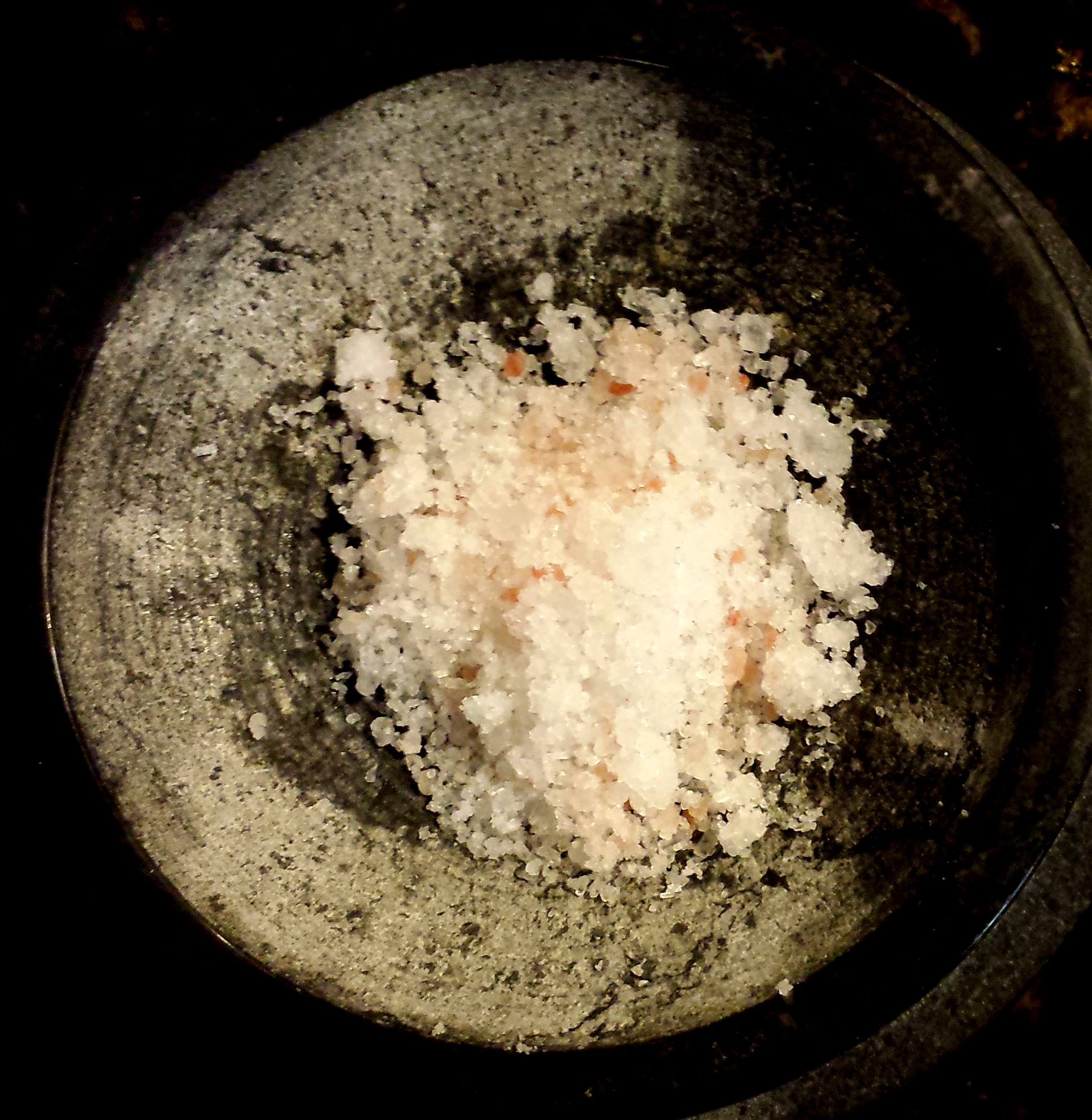
SEA SALT! Why salt scrubs needs more (witchy) love.

One of those things that I LOVE to make for the shop but rarely sells is bath salts. And it makes me sad because not only does one of my favorite things not sell as well as I’d like them to but it makes me feel like no one really gets the true power of salt.

Evoke the Sea salt scrub

Evoke the Sea salt scrub

First, let me wax prose about salt. I love salt. If I was a dragon, my hoard would have salt in it. I use it all the time. Salt water is my absolute friend and the ocean is where I go when I need to cleanse myself and double check if I’m on the right path still. Seriously, a quick wading into the ocean and ten minutes later I’m ready to conquer worlds. Salt carries much of those connotations with me, especially combined with water. But that’s not all salt can do. As truly magical salt can be, salt can also do a lot physically for you.

I’m going to tell you a true, personal story. I hit the growth stage of my puberty early and my face broke out into acne often. It made me self-conscious and despite my mother (a medical professional) giving me various medications and remedies to calm my skin down, nothing worked for long. I was a ridiculously shy child too so the combination gave me social anxiety. I spent 98% of my time alone and preferred it that way. I found my skin ugly and didn’t look like the other girls. I knew I could be pretty, logically. I had modeled in several pageants as a young child and was constantly told I was pretty as a girl. Puberty ruined that for me, I felt. By the time middle school rolled around, I had accepted that acne and I would never be parted and grew resigned around it. I even stopped actively trying to fight it. My mother, you see, had breakouts of acne still so I knew it could and did persist into adulthood. When my face broke out I sighed and vowed to duck my head lower.

My third year of high school I was given an opportunity to study abroad in Cape Verde which I snapped up in a heartbeat. Even then I wanted to be an archaeologist so I knew studying people and anthropology was something I’d have to study en-route to my goal. While in Cape Verde we were taken up to the salt mine, specifically the salt pond there to bathe (and learn about a major economy export of that specific island). The teacher chaperoning us said something about how salt was good for the skin and used in spas. And then one of my classmates reiterated it a bit later. And sure enough, my skin did feel softer after the dip in the water. I didn’t think on it much however given some tragic events that had happened and that tidbit of information slipped to the back of my mind.

A few months later I got my license and after that I was beach bound most days I had a car, could afford gas, and it was warm enough. I didn’t care for the sand or the half-naked men or the calm it gave me – I was there to swim, to embrace the power of the ocean and love it. My skin got better, slowly but surely. But I had psychologically written my skin off so while I noticed less breakouts and redness, I didn’t really make the connection. This pattern continued in college and in the winter where I couldn’t go to the beach, my skin got worse but once it was warm enough and I hit the beach again, it’d clear right up. I still didn’t make the connection, almost certainly due to other medical issues and double majoring taking most of my thoughts. Even without my paying attention to it, my skin got better.

Lorelei Salt Scrub without petals

Lorelei Salt Scrub without petals

Shit went down and I eventually transferred to Harvard than to University of Hawai’i to finish up my schooling. I lived across the street from the ocean in Hawai’i. I stepped outside and I could see the ocean and I fell asleep to the roaring of the waves. To be fair, most houses are within walking distance to the ocean that unless you like in the middle of the island and in order to get that view I lived in the farthest town I could get on the island, one inhabited mostly by native Hawaiians and considered the worst part of the island. (And I’ll let you draw your own conclusions as to why the native Hawaiian people lived primarily in the most run-down and ignored towns in Hawai’i.) Anyway, I spent everyday at the beach swimming. And then while talking to one of my non-native friends she said something that changed by world:

“I’m so jealous of you. You have great skin.”

I was so floored I could only smile and thank her but inside I was shocked. People are jealous of MY skin???? Why? I’m acne-face! I had enough bumps to be able to throw on green makeup and go as a lizard. But I didn’t. I got inside my flat and took a good, long look in the dingy lighting of my bathroom and saw that no, she was right. My skin was clear. Pale, sure, but acne? GONE.

And it came back to me, nearly a six years later “sea salt is good for the skin”. To be fair, it wasn’t entirely salt’s doing. A fast food free diet helped as did reducing my stress level and using my panacea salve any time a breakout threatened but they happen significantly less often. But I started to think of all the cycles of where my skin would flare up and the pattern appeared. Salt is why I looked amazing.

So while sugar scrubs sell phenomenally well and are super popular, I will always promote salt scrubs. Using salt scrubs is easy – dump a bit in a wet wash cloth, rub it between your hands and use the cloth on your body. When the salt is mostly gone, use it on your face. NEVER put raw salt on your face. Salt is so sharp it’s recommended to pour on things to cut fleas in half so don’t do it. I even save a jug from orange juice and poured a little sea salt in with the gallon or so of water and shook it until the salt dissolved. When I feel my skin getting rougher or I need a cleansing, I dump the salt over my body. Be wary – salt water is always going to be noticeably colder than non-salt water (which is why you should also dump some salt in coolers to keep the cooler ice and water colder, longer).

What other uses does salt have?

Here’s a dozen mundane purposes I have personally used salt for (there’s well over a hundred I know of, especially in regards to food):

  • Poured on mattresses/blankets/pet beds/furniture to cut fleas in half – noticed a significant decrease in fleas when left on for 12 hours during fumigation after Noelle the cat brought home unwanted friends despite her anti-flea medication. Vacuum up salt when through.
  • A bit of salt with some water can be used in the garden to get rid of pest, similar to above. Be cautious as plants with delicate roots or specific soil needs can suffer from this. Similarly, over-salting a plant like poison ivy will kill it. (This is an excellent way to keep poisonous plants in one area of the garden for your witchy needs while making sure they don’t take over the garden entirely. Poison oak I’m looking at you.)
  • Melting ice and snow – works great but it’s cheaper to use road salt and you get better grip with cheap kitty litter.
  • Making soap – you can use it in soap making but I tend to leave it out.
  • Can be used to put out grease fires (or any fire, really). You’re smothering the fire with the salt. Don’t use sugar as a replacement since sugar can melt. Dirt can also be used.
  • Mordant in textile and paper dying. Also, throw a pinch or two in the wash when washing new towels to keep the color from running.
  • Salt and water can be used to clean cast iron without ruining the seasoning. (Don’t overdo it) And hey, if you keep the salt afterwards, you’ll have a good start to black salt.
  • Shine chrome with a salt + vinegar base. Can also be used to get rid of stubborn tea or coffee stains (CRUCIAL around here) and rust. Be prepared for a workout with this.
  • Problems with the drain? Add salt. Especially good when you have hair, worms, or maggots in the drains. Follow up with boiling water or oil. Remember to stand back when pouring so you don’t get scalded by steam.
  • Whiten faded or yellowed cloth or linens by adding 1/4c cup baking soda, 5 tbsp borax or oxiclean, and 2 tbsp salt and boiling for up to 1/2 hour. Rinse in cold water. I use this with bleach just isn’t cutting it sometimes. I’ve also used this to get rid of sweat stains. I would not recommend it for antique cloth given the sharpness of salt. YMMV. Similarly, using this mixture gets up stains on carpets and such.
  • Soaking newly made candles in a salt water solution for a few hours will make them drip-proof. Be absolutely sure to dry them before burning though. Water inside candle wax can cause explosions.
  • Rub slightly damp salt over windows to keep them frost-free (ish). (Make a cloth bag with salt in it, spritz some water, and go to town).
  • Adding salt to shoes and gym bags will help absorb moisture and odors.
  • Soak your straw brooms in hot salt water for 1/2 hour to give them a longer life. Let dry, bristle up. This is for the brooms you use to clean with although the witchy applications are easily visible.
  • Tossing salt in the fire isn’t just a spell to bring back lovers, nope. My aunt use to throw salt in the fire at the end of the night to kill it quickly and to have less soot (since it doesn’t smolder). She said it was to help clean up the ashes easier.
DuRose Salt Scrub with petals

DuRose Salt Scrub with petals

Now for some witchy purposes for one of my all-time favorite ingredients ever:

  • Salt water is a great offering to oceanic deities and spirits. Many time salt water can also be used as an offering to moon spirits. Making your own salt water at home is especially helpful if you live inland.
  • Some theories state that Christian holy water was originally salt water. I have zero Christian background but some sects may still use this? Some Roman Catholics I think? Either way, salt water is used as a holy water recipe in various religions. YMMV depending on your deities’ associations.
  • I know “get the salt” is often ascribed to being used too much by witches but it’s actually REALLY common in various other religions such as Shintoism, Hinduism, Jainism (I believe?), and certain types of Buddhism. And, of course, Judaism have their own specific importance to salt. These are used as cleansing, purifying, or blessings, religion depending. (So if people are telling you it’s not a thing, remind them of this.)
  • Again, not a Christian background but I know Lot’s wife was turned to a pillar of salt and that was a punishment – a curse. As mentioned above, salt can be used to get rid of a lot of things and “salting the land” is an excellent way to forever ruin the ground. Salt in the wounds is another phrase that comes to mind. Add salt in your curses to let them fester and ache more, to cut the wounds deeper. Plus, you can die from too much salt so there’s that. Add in some peppers to make a hot foot powder.
  • Salt is commonly associated with earth in (Neo?) Wicca although I’m not sure if this is true for closed initiation Wicca. So if you’re the kind of person that uses the four or five element paradigm, there you go.
  • Protection is, as mentioned above, the most common use for salt. Making a ring of salt around an object you want to protect or at the windows and doors will not only keep bugs from whatever but also spirits. I have a witch ladder of glass bottles and one of those bottles is filled with – you guessed it – salt.  As a warning and active protection.
  • Lots of spells use salt, such as the aforementioned throwing salt in the fire to bring back a lover. You’re suppose to do this for seven or nine night consecutively, beckoning them back to you.
  • Salt divination is totally a thing I do. It’s similar to tassomancy (tea reading) in the sense that you see the patterns that are there. There’s two methods I use: either I throw down the salt, and read the patterns or I go into a trance, close my eyes, and let my fingers trace out messages and symbols until the moment passes. Depends on my mood and needs, to be honest.
  • Salt is a HEAVILY traded item and I’m all about using items that are popularly traded for wealth and prosperity. I infuse salt with my desire to bring more business or good wealth or something and leave it in an offering bowl by the door or stairs. Laborers were at times paid in salt all the way back to the Roman Army.
  • Huixtochiuatl is associated with salt and salt water, if I recall correctly and salt was not an unknown offering in the Egyptian, Greek, and Roman rituals. (Although how much of that is a scholarly supposition versus evidence I will freely admit to not knowing.)
  • Salt can be submerged in water and dissolved, right? Salt water can also be left out to evaporate, making salt once again. This could be construed as loyalty or an eternal cycle if you’re of a mind to think of it that way.
  • Anglo-Saxon farmers kept a piece of salt by their plows to ward off spirits from ruining the crops. As mentioned above, it also kept pests away and soaking crops in brine wasn’t unheard of during the middle ages.
  • I never travel anywhere without a dash of salt, earth from my garden, and a handful of coins on the bottom of my luggage. It keeps everything protected, wards it all away, ensures I’ll return home (and always have home at hand), and will keep money in my pocket.
  • Salt absorbs things so use a sprinkle of it to absorb negative energy off an item. Be sure the item won’t be damaged by the salt.
  • Remember that long list of mundane uses? Throw a little magic in that and you’re good to go.

So, we’ve covered salt’s amazing right? Now imagine a salt scrub, luxurious for your skin, scented by carefully selected oils and botanicals, and churned into being by a witch pouring magic and energy into each turn of a carved wooden spoon just to make you look beautiful and healthy. Head over to my shop to pick up your own salt scrubs!

Book Review: “The Witch’s Handbook” by Malcolm Bird – 4/5

4/5 – You should be reading this

An excellent children’s book that will double as a fun source of information and craft ideas for practitioners.The only thing that kept this from being a 5/5 is that it’s clearly a children’s book and written about your stereotypical Halloween style witches. (Which is the point of the book after all.)

Continue reading

Book Review: Easy Instant Astral Projection by Alan Marx – 3/5 Meh

Easy Instant Astral Projection by Alan Marx – 3/5 Meh

It does what it says it does. It will tell you one easy way to get into the astral. No muss, no fuss. However, it has three major problems I’ll elaborate on below but most readers won’t be put off by the issues.

Continue reading

The Goddess is in the Details by Deborah Blake Book Review 3/5

3/5 – Meh.

Total review length: ~2500 words. See more about my review system here.

Warnings for casual religion and Christian bashing, Wiccan=Witch=Pagan, “we all revere nature/the God/Goddess/divine”, inconsistency, slight misunderstanding/shaming on lesser known subjects such as BDSM and satanism, generalization for all pagans/wiccans/witches, “the gods know what’s best for us” thinking, slight victim shaming, and in one stance flat-out false information with the word “cowan” (likely unintentional but still false)

The book has a lot of good ideas but nothing new is being shared here that hasn’t been said before. Blake isn’t quoting the Rede for you but is decidedly in the neo Wicca camp. Advanced practitioners may find the second half of the book an interesting read but many ideas could be fleshed out further. The book was a quick read for me (four hours give or take) and is 227 pages. My copy was from the library and is the 2011 printing. The book’s marketed for intermediate or advanced practitioners so I think much of the beginning information is kind of unnecessary but nice to know where Blake is coming from. The “something to try” at the end of each chapter is interesting but the real bonus is the sourced footnotes within the material, although it is somewhat inconsistent. (Not every idea is sourced but there’s a bibliography in the back).

Continue reading

Crown’s Book Review Guide

When I review books I look for the following: 
  • Author’s stating that their opinions and personal definitions are just that.
  • Author’s actual handle on writing and the editing process. Few to no grammatical errors, misspellings, off wording, or typos
  • Consistency in the material. Hypocrisy will be pointed out at once.
  • Flat-out misinformation or false or revised history.
  • Sourced material. Original material should be noted as well but if something is from elsewhere, it should be sourced or explained.
  • Privileged bullshit
  • Shaming of any sort in any way.
  • -Phobic and ableist language. Homophobic, trans*phobic, and other like phobias.
  • Hate speech, racism, sexism, ageism, and misogyny,
  • Cultural appropriation and fetishism.

I rank 0/5 to 5/5. I have never given a book a 0 or 5. I likely never will. The rankings are as follows.

0/5 – Absolute shit. There is literally nothing about this book that is good. It has every error listed above and issues may have been created for this book. The review likely consists of caps lock screaming and fire. It may have made me physically ill. I quite possibly contacted the Doctor and the TARDIS to get back my time.

1/5 – Crap. While the author may have managed basic writing skills, it still has a whole host of problems it at least provided information of some sort of made a point. You may wish to flip through the book if it was given to you or you find it at the library but don’t pay money or spend a great deal of time on it. I likely only threw the book a few times and set it on fire once.

2/5 – It’s OK. It has its issues but it also has some aspects to that that’s worth reading. Pay a low price for the book or pick it up at the library. Look carefully at the review before reading. I may have thrown the book or resorted to cussing in every language I can speak to verbalize any distaste for the book. If owned, this book levels out tables and chairs because it’s *just* the right size and you won’t really mind if it’s damaged along the way.

3/5 – Meh. This is a decent book. Still has its issues but most of them aren’t going to bother most people. The issues may be few in number and the book’s worth spending a bit of time on. It may not bring out brandy-new ideas, but it has a solid basic understanding on how shit works. Or, it may have a bunch of clever ideas but has some other shady shit going on in it. The book has some worth. While I still wouldn’t pay full price, if I spend a few bucks then I wouldn’t be sad and will have a nice, safe home behind a clutter of random bottles and crystals on a bookshelf where it can be referenced or reread on occasion. This book is to be recommended occasionally for specific topics. You may find yourself thinking “Whatever happened to X book? I think I loaned it to Billy but he never gave it back. Now he’s left for Mars so I guess it’s gone for good. Oh well.”

4/5 – You should be reading this. It may have an issue or two here and there but it likely has so much good shit in it that the few issues can be ignored or put aside. Paying full price wouldn’t bother me. This book sits securely on a clear shelf where I can reference it often and with glee. This book will be commonly recommended and may serve as a pillow in times of emergencies or while passing out during research. The kind of book that you ensure your friends return to you, even to the point where you text them at odd hours to annoy them enough to return it to you.

5/5 – The Preciousssssss. There are absolutely in no way any flaws.This book glows golden in my hands and whispers sweetly to me. Not only would I pay full price but I likely pre-ordered it and maybe even showed up for the midnight launch or signing if that was available. This book is never far from my hand, protected as if made of glass, has is graced only by satin or silk bookmarks. Not only will it be referenced daily, it will never touch a bookshelf but may sit in a special place of prominence, like a book stand or on a particular shelf dedicated to other excellent books. I would fight Gollum for this book and win.

Obviously, all reviews are mine own opinions and should be viewed as such. Furthermore, I write the reviews as I read the books so they tend to be long-winded and can be used as a walkthrough of sorts. If you have a book you want to suggest to me, feel free to drop an email. I can’t guarantee I’ll read them but I’ll consider it.


Originally posted on tumblr

Summertime Offerings

Offerings are kind of a big thing in the pagan world. You might make an offering or a sacrifice for your deity on some regular basis. Or you might offer something to local spirits by way of thanks. Whatever your reasoning and purpose, practicality has to be tackled alongside the spiritual considerations when handling offerings.

Here’s a few simple tricks, tips, and rules in order make sure both you and the offering recipient are happy campers.

Clean your space

  • Take a glance at your altar, shrine, or workspace. How long would it take to disassemble? Go ahead and time yourself. Regularly taking apart your shrine space and putting it back together (even if the layout is the same) will help refresh and renew the space. It’ll also keep you from putting useless stuff there.
  • Take 30 seconds to wipe down the surfaces of your altar, shrine, or workspace. This includes idolatry pieces like statues, table or shelf surface, and offering dishes.
  • Wash your offering dishes. It doesn’t matter that only dried rice or water was held in it. Wash it out.

Protect your space

  • Summertime can be the worst time for food and liquid offerings. Milk curdles, insects are attracted to offerings, and animals – and people – are everywhere. Make sure your food and liquid offerings are safely placed so children and animals don’t get to them.
  • Insects a pest? Grow plants like lemon balm, peppermint, or citronella around the altar if possible. If not possible, spray strips of cloth or rope with bug spray (I recommend natural but you do you) and hang or place it near the altar.
  • Have a lot of visitors this summer? Move all breakable items away from the edges. Introduce children to altar spaces and ask them not to touch unless you say it’s OK because it’s very important to you. Often times simply explaining the space and letting them touch or look at the items will keep them from grabbing and breaking something accidentally. This depends on the child, of course.

Use common sense

  • Leave out offerings of milk and honey for the faeries? That’s a great idea in the summertime right? You may wish to switch to something that’s not as easily spoiled in the heat for a while. Or, reduce the amount of hours the offerings are out for.
  • Ask the recipients before making any exchanges or substitutes for offerings. For example, my household fae dislike almond milk but don’t mind soymilk as a substitute for regular milk or cream.
  • Placement is key. Want to remember to make a daily offering? Put it next to the coffee maker or refrigerator. Make it memorable. I keep household spirit offerings next to the oven and by the coffee maker.
  • Always watch open flames. Always. Make sure there’s nothing for the flames to set fire to.

Substitutes and alternatives

  • Always ask before making substitutes for traditional or common offerings. You can even give a little explanation on why you’re making the substitute if necessary when making the offering.
  • Clear alcohol is a common offering that is generally accepted by many spirits and deities, including ghosts. It has the added benefit of not spoiling in heat or freezing in cold.
  • Water, especially purified water, is almost always an accepted offering. Only certain types of spirits, like those associated with fire, will disdain them. Deities are a hit or miss.
  • Nuts are often offerings and can last a long time.
  • Dried grains, rices, and beans are also great offerings but watch for worms and flies if left too long.
  • Non-food offerings like incense, music, art, actions and prayers are all offerings too. Don’t forget about them simply because there’s a focus on food items.
  • Can’t use candles or incense? Mist sprays made from light tisanes are great for cleansing and making offerings. LED lights work just as well for rituals unless you need to burn something (which I would then recommend waiting until you can safely and legally have a place to use a candle).

General altar and work space advice

  • Have a lot of stuff? Cycle it through by season or purpose to refresh the space. You probably don’t need all the stuff all the time.
  • It’s often desirable to have a beautiful altar or shrine chocked full with statuary, incense holders, associated objects, and offering pieces. Consider simplifying your space. Do you really need that athame out on the table surface or can it sit in a sheath until necessary? If you never put out food offerings but for special occasions then why have the empty offering plate there? Does that scrying ball need to be there if your deity isn’t associated or involved with divination? Consider what you have in that space and if it’s really there because you have no where else to put it or if it actively services your and their needs.
  • Use your terminology correctly. Work spaces are for you to do work on and doesn’t necessarily even have to have deities or spirits honored at all. An altar is where offerings and sacrifices are made. It’s general a table or shelf set up and can be a part of a larger shrine or temple. A shrine is a building or set up that will usually contain an altar or offering place. It is a holy space for the deities and spirits honored and is dedicated to them entirely. A temple is more of a place for worshipers to go whereas shrines have a tendency, especially in Western culture, to be reserved only for the priesthood or attendants of the honored deities and spirits. A temple could have a work space, altar, and shrine all in one place.Terminology does change somewhat depending on culture, especially the further east you go but this kind of language is something to keep in mind.
  • What you put on an altar or in a shrine should have meaning to both you and the honored being. You’re honoring them so having things they enjoy is just as important as having beautiful things you enjoy.
  • Take your time assembling your spaces. There’s a lot of beautiful inspiration out there and newbies have a tendency to want to rush out and buy all the things. Shop around and visit used goods store, flea markets, garage sales, and even online ads for things that would fit your spaces perfectly. You might even have earmarked some pieces for future altars that aren’t available yet from family collections.
  • Travel or pocket altars are incredibly useful if altars are important but you can easily assemble an offering from whatever when traveling.
  • Research, research, research. Look at what was historically offered for these beings. You don’t have to follow that strictly but knowing what those beings are use to and expecting can make introductions and foundling relationships so much easier to develop.

Simply put: don’t forget to use common sense when setting up your altar space.

Please, please, please remember that many times you do not need a permanent work space, altar, or whatever. It is not a requirement of most practices. You can make offerings without such spaces and you can easily work witchcraft without them.

Creating an altar can be extremely fun and making summertime offerings when fruits are plentiful is always a blast. But taking precautions is always ideal to make sure everyone’s safe and happy.

I bought an online reading. Now what?

Sit back and relax! Within a few days you’ll receive your reading via email or etsy conversation.

When a reading is purchased online, I review the request and schedule a time to do your reading. Sometimes this is immediate and other times it may be a day or two after the purchase is made. An average day for me will be described in a later post but essentially, my work is just like everyone else’s work. I sit down at my reading table with a cup of coffee or tea and set to work.

The first thing I do is consider your order’s requests and unique circumstances. You can also request a specific deck if you want (etsy even has the option to select the deck when you place the order) but if a deck isn’t selected I’ll pick one out. Sometimes a deck is chosen because of the nature of the reading or even the personality of the client. Other times I’ll use whatever deck “feels” enthusiastic for the specific reading. If you’re a repeat client, you may find a deck used numerous times with your readings. Some decks prefer certain clients and will produce better results because of this.

When I read for my clients, I think of the person who made the request. Sometimes I only have a name or pseudonym to go by and other times I have information such as birthdays or pictures. My readings don’t seem to lack with however much or little information is given so give however much information you’re conformable with. The more information simply allows me to put the cards in a more specific context. When I physically read, I take a second to clear my mind then I shuffle the cards thinking of you, your situation, and the specific questions to be answered. I shuffle until it feels right to stop and then lay the cards out.

I’ll look at the cards and make a perfunctory reading. This preliminary step usually includes any feelings I get or general keyword meanings the cards provide. Sometimes the cards speak easily and this first step goes into all the details that are included in the full reading. Other times the cards need to be parsed for specific details and connections. Think of this as taking notes. This is a “quick answer” and is the first impression I have with the cards drawn.

Usually I’ll take photos between the drawing the cards and finishing the reading. This is because when I read I tend to pick up the cards and study how they work together and how they speak to the situation being asked about. Putting them back is never as pretty as when the cards are first laid out so the pictures are taken before this step. For each reading, I tend to take three to four times as many photos as the amount you receive and pick through the best of them to send to you.

I’ll go through the reading, fleshing it out with the information the cards give me and any psychic impressions and tidbits I’ve gathered intuitively, completing the reading in depth. While you may recognize a common meaning of a card, each reader interprets that differently with every reading and situation, the information the reading gives you isn’t going to be quite “by the book”. This is a good thing! If a by-the-book answer is what you were looking for, then you wouldn’t need a reading! Then I go through to make sure I didn’t miss any details and fill out the “format” for my readings. (For example, writing the introduction greeting and salutation is done at the end.) The file is saved on a secured cloud server in a folder dedicated to you.

I’ll then go through and edit the photos of your reading. Editing the photos is usually a simple process. I crop the photos down, adjust the lighting and contrast to make the colors pop while staying true to the cards, and add in a watermark. Then I’ll pick my favorite ones and save the files as .jpgs in the cloud folder, labelling them accordingly.

Finally, I’ll send you a copy of the reading and the photos through etsy convo or email and mark the order complete. If you request the reading to be sent though email and you placed the order through etsy, you’ll receive a second copy of the reading through convo (unless requested otherwise). I can and sometimes do make the reading into a .PDF on request.

That’s it! Sometimes the process is switched up depending on the situation as each and every order is unique and different but that’s generally what happens. Seems like a simple process but it can take several hours depending on the size of the reading to complete. I highly prefer that my readings are done in one sitting so finding the time to properly sit down and read the cards may be challenging (who doesn’t have a busy life these days right!?) but worth it in the end. I hope to have sample readings up soon for everyone to explore.

When you receive your reading, keep an open mind while reading it as some of the information may be hard to face truths or advice. It is up to you to put the information in the reading to use and in context. Sometimes the reading involves seeing the future or future events that haven’t occurred yet. I’d recommend putting the reading away and going back to it at a later date then. Since we make our own choices and our lives aren’t written to any great extent, your future can change from what’s been foretold because of the choices you’ve made! Usually this affects the timing of when events will occur but sometimes it will render foretold events moot. If I see that this may happen, I’ll say as much. You may also find there are times where you aren’t asking the right questions or have a reading that doesn’t reveal much information. This is because you’re at a crossroads of a sort – a decision must be made to proceed. If I see this in your cards, I’ll say as much. I may be able to parse out the details or the right questions to be asking.

I’m perfectly happy to discuss my reading process so feel free to ask questions! I’ll be happy to answer if I can!

How to Determine Your Worth as a Witch or Reader

One of the most frequent questions I get as a witch and reader is how to determine what to charge. I see hundreds of readers or witches great under charge their worth for fear of not getting sales or that they are overcharging. Chances are, you’re not and I’m here to tell you why.

First off, let’s conquer this idea that witches and/or readers shouldn’t charge. It’s absolute bullshit to say that these services should be available for free. I mean literally the most absolute bullshit in the highest scale imaginable and when I’m told this I literally stare at the speaker as if they were on fire. Because in my mind I’m probably lighting them on fire. By saying that readers and witches should offer their services for free, you’re doing five things:

  1. Pushing your opinions, ideas, and values on others and in many cases using your religious, spiritual, or personal morality and ideology to silence others and force them to conform to your beliefs on this topic. That’s a horribly shitty thing to do and it needs to stop. Now.
  2. You’re saying that their services and skills are worth nothing. Please go out in the street and flag down the nearest electrician. Now tell them they should spend hours rewiring your house and, while you do that, tell them that their skills aren’t worth shit and they’re overcharging. Tell them there’s dozens of other electricians who charge less, many amateurs who aren’t trained or licensed who would do it for free, and clearly they should just not charge you. Then go to your therapist or doctor and tell them the same thing. When you say that there’s lots of readers out there and thus someone’s overcharging and/or they aren’t worth what they’re charging and/or they should just give these services away, that’s exactly what you’re saying. You’re saying that religious and spiritual services are not worth paying for. You’re saying that they, as people, are doing something worthless. You’re demeaning them, their practice, and their faith. Essentially, you’re being a piece of shit.
  3. You are ignoring the INCREDIBLY long history of these services being paid for. Village healers were paid for their services in kind or with money. History guarantees this. Why do I say this? Because there are just as many tombs of valued priestesses and healers as there are rulers and warriors.  I can literally walk into a museum and see the crown of a priestess next to the crown of a fucking king. You can bet your ass those priestesses didn’t go dig up the gold and smith it themselves. So when you say shit like “no TRUE [whatever] would charge for this” you are LITERALLY shitting on every single one of those practitioners before you that makes up those traditions you so viciously defend and adapt to your practice.
  4. You are saying that working in an religious or spiritual field is a waste of time and not a profession. You’re saying religious and spiritual organizations shouldn’t make money. And that is clearly false as shit. I present to you: the Christian Church, one of the richest organization in the history of the world. You’re welcome to have this belief but you don’t get to force it on others (see #1).
  5. “It doesn’t work!” I can’t prove that faith works either but tithing is still a thing. And if you’re using THAT as your fucking basis of an argument, then you’re once again committing #1 and forcing your beliefs on others. And for fuck’s sake, so long as the client’s fucking happy, who gives a flying fucking shit? Additionally, it’s basic fucking science that there’s no way to prove something doesn’t exist. Just saying, the possibility is absolutely out there.

Now that we’ve covered that, moving onto the business side of things.

I recently posted this comment “if you’re going to run a business then run a damn business.” I completely stand by that. And the tips I included are really simple:

“Get a business spreadsheet for prices, put in the materials, how much time you spend doing the thing, how much base pay you want, taxes if applicable, shipping if applicable, what kind of profit margin (if any) you have and presto! Instant price. Pop that into the “how much box” and call it a damn day.”

This is absolutely true and has saved me so much trouble and heartache. If left to my own devices not only would have (and have I) undercharged my services, but I still struggle with this today. (Actually, I struggled with it less than an hour ago before I said fuck it, typed in what the numbers said, saved it all, and starting writing this.)

Why do this? It takes out the emotion of it. It’s entirely and completely clinical and that makes it far easier to sell the item and to actually charge what the item is worth and make money off of it.

“Be honest with how long it takes you and round up, not down. It shouldn’t matter whether it’s for tarot readings or if it’s for selling homemade candles, break that shit down and work it out.”

This is sometimes the hardest thing but absolutely, positively the MOST IMPORTANT. You need to be charging an hourly wage, especially if you need to make a certain amount each month or this is your only occupation. For example, I charge $25 an hour for my services as of this writing. Right off the fucking top. That price was determined by how my bills and expenses and what kind of savings I wanted to make. To be honest, it’s not enough to do what I want to do (like actually repair my car) and I’m thinking of raising my hourly wage to reflect that. Am I worth that? Fuck yes. For what I do and in my area I can charge $75 a hour or more. I don’t because I like my services to be accessible to all. And yes, I do mean all. Charging what I’m worth allows me to donate to charities and organizations. I offer free readings to inmates and spells for the homeless upon request. I have the time and materials to do that because I charge what I’m worth. It means I’m less stressed and can cater to my clients properly. Plus I can pay my bills which is really kind of cool.

“You shouldn’t have to feel guilty asking your worth.”

This is arguably the hardest part of it all. We have been told time and again that our services and this field isn’t real, is a waste of time, and we should feel obligated to not sully out gifts this way (please tell Beyonce she shouldn’t charge for her shows or albums because she’s a gifted singer. Go on and tell her. I fucking dare you.) You are worth something. Your time is worth something. So charge for it. You have literally no idea how happy I was once I said “fuck it” and stop letting others determine what I was worth (which, BTW, is about what a living wage should be). Is that possible for everyone? Fuck no, but that’s literally the debate on minimum wage. I wish this was possible for everyone. I really fucking do.

So that’s all well and good but HOW???

Spreadsheets. I downloaded and looked at dozens of hourly wage and pricing spreadsheets, combined them at will to best suit my needs, and moved the fuck on. I plug in the numbers and go. Don’t know how to use spreadsheet? Tutorials are your friend. Look at the help page and just copy and paste the formula at will. Save and make numerous copies of both untouched and touched spreadsheets in case you fuck up royally. Cry a bit in frustration when something doesn’t work and ask for help as needed.

Here’s some areas to consider for your spreadsheets:

  • Materials. Put in each material you used, down to the tiniest screw. Determine how much that screw cost you. If you bought 50 screws for $4.00 that means each screw costs you 8 cents. You divide the the price (include that tax!) into the number of items and call it a day. 4/50. Use a calculator, the spreadsheet formula, or just type the math into Google.
  • Overhead. This is what you spent each month. You can also pro-rate things. For example, I recently bought a sewing machine for the shop. I include that in my overhead. My rent, bills, food, gas, any tools I use (screwdrivers, for example), fees I pay out for services, business cards/advertising, and so on all get plugged in. Then that number gets divided by the number of items I produce each year. Here, I’ll perfectly admit I’ll fiddle with the numbers. I divide it by the number of items I could produce a year. This is primarily because I make things to order. I have a set number I use as a base and I alter it if I go over the set number in sales. (Example, my set number of items sold might be 300 but if I sell 500 readings, I’ll use 500 instead which will reduce my overhead cost.) This does mean I am potentially, yet again, undercharging for my items.
  • Labor. Break it down. How long does the reading take you? Divide that by your hourly wage and call it a day. Making a candle? How long to buy the ingredients? To melt the beeswax? If you’re going to do a batch, divide those numbers by the amount of items you produce. And the spreadsheet do all the math so long as you put he right numbers in.
  • Adding all the above will give you the price of the item that you should be charging. However, there’s one additional item to consider. Profit margin. Some folks use this, others don’t. Usually it’s a percentage. This is going to be absolutely pure profit, extra money for the item. Use this wisely and at your own desire.

No, but seriously, HOW????

How do I decide how much something is worth? I do it. I make whatever item I’m going to make and time myself on how long it took me. Then I multiple that by however much I want to make hourly and call it a day.

Look and talk to fellow practitioners of the same craft of you in the area. How much are they charging? You should match them relatively in price. Don’t go by online prices. Go out on the street and get the prices there. Why do I say this? Because there are so many people charging less than they should online and it’s a fucking tragedy. If you’re an artist, go up to street artists and ask how much they’re charging. If you’re a reader, ask other tarot readers how much per a reading and what that reading entails.

Make your product different and unique. This can be really hard if it’s the same kind of service. Flaunt your experiences, skill, and personality. Offer fantastic customer service or free gifts. (I like my gifts to be a surprise because it’s really cool and I love it when I discover I got something extra whereas when I’m told I’ll get a free gift I expect it and eventually start to think of that item included in the price of whatever I’m buying. Having a cohesive aesthetic and running with it helps. Most of all, make your products unique and then see what clients say about your prices. Do they think they’re getting a great deal? Then you can probably charge more. Have they not mentioned the price at all? Then you’re probably in a good place price-wise. If they mention that you’re overcharging or it’s price-y (and it’s consistent on a single item for example), check around for what others are charging, change your target audience, and/or look for ways to reduce cost.

This is a lot of math.


Yes it is. But you can do it. I swear to all your gods and mine that if I can do it, you can too.

Why do I say this? Why am I so certain? I am absolutely math stupid. My six year old brother can add and subtract better than me. I am absolutely fucking serious. It’s a game by brothers play to throw numbers at me. I don’t get angry, I literally stop. I stop functioning because I simply do not get numbers. I stop while my brain tries to figure out numbers, even simple addition like thirteen plus five. (It’s called Dyscalculia and it’s occasionally the bane of my existence. I wish to everything that is holy I was diagnosed as a kid because maybe I wouldn’t have ended each homework session crying into my multiplication tables. )

ANYWAY, remember that intelligence doesn’t negate learning or cognitive disabilities so you can absolutely fucking do this.

This is a lot of business jargon.

Look, my hatred of math made me avoid all math and, in turn, business. As soon as I could, I dumped math off my to-do list forever and never looked back until recently. What I know of business I learned from reading books and articles, asking questions, trying stuff and seeing if it worked or failed. I started my business up because I was broke as fuck and with my chronic sleeping disorder I can’t hold down a nine-to-five (At all. I fell asleep on a TV once. I’m not kidding.) I learned so much and I love my business. Love it now. It makes me want to actively seek out business stuff. I don’t understand most of it without breaking it down (and calling friends who get numbers to ask them to explain things to me) but it’s a journey I don’t regret in the slightest. I might not have a head for business but I have a love of my business so I will do what I have to do to make it thrive.

Final words are this: Just because we work in a spiritual and religious field doesn’t mean we can’t make a living off of it and still remain accurate, authentic, and true to ourselves and our beliefs. Best of luck everyone!