Money in the Spirit World – Astral Currency & Trade

Money in the Spirit World


Here’s some real talk: shit costs money. This is true with your spirit dealings as well.

Historically, money has been used in multiple cultures as offerings to spirits. (Also, historically paying the people who dealt with spirits, such as practitioners, was and still is a thing.)

However, it’s not always about the amount of cash you can put out. Trading expensive goods is also something that’s often used. Are you giving that expensive alcohol as a gift – or a bribe? Or is it really for services rendered on your behalf?

Offerings are made for a lot of reasons. They can be made from a place of love or fear. As a perfunctory action to something you’re excited to share. There’s lots of reasons to give offerings. It’s not necessarily part of a commerce-based action. You can simply do it to please the spirit or deity you’re with.

But, what about commerce? What about actions made that are not an offering? How do you trade with spirits? How does money work in the astral? To be honest, it’s not that much different with how money works here.


Commerce isn’t always going to be based on coins or paper money. In fact, most of the time, it isn’t. If you’re operating in a territory controlled by a specific ruler, that territory may offer currency, like any country would. But that currency will probably be worthless outside of that territory.

Trading services or items is probably one of the easiest ways to get something. Can you draw? Suggest that. Can you cast a spell or create a magical item? Did you find a pretty astral stone or grow a particular herb in your astral home’s garden? Try that as a means of trade.

Of course, you can always trade information. Information is, almost always, the most appreciated sort of currency. Tell someone where to a particular river, give directions to someone, mention where you last saw a particular spirit. Even gossip and rumors have their own weight and merit. Best of all, you can use the same information gained with different people and some people will pay very highly for information. The more desperate they are for that information, the more you can charge. It’s a very good idea to keep an eye on what kind of information you have to share and how much that’s worth to some people.


Another option is to get a job. This probably is the least liked option but is certainly going to get you what you want. If you do take on a job for someone, be sure that your terms are agreed upon in a very plain fashion. You will do X for Y and that’s it. Courier is a very popular job for dreamers and spirit walkers like us.  You can also be a freelancer of any skill you’re good at or even a mercenary. The tie-less kind of jobs are quite suitable for us as we aren’t consistently able to access the astral.


If you have you own territory or home, you can grow, make, rent, or create something there to sustain yourself. Maybe you’ll grow herbs or you have the only water for miles. You could be the only person in the area that can heal or has light or a safe place to sleep at night. Trade for these commodities and go from there.

You can also see if a local spirit has work for you to do. Working under the service of a spirit ruler or any spirit will be like working in you regular day job. The only exception is the work will probably be different and there probably isn’t a lot of rules in place. Make sure that you know your rights and how to get out of the job if you no longer want it. You can even make agreements to when your job ends if you don’t want it with the person that hires you right off the bat. Help yourself and make these demands and agreements at the start so you don’t have to worry about it later.

You can also make agreements to do something in the physical realm for the spirit. This works very well for us and it’s utterly unique to use dreamers and spirit walkers. Spirits can’t do this for one another usually so it gives us a unique advantage. However, I’ve found that the more you pay attention to a spirit while in this realm, the more control they have over this realm. For example, if a spirit asks you to make them a shrine in the woods and some kids find that shrine, it may give that spirit more power here because more people believe in them. It’s hit or miss as some spirits don’t work in the manner.

There’s pros and cons to each of these methods. You’ll have to talk to people and have a good grasp of people in order to trade information. Working under a spirit ruler may gain you some enemies because of your association but you’ll probably also be under their protection. Grow herbs to sell and you’ll have to actually, you know, grow them. Weigh your options before you decide what to do.


As a rule of thumb, it’s best to make trades and arrangements in front of a third neutral party. There are even mediator spirits you can hire for this specific purpose. But, anyone can serve as a third part. These third parties will verify the agreement of the trade (or whatever) and if one side of it is broken, then actions can be taken.

There are also spirits that work like money lenders or even currency exchange. These spirits will vary wildly in temperament so you might wind up dealing with a very nasty spirit or someone who is a complete sweetheart. Currency exchange will usually have a direct price – you bring 8 X and get 5 Y. The spirit making the exchange will take a small percentage of the trade for their own payment.

Keep in mind that breaking promises or agreements is considered extremely bad. Note, this doesn’t mean you shouldn’t use a loophole to your advantage. Faeries are really the experts at this – they won’t do something outright against the agreement but they will find every loophole ever and use it instead.

Theft is an additional problem to remember. Items, even those in the astral, have energy and some people – even some practitioners – can track that energy like a bloodhound. So if you steal something and someone is skilled in tracking energy, they could hunt you down.


Not everything you can trade or do will be useful so cultivating many skills or keeping items around like some pack-rat RPG hero can help you figure out exactly what to offer at the time.

It’s tricky to get the hang of so don’t be surprised if you get up getting proverbially robbed during a deal. It happens. Live and learn. Like in real life, it takes time and practice to develop a good system of deal-making.

Why should you jump through all these hoops? Well, not everyone can create everything in the astral. And some items require knowledge to create that you don’t have. It also fosters relationships within the community. Plus, some things are just easier to buy than make.

The astral is a truly fantastic place and spirits of all kinds exist there. Some will have wildly different ideas of what’s useful or worth currency. Ask questions politely and you’ll probably do just fine.

Enchanting Objects for Second Sight

If you’ve hung around fairy tales long enough, you’ve run into the concept of using objects to achieve second sight.

Second sight is the ability to see things that are beyond normal perception such as spirits or energy. Some people are naturally gifted at this and others train themselves to use it. It sits firmly on the line between psychic ability and intuition.

Enchanting Objects for Second Sight by This Crooked Crown

Let’s be clear on one thing – just because someone has the second sight does not mean that they’re seeing spirits all the time. It doesn’t mean that they’re able to see all spirits. It doesn’t mean that they are always seeing spirits with their physical eyes. Spiritual beings aren’t always able to be perceive with physical eyes. It’s far more minute than “can you see that ghost?” even if it doesn’t seem like it.

There’s lots of folk information on how to achieve this. Looking through a hagstone or enchanting object are just one of the ways. You can use sandalwood, wisteria, wild thyme, and a number of other herbs to see what’s beyond normal vision. Trance inducers like flying ointments also work in this manner.

Look through a hagstone or doorway is another way to see these things. It’s about threshold crossing which is known to allow one to step between the worlds. (Hence the word “hedge-crossing”). Using this method, you’ll look through a hagstone (a stone with a natural hole in the center but shells with holes in the center work well too) and see what there is to see. Threshold crossing can be any kind of threshold. Stepping between two poles could be a threshold. Crossing between a wall and a hedge could be a threshold. There’s tons of ways to cross like that.

Weirdly, enchanting objects to allow you to see things is common in folk stories and fairy tales but not a common technique shared in modern day. I have no idea why this is.

In order to enchant an object to see what’s beyond normal sight, you’ll first need to pick an object that can be held up to your eye. Eyeglasses and sunglasses are absolutely the easiest and more available for this. A camera could also be used. You may want to pick a necklace you can hold up to your eye. This will be a constant spell so it’ll always be working.

That could actually be a problem. Anyone who has the second sight can tell you that it can be really distracting to see stuff that isn’t there. I’ve braked suddenly while driving thinking I was going to run over a dog that wasn’t there. I nearly jumped out a chair just last night because I thought something ran across the wall directly next to me – but nothing was there. If you’re not use to seeing these beings, you can absolutely end up looking a bit weird. It’s not a consistent thing but at least once a week I end up being startle by some spirit shenanigans that I wasn’t expecting and no one else can see.

You could also pick an object that you wear in order to give you second sight. This gives you more control over the ability. A pair of earrings is a good choice but a necklace or even an article of clothing can be a good choice too.

The technique is very simple but gathering the ingredients can be very complex. It can take up two or three months to set this up if you don’t have any of the materials on hand. For best results, it could take years because you should collect the water and plants on the first of May and then cast the enchantment then as well – which could be difficult if the moon’s not working with you. You could, alternatively also or exchange May Day for October 31st or some other spirit important holiday. I don’t bother because that’s a lot of hurry up and wait for me but to each their own.

First gather water from an old water source – an old river, well, the ocean, etc. I specifically mention old as a pond newly made in a golf course isn’t going to have the same kind of results we want.

Gather the first morning dew for about seven days. You can do this by placing a jar outside overnight and picking it up as the sun rises the next morning. It probably won’t amount to much but that’s OK.

Create full moon water and new moon water by placing jars of water in window sills under the moonlight (or lack of moonlight).

Pour water from each of these sources into a bowl and place any of the following into it: calendula petals, wisteria leaves, powdered sandalwood, mugwort, ash leaves, violets, wild thyme, lavender, or woodworm. Pick as many or as few as you’d like. Let this sit under the full moon for a full night but remove it from sight before the sun rises. You can strain this water now, if you want.

Cleanse the object you intend to enchant. Wash the object with each water source. Make sure that you concentrate on the surfaces of the object. For a pair of glasses, you’ll trace the water along the eyeglass frame then wash the lenses on both sides. Repeat once more with the herb infused water.

Sleep with the object at your side on the night that you wash it. Then it’s ready to use. To use it, concentrate on what’s before you with your mind to see if there’s anything there for you to see. This should allow you to see spirits and energy far more frequently than before. As stated above, you may not physically see things with your eyes all the time but you should be able to sense things and see glimpses more easily.

In addition to the problem mentioned above with reacting to things as if they’re physically in front of you, there’s another thing to be aware of. When spirits begin to notice that you’re able to see them, then they start paying attention to you. This can be fun for some people and terrifying for others. It depends on the beings you end up meeting and how you interact with them. If you’re not thinking about spirit work, then you might want to consider against this entirely. In the end, that’s a choice you’ll have to make.

It can be difficult to see spirits. Sometimes they simply don’t want to be seen or the circumstances aren’t right. Or maybe they don’t even have a physical form for you to see. You may need to just roll with whatever they give you. Good luck!

Secular Witchcraft Defined

Secular witchcraft is a rising star in the witchcraft scene but it’s also one that is heavily misunderstood.

Secular Witchcraft Defined by This Crooked Crown

As a secular witch, I practice a style of witchcraft that is separate from my spirituality.  The word separate is absolutely key. What this means that I may have spiritual or religious beliefs but they do not touch upon my witchcraft. The witchcraft practice and the spiritual/religious practice are not used in conjunction. They’re two separate things in my life, just like how your witchcraft may not touch your work life or family life.

It’s important to note the separation rather than the absence of spiritual connection. Much of the misconception is centered around this confusion. On the surface, absence and separation may appear to be the same thing but they’re not. If you combine oil and water in a glass, they separate but not disappear. Or you might think of your spirituality as a box and a separate box holds your witchcraft. Just because they’re apart doesn’t mean they don’t exist.

For example, as said I’m a secular witch but I’m also a hard polytheist that’s loosely tied to one god on a family level and another on a personal level (and maybe a third merely because the other two are around). I never use those deities in my witchcraft. They’re simply not a part of it. I don’t need or want them involved in the witchcraft portion of my life


Witchcraft itself is the art, science, and skill of a witch. Witchcraft is not and cannot be inherently secular. This is another misconception that has been made. By saying that witchcraft is inherently secular denies the existence of spiritually connected paths and systems. It denies witchcraft religions such as Wicca. It denies the idea that magic can be pulled, derived, or invoked through sacred or divine means. It denies quite a lot of historical magical practices too. So let’s cut the crap now – your practice may personally be inherently or originally secular but witchcraft as a whole cannot be.

The tricky part with secularism is where to draw the line between spirituality and secularism. What portions of your life count as witchcraft? What acts are religious to you? How to separate them will entirely depend on you. Secularism requires an ability to separate intimate parts of your life and for some people that’s difficult or undesirable.

For me, my witchcraft is spell casting and manipulating the world with magic. That’s how I define my personal practice. My spirituality is more of convoluted and difficult to describe but it doesn’t include using magic or spells to change things. Spirit walking and divination are separate skills from either of these two. While I do use spirits in both my spirituality and my witchcraft I don’t enact a spell while doing a spiritual ritual at the same time. And divination is used in neither except for very rare occasions.

This means that I can be having a spiritual crisis and still be able to perform readings, cast spells, or deal with spirits. Or I could be feeling super disconnected to my witchcraft or spirit work but still be able to read tarot or feel spiritually connected.


It’s extremely difficult to decide what believes are secular and where to draw the line. What makes up how you view the world? How do you define magic? How do you define spirituality or religion? What things are spiritual or sacred to you? Do they hold a place in your witchcraft practice? Can you cast a spell without using divine or sacred things in it? Ask these questions and see where your answers lie.

Many witches may call themselves secular when in actuality, they’re loosely religious. That’s not the same thing. You can’t sprinkle religion on top of secularism – it breaks the secularism, by definition.

Similarly, you can be an atheist and be a witch. Again, that belief of atheism should still be separate from witchcraft in order to be defined as secular witchcraft. Otherwise it’s simply atheistic witchcraft.


Many secular witches try the secular thing and eventually go away from it. Or they come to secularism from a religious or atheistic place. Which is perfectly normal. Our practices grow and change as to match how we as people grow and change. If your practices doesn’t suit the person you are or want to be, then it’s probably not anything more than a hindrance.

Secularism witchcraft isn’t for everyone and that’s perfectly normal. There’s no singular one size fits all for witchcraft. It’s perfectly OK to try secularism witchcraft and say “Nope! Not for me!” To each their own.

Knot Your Garter

A while ago I was researching love divination superstitions when I came across an interestingly little charm from the 1696.

To know whom one shall marry. You must lie in another county, and knit the left garter about the right legged stocking.. and as you rehearse these following verses, at each comma, knot a knot.

‘This knot I knit,

To know the thing,

I know not yet,

That I may see,

The man (woman) that shall my husband (wife) be,

How he goes, and what he wears,

And what he does, all days, and years’

Accordingly in your dream you will see him: if a musician, with a lute or other instrument; if a scholar, with a book or papers.(1)

Now this is particular charm evolves so the more common usage of it is as written in 1899 “To induce favourable dreams, nine knots are tied on a garter.” (2) There are other regional variations of this as well that are interesting to look at but we’re going to deal primarily with these two variations.

Now, I am a folklorist at heart. I majored in it at college so I love to watch superstitions evolve in this manner (and then dissect why they evolved in this manner).


Wrist Bells


More importantly, this is interesting from a witchcraft perspective. Here, the practitioner is sleeping somewhere different away from home. While there, they knit their left garter around their right stocking and say the verses. In their dreams, they’ll get a vision of their future spouse. (Remember that around this time, garters more unisex than they are now.)

There’s a couple ways to break down this superstition into an actual practice and it would widely depend on how the garter was constructed and the usage of the word “knit”. I don’t knit personally (I’m a crochet girl) but theoretically, you’d have to pull stitches out in order to restitch the stitches for this charm or you’d end up adding length to the garter and defeating the purpose of the garter entirely. Or, you’d add length to the garter ties, making them longer than used (garters were tied at this time, not elastic as now).

But garters are still a close, personal thing. They’re kept close to the skin and were incredibly individual yet ubiquitous items. There’s also a level of propriety to be addressed with garters. Garter kept your clothing where you wanted it to be, it kept you properly dressed. Typically speaking, you were rarely improperly dressed except around wardrobe-related servants or your spouse. So there’s something of a “revealing the self” aspect to this charm, subconscious though it made me.

As pre-made clothing became more popular, people made less and less of their own garters. Garters eventually became less used as clothing designs changed. The origins of the charm became older and less known. It simplified, due to clothing changes and time itself. It became more of a “knot nine times to reveal your future spouse in a dream” sort of deal.


Either (and any) variation of this charm has legs to stand on so the actual change isn’t the problem we face when looking to use this spell. Instead, what we need to address in how to adapt this spell to modern times.

Few people regularly wear garters. Many people end up with garters for their wedding clothing and that’s about it. It’s a special occasion thing, usually, so not a lot of people would consider this specifically important. Of course, some people still regularly use garters for costuming, tall socks, or they wear them for work-related clothing.

We need to look at what’s important here. Is the garter itself important? Or is what the garter represented more important? If the garter itself was important, then you would have to use a garter to cast this spell. If the garter isn’t important, then what could be used in place of a garter? Would making nine tiny knots with a piece of sting in the hem of your underwear work in lieu of a garter? Shoelaces? Hair? Hair ribbon? Suit tie? What could be used when it comes to modern clothing?

At it’s heart, this superstition is a knot spell to induce dreams of love. That’s what it’s suppose to do. So… would any knot do? Could you make something and then knot it?

Could you make a garter specifically for this purpose and use the charm for it? Either by knitting, sewing, or even braiding some thread together and tying it to your leg. The steps would probably be creating the garter to your left leg measurements, then tie it to your right leg, saying the charm, then go to bed.


If you wanted to adapt this to modern usage you’d have to answer these critical questions:

What’s the purpose of the garter? What does it stand for? Does that meaning still stand today for me? Is there an equivalent I can use instead?

How can I knot the garter or garter substitute? Will sewing stitches be representative? Or does it have to be knitted?

In the end, any of these variations would work. I don’t have a “here’s exactly how you adapt this” because there’s so many ways you could go with this. Personally, I’d crochet a garter (because knitting seems to escape me) with my left leg measurements and say the charm as I made each stitch. I’d make it long enough to tie on and knot the tying portion nine times. Then I’d tie it to my right leg nine times, repeating the verses, before heading to bed.

But, that’s me. How would you adapt this classic superstition? Does it sound similar to an old superstition you’ve heard of before?


  1. Oxford Dictionary of Superstitions, editors Iona Opie and Moira Tatem. 2005 Edition, Oxford Press. Page 221-222
  2. Ibid.

5 Tips to Loving Yourself + Tarot Spread

Quick post and then I’ll let you get back to your evening. There’s a ton of tips floating around about how to love and care for yourself. I’m not going to rehash all of that info because I’m sure you’ve run into it before. Here’s some of my favorite ideas.

Keep reading because there’s a tarot/oracle/divination spread at the bottom you might enjoy!


01 Focus on what you love

I pick one thing that I really like about myself and buy or create something nice for it. For example, I’m really fond of my hair so when I’m feeling down in the dumps, I’ll buy a new hat, make a new hair accessory, or try a new hair style.

It helps reinforce that there’s stuff I like about myself and that I’m still super cute even in sweats and a baggie tee while procrastinating today’s workout.


02 Forgive yourself

Life’s tough and sometimes it sucks. And when you suddenly remember that mistake you made when you were five, it’s like the world is crashing down for about fifteen seconds.

Forgiving yourself isn’t easy. How do you come to terms with something you’re still ashamed about or still embarrassed about? For me, I sit and and say, “yeah, that thing happened and it sucked. I’m sorry it happened but I can’t change it now. I know not to do that thing again.” And that little mental convo helps ease the regret that clings to that memory and it can ease out of the forefront of my mind. It doesn’t instantly forget that memory but it makes it easier to go on with my life.


03 Making time for yourself

I’m not really a meditation girl. I spend about five minutes on meditation, total, a day. I’m far too restless to sit otherwise. And half of that five minutes is actually me telling myself today’s to do list.

But all those thoughts running around in your head can be addressed when you’re not busy doing a thousand and one other things. Taking a moment to stop, think, and know that you’ve got eight more things to do before lunch is important. Know what else is important? Acknowledging how much of that to do list is actually for you.

If your to-do list is entirely for someone else or work, then you need to carve out time for yourself. And if you can’t find time, make time by dropping or rescheduling something that isn’t important.


04 Treat yourself

Typically when I’m treating myself,  I buy myself flowers or a book. Usually I mix up something super tasty while I’m at it. I don’t do it often and I make sure that what I’m making or buying isn’t witchcraft related. It helps separate my work and the rest of me. Don’t get me wrong, almost everything I do is witchcraft related eventually. Untreated flowers become dried flowers for my herbal creations, books are broken down to see if I can utilize any ideas in my spells. Food may later become offerings. These are all things that may happen but that’s not why I’m doing them, so it counts as a treat in my eyes.

Why and how do you treat yourself? Are you treating yourself for good accomplishments? To even out bad days? How about ordinary days? You know the ones that you have most of the time. Do you treat yourself then?

Figuring out how to treat yourself is super important. It can make ordinary days special and memorable. It can ease dealing with crappy co-workers or take the bite out of an argument with family.

It doesn’t have to be food based or shopping based, as many “treats” are. I sometimes dedicate an evening to doing something fun but “wasteful” like surfing pinterest pinning ideas for my dream home on a secret board. Or I’ll pop in a favorite Disney movie or read a favorite book once again. It’s a treat. For you. Who cares what others think of it?


05 Stop doing things when they’re no longer fun

I don’t know about you but there’s lots of people out there that start doing a hobby and it no longer is fun. Sometimes projects become frustrating or you realize that the people around a hobby aren’t people you want to be with. Whatever the reason, they’ll be a point where you’ll stop and ask yourself “why am I doing this?”

And if you don’t have a good answer for that question, then stop it. A good answer might be “because I want to master this” or “I’m doing this for a commission” or “I want to achieve this goal”. If it’s not those reasons then it’s probably not worth your time right now. Put the project and hobby aside until you get inspired to pick it up again.

Your hobbies should be enjoyable. If they’re not, what’s the point?


Ready for the spread?

loving-myself-by-this-crooked-crown-3

A simple spread to be sure but it focuses on big questions.

01 How can I love myself?

This card doesn’t tell you what to love about yourself or why you should love yourself. Instead, it tells you how to treat yourself with love. It tells you how to show your love of your own self in the same way a card might show how you love someone else.

02 How can I care for myself?

This is your self-care methods. It may suggest that you reread a favorite book, binge watch TV, meditate, or any number of other self-care choices available to you. When you draw this card, make sure to correlate it with real-life actions in addition to ethereal or mental actions.

This card might be a little harsh. It may tell that you need to cut back on snacks and focus on healthier food choices. It might tell you to get out of the house and go make friends. It might even tell you to drop toxic friends for your health.

03 What can I do better for myself?

This card will focus on things you’re already doing. They will be things that you should focus on now, for yourself. If your attention is scattered or you feel like you’re being pulled in a thousand directions, this card will tell you where to focus your attention and how to get back on track.

It can also tell you things like “go make some more friends so you’re less lonely” or invite more art into your life. It might suggest that you take a class to inspire your yoga routine or start taking up daily writing prompts to upgrade your writing skill.

This isn’t necessarily about bettering yourself but doing things that you already like doing and focusing on that. It may also be a suggestion that you should focus on controlling your finances or getting a job promotion. It’s less self-oriented than any of the other cards and can involve how you deal with the world around you.


Give it a try! It’s a simple little reading but can really answer some questions if you’re kind of floundering right now. If you don’t want to read for yourself, you can always buy this reading over at my etsy or storenvy shops.


Decks featured:

  • Sacred Creators Oracle by Chris-Anne © Chris-Anne.com
  • Linestrider Tarot: Kickstarter Edition by Siolo Thompson ©

How to Find the Perfect Tarot Deck for You

Reading tarot cards is often considered a stable of magical practitioners. Lots of people read tarot cards though (and many magical practitioners do not) so there’s about eleventy-billion ways to learn how to read tarot and even more reasons to read tarot.

First, let’s get that troubling superstition about buying your own deck out of the way. It might work as a superstition for you, but it’s fairly new in the realm of superstitions and likely doesn’t apply now. You can buy your own deck. The deck will read perfectly well and will not carry negative energy because you bought it.

More importantly, the criteria for your tarot deck is one that needs to be considered carefully. Each person will want different things out of a deck. Ask yourself these questions to help narrow the field.


how-to-find-the-perfect-tarot-deck-for-you-by-this-crooked-crown


Do I like the art?

This is, by far, one of the most important criteria. It’s really hard to connect to a deck which has an art style you don’t like. I have all sorts of decks in all sorts of art styles and I can read with many of them but there’s a few I don’t use as often because I’m not super fond of the art style. I keep them often due to sentimental reasons or because they work well for a particular thing but otherwise, I could live without them.

Look at the art. Glance through google images for more pictures and check reviews. There’s some decks that have a fantastic cover or a handful of cards I love but I couldn’t stand the rest of the deck. Sometimes it’s the colors or something else. It’s a personal choice and don’t discredit that when it comes to a selection. You’re doing the reading so your aesthetic should matter.


Do important cards resonate with me?

Many  readers have particular cards that resonate with them. They might always look at the High Priestess or the Fool to determine if they like the deck. I usually check the Tower, Magician, and Hermit myself because those are the cards I like the most. If those cards don’t work for you, how does that diminish the deck’s quality or importance? I know there’s a deck that has a nice if kind of weird Tower card that I’m unsure about. Something’s not right with it for me so I end up not using that deck quite as often as I might otherwise.

Don’t forget to check the court cards too. The whole Arcana is important, not just the Major. Check the leaders of the Minor Arcana too. I know what happens with the Kings and Queens can make or break how I feel about a deck.


05


Is the content up to par for me?

This is both a personal decision and an aesthetics  decision. I have a deck that covers all sorts of places in the world at all sorts of eras. But it largely settles in the medieval and Renaissance eras. But Chariot and World, with a handful of other cards, are thoroughly modern images with cars, computers, and so on. Every time I see one of these cards, it throws me because there’s so few of them compared to the rest. It made me change how I use the deck because of this.

You’ll want to consider the tone and content. Are a few cards really graphic? Do they show a lot of nudity? Are their children everywhere? What doesn’t work for you?

As said, some of this comes down to artistic choice with the creator. Some decks just aren’t designed well or use the creator’s own understanding of the cards rather than the traditional meanings people generally expect.


What do I want to do with the deck?

Are you focusing on love readings? Personal questions? Spiritual questions? Do you want a deck you can connect with or one that just the job done without a lot of fuss? I find that decks have an energy to them almost (or exactly) like a spirit. My Heart of the Faerie Oracle is so sassy and always wants attention whereas my Claude Bludel’s Classic Tarot is Grumpy the Grandpa Grumpasaurus. I’ve used my Heart of the Faerie Oracle for most everything but it doesn’t like financial questions. My Classic Tarot likes business questions but not business questions that relate to the heart or passions. It’s strictly business.

Reviews will help you determine a general deck usage typically but also check out the creator’s own words. The Heart of the Faerie Oracle was designed for relationships of all kinds and that purpose is abundantly obvious.


Will this deck be hard to learn?

Some decks are not beginner friendly. They might have small or intricate images or only have subtle hints at what they’re suppose to be rather than spelling it out on the card. My Deviant Moon Tarot, for example, doesn’t display the words “Cups” or “Swords” so you either have to pay attention or know the deck. I have numerous decks that just give numbers for the Major Arcana, which may not even work since some decks swap out the numerical placement of the Fool, World, and a handful of other cards.

Many decks expect you to know stuff. For example, the Sherlock Holmes Tarot is wonderfully but if you’re not overly familiar with a great deal of the Sherlock Holmes writing, you’ll have a challenging time with it. The Ghosts and Spirits Tarot takes from stories all over the world relying on you to either know the stories from the images or memorize the stories associated with the cards. Fairy Lights seems to have a hidden story or knowledge expectation, perhaps just merely being familiar with fairy tales as a whole helps or maybe there’s a specific real life fairy court life being referenced. This tends to only happen in themed decks but it’s something to be aware of.

Others might take the creator’s personal knowledge of the subject, skewing traditional meanings which makes it difficult to remember if you’re just learning stuff.

Originality versus RWS traditional meanings also may come into play here as well so keep that in mind.


Is it a RWS clone? Based off of RWS? Original? Does that matter?

Many of the decks you’re probably going to run into are Rider-Waite-Smith based decks (RWS) referring to the acknowledged creators of the tarot deck popularized today. This deck is also known as the Rider-Waite deck but Smith was the artist and her contributions shouldn’t be forgotten either so there’s been considerable movement to include her in the name/titles.

The RWS decks are the standard when it comes to tarot cards. Some decks are flat-out clones where even the position of the characters are exactly the same. A good example is the Tarot of the Magical Forest. It’s certainly pretty to look at and different with the animal characters but if you compare it to a RWS deck, you’ll see it’s a clone.

Many decks just take the RWS traditional meanings and put their own spin on it. You get some great themed decks out of this as well as some fantastic classics too. But, you’re at the mercy of the creators’ understanding of the cards and how they learned the cards. The Devil is a good example here: some people will immediately draw it as a classic devil and debauchery kind of scene and others go for a wholly different approach.

Original decks may have some inspiration from RWS or they might take inspiration from older tarot cards (tarot was a playing card game before it was a divination tool) or they could invent some new stuff. This is far rarer and often swings into the realm of oracle cards rather than tarot cards.

Oracle cards are different in that the meanings are entirely dependent on the creators. These decks are typically extremely original with their content and often are themed. The Mermaids and Dolphins Oracle comes to mind as does the Sacred Creators Oracle. Since there’s no standard in meanings, you’ll either have to use the book or intuition to read the cards.

There’s also Lenormand cards which are a whole different system of card reading. They have even stricter meanings than tarot cards, have a few hundred years less history, and have designated spreads. They’ve seen an upswing in popularity of late and many people use them now as oracle cards in addition to Lenormand cards.

I have all these styles of decks and I use them all fairly often. I’m an intuitive reader so it doesn’t matter to me which system I use in the end. I just pick the best tool for the specific question at hand. If you’re not an intuitive reader, a Lenormand or RWS deck might be a better choice. If you have trouble with memory, are an intuitive reader, or you dislike classic occultism, an oracle deck might be a better choice for you.

I honestly suggest one of each if you’re going to do a lot of divination reading. Don’t break the bank but a RWS, Lenormand, and oracle will each have different approaches to the same problem and can reveal different aspects of the same question. Or pick your favorite. It’s up to you.


Do I like the size and feel of the cards?

Not all tarot decks are created equally when it comes to materials. Card thickness, sheen, card material, shape, and the mere size can all change. For example, all of the Blue Angel Publishing decks I own are huge – I have trouble shuffling them at time with my tiny hands. My Enchanted Lenormand? Fits in a pair of women’s jeans pockets (a claim that has either confused you or highly impressed you, I’d wager) and is about the height of a tube of lip balm.

Each reader will have a preference. For example, I like small to medium sized cards, slight to matte sheen, and a bit thicker than a playing card but not so thick you can’t easily shuffle them. I have a friend who loves large cards and another that adore shiny ones. It definitely comes down to personal preference but it’s something to be aware of. Look for these details in reviews.


09

My favorites! The Queen of Swords, Page of Swords, the Hermit, and the Tower from the Dreaming Way Tarot


Do I want a companion book? What does it come with?

Most tarot decks comes with a tuck box which is exactly like a playing card box and a little white book with maybe a sentence to explain each card (also known as the LWB). Some tuck boxes and LWB are awesome and others are completely useless. Deviant Moon’s tuck box caused me so many issues when I got it that I spent the next day crocheting a bag for the deck just so I didn’t have to use the tuck box. Why? It was too tight and made closing the box and fitting all the cards difficult, risking even damaging the cards just to close the box.

Some decks have heavier cardboard boxes which are intended to house the deck permanently. And some others go completely overkill with their boxes and completely waste space. (I’m looking at you Heart of the Faerie Oracle and Enchanted Lenormand.) Often these decks include a companion book of some kind which makes up for the box size, usually.

I’ve also gotten decks in bags before which, like the heavier boxes, are intended for permanent storage but might not wholly protect the cards if dropped.

Companion books are a thing now and they’re pretty awesome. I’m not really a super fan of selling a companion book separately from a deck unless the deck comes with a LWB too but that’s just my opinion. Companion books are more complete LWBs, going into details about each card, usually a page or so, and often include a spread or two and some sort of introduction or forward from the creator(s). Some books are better written than others and they might be hard or soft covered. It varies from deck to deck.


Is the deck worth the price it’s being sold at to me?

This is more aimed at collectors than anyone else. I keep a list of decks I want and I periodically go through and examine the items on there, deciding if I want them for the reasons above or if the cost is worth what the deck offers. A RWS copy isn’t going to mean as much to mean as an oracle for example as I prefer original decks for the most part.

I see a lot of readers buy decks that they later sell off because they didn’t meet their needs. Sometimes, they wholly regret the purchase. Decks can be bought for the $25 price or under but many decks hover in the $35-45 range which, combined with shipping, can be a bit pricey if you don’t budget it. Many are more than even that and out of print or limited edition decks can go for hundreds of dollars.

Remember to take a second to think before purchasing. Many sellers don’t allow returns in this field so be aware before you buy what your options are if you don’t like the deck.


Does it have a companion app?

Some decks have their own companion apps. The mobile apps are sold separately but if you really love a deck, you can get the companion app and use the deck digitally on the road. Companion apps often also help you learn the cards.

Another good thing about companion apps is they’re often cheaper than the decks themselves so you can view all the cards without paying full price for the deck. Plus their ultra portable which can be a huge bonus if you’re a big traveler or aren’t public with your practice.


05


What do others say about this deck?

Check reviews. Google up some reviews, ask around on social media, haunt the review section of retailer’s websites. Aecletic.com is a great place to start for this. Asking favorite bloggers is a good idea too. If you get a tarot reading from other readers, you can ask them how they feel about the decks used. There’s a good chance they’ll be happy to answer the question.


Those are good questions to ask if you’re looking for a deck. There’s a lot of choices out there so it can be tricky to find the right deck for you. Good luck and happy divining.


Decks featured (in order of appearance):

  • Dungeon Solitaire: Labyrinth of Souls by Matthew Lowes & Josephe Vandel ©
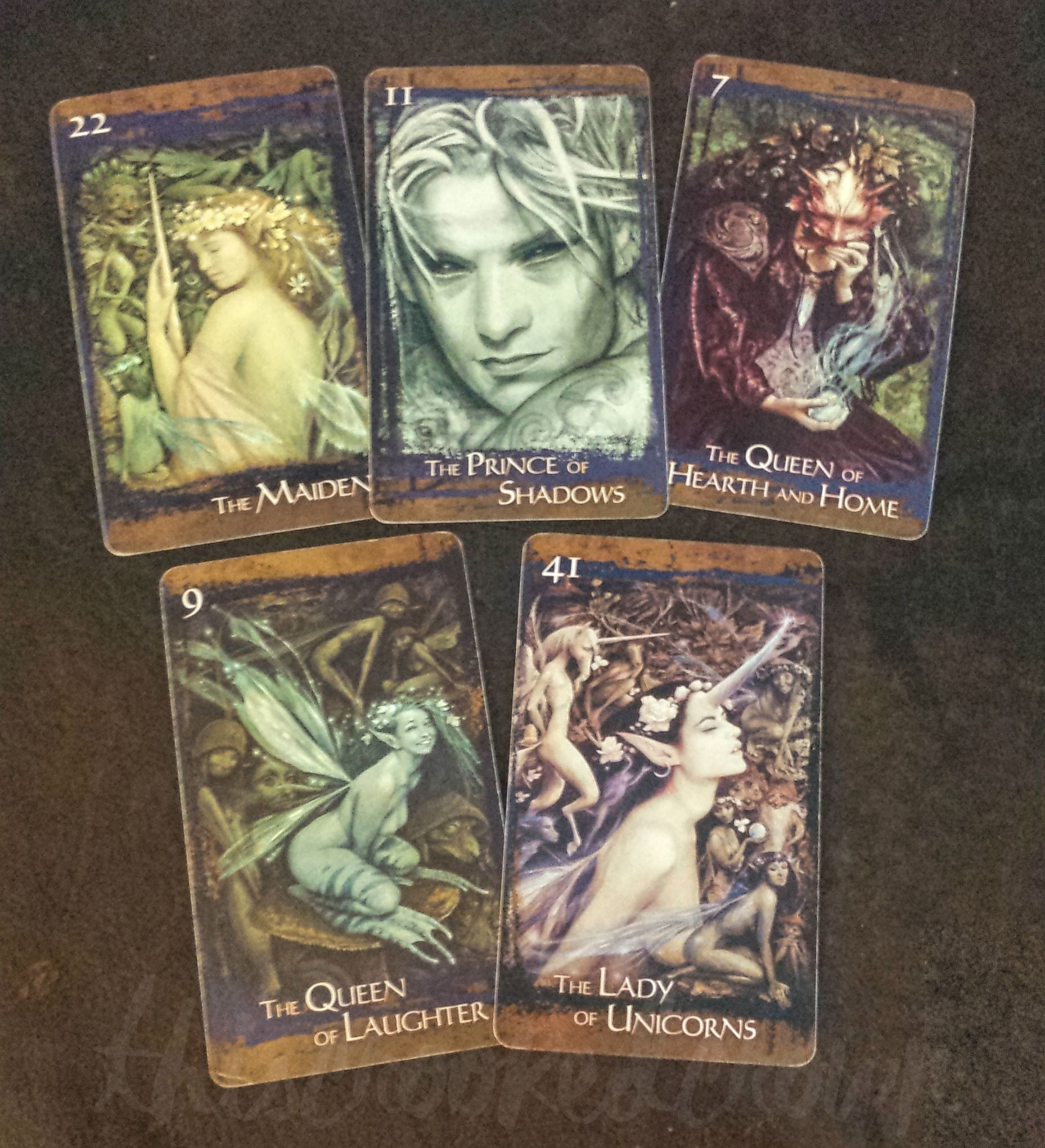
  • Heart of the Faerie Oracle by Brian Froud and Wendy Froud with Robert Gould © Harry N. Abrams
  • Fairy Lights Tarot by Lucia Mattioli © Lo Scarabeo
  • Classic Tarot by Claude Burdel © US Games Systems
  • Deviant Moon Tarot Borderless Edition by Patrick Valenza © US Games Systems
  • Scrying Ink Lenormand Oracle by Siolo Thompson © Bay & Willow
  • Dreaming Way Tarot by Rome Choi and Kwon Shina © US Games Systems
  • Tarot of the Magical Forest by Hsu Chi Chun, Leo Tang, Pietro Alligo, Giovanni Pelosini © Lo Scarabeo
  • Linestrider Tarot: Kickstarter Edition by Siolo Thompson ©
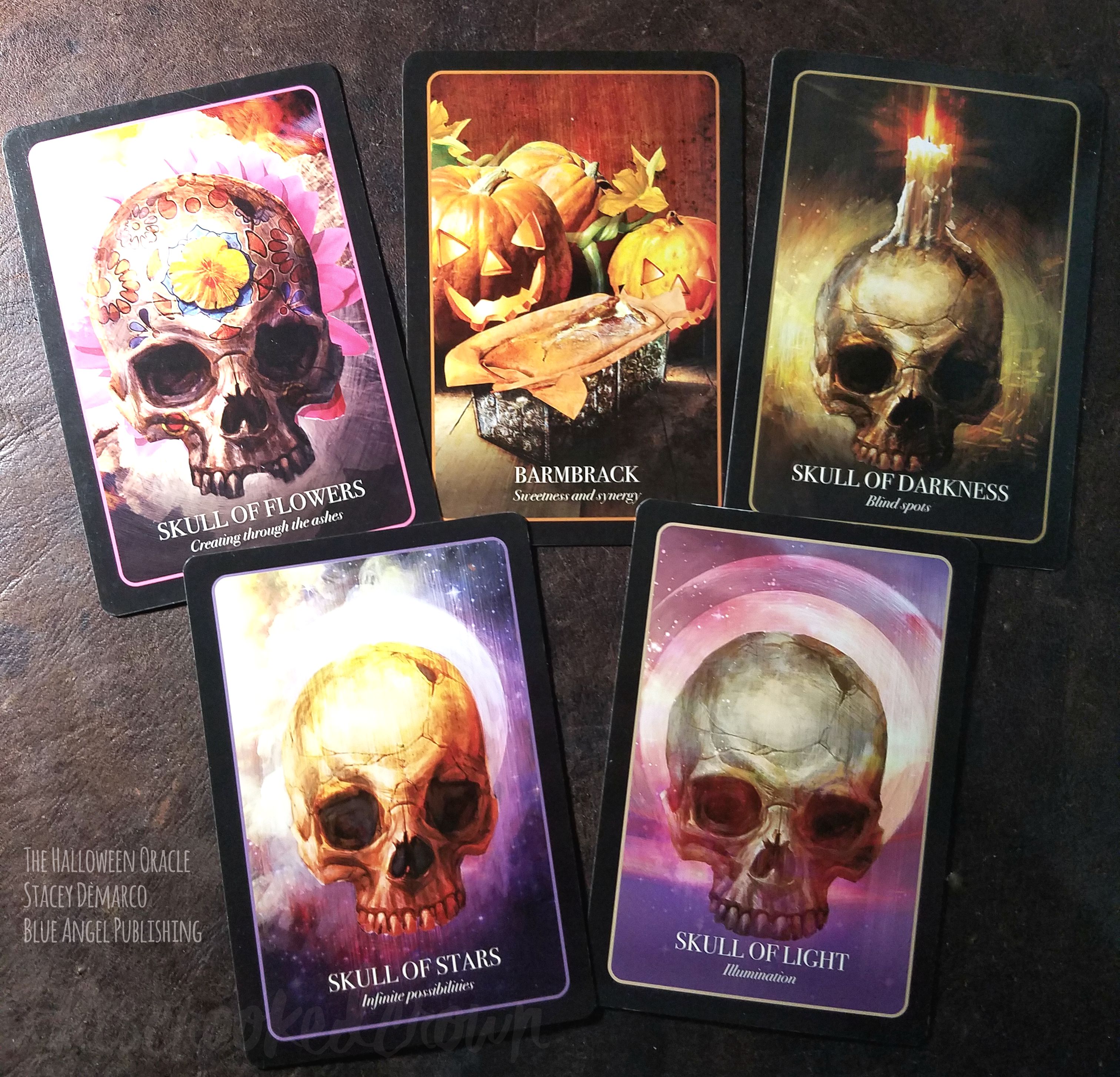
  • Halloween Oracle by Stacey Demarco © Blue Angel Publishing
  • Sacred Rebels by Alana Fairchild and Autumn Skye Morrison © Blue Angel Publishing
  • Sacred Creators Oracle by Chris-Anne © Chris-Anne.com

The Myth of Buying Your First Tarot Deck

There’s this superstition that you cannot buy your first (or any) tarot deck for yourself. It should be bought for you, given, or stolen but you should never buy it for yourself. If you do, the deck won’t work for you, or it’ll have negative energy, or bad luck, or whatever.

It’s not a superstition I ascribe to. In fact, I find it kind of rubbish.

05

Heart of the Faerie Oracle by Brian Froud, Wendy Froud, Robert Gould, & Harry N. Abrams. 

Don’t get me wrong. I’m superstitious at heart. I studied major in folklore in university so it’s my thing. But, uh, I’ve tested this and I’m calling it: it’s not true.

First, let’s get to the root of this superstition. It’s not a historical superstition and I’m prone to believe it’s only a few decades old – perhaps calling back to an era where tarot cards weren’t published regularly and therefore were hard to come by. The decks would have been passed down like treasures. In this theory, it makes sense that people would believe that these decks held more power because they’re proven reliable and held sentimental value. (That doesn’t mean those decks are better than one you’d buy, by the way, just more personal.) My theory suggests that this tradition morphed into a superstition over time due to grandstanding and ignorance.

There’s a second reason why this superstition might have come to prominence. That reason is research. Back in the 90’s when the internet was still young but the New Age and Neo-Wicca movement was strong, you could buy decks fairly easily. But just because you picked up a deck didn’t mean…

A) You would know how to read it. Those little white books are infamously useless and many tarot reading books at the time were hard to get or steeped in occultism. Peer-learning was definitely a thing but you never knew if you were getting the complete education.

B) That deck or style suited you. I know many people from that area that just bought decks because they were the only ones they could find, not because they liked the art or how the deck read.

C) The resources were there for reviewing the deck before purchase. These days, if you want to buy a deck, all you need to do is hop on your social media to ask friends what they think or google up a review. That wasn’t easily available in the past and rarely did you have the time to do that before purchasing. These days, I can check multiple reviews in the store on my phone within five minutes.

So if you bought a deck and it didn’t seem to work for you, it could be for any one of those reasons and not because you simply bought the deck.

05

Another source is possible. It could simply be one of those things published or spoken of by one group and then taught to their readers/followers and that passed along like a terrible game of Telephone until we have the superstition as it stands today. I haven’t been able to track it back that far but it’s definitely a reasonable theory.

It’s also likely to be at least partially a corruption of other bartering myths of which there are thousands. Superstitions of these kinds generally works like this: You should not buy X for yourself but it should be given as a gift or bad luck will follow. It might also have a condition, like you shouldn’t buy it on a Thursday in October or a neighbor has to buy it for you. These sorts of superstitions typically start in a regional area and build momentum as people move into new areas of the world. It’s a pretty common style of superstition. I’ve seen this style of myth attributed to just about everything from tallow candles, to eggs, to cattle. Historically speaking, these myths are likely partially existent to circumvent community bylaws that disallow various behaviors within a small community. For example, you can keep chickens in my state’s capital city which is across the river from where I live but you cannot in my city. I can read tarot in almost any city in my state but one next door to where I live. And in the capital city, it’s illegal to throw pickle juice off the back of a trolley. The bylaws might or might not make sense but you can bet there’s some sort of history to them. These superstitions may be born from these sorts of laws.

Whatever the source, the fact is that many, many, many tarot readers including myself buy their own decks. Many readers have bought their first decks for themselves, including myself. And I’ve never heard a case of someone who suddenly cannot read their tarot cards or claims to have bad luck because they bought their own tarot cards. Continue to hold to the superstition if you like but it seems highly irrelevant to do so in this day and age of consumerism.

You do you, but be critical in what you hear and read, OK?


Heart of the Faerie Oracle by Brian Froud and Wendy Froud with Robert Gould © Harry N. Abrams

Halloween Oracle by Stacey Demarco © Blue Angel Publishing

Sacred Rebels by Alana Fairchild and Autumn Skye Morrison © Blue Angel Publishing

Sacred Creators Oracle by Chris-Anne © Chris-Anne.com


Patreon | thiscrookedcrown.com

Advertisements
Advertisements
Advertisements
Advertisements
Advertisements


Advertisements

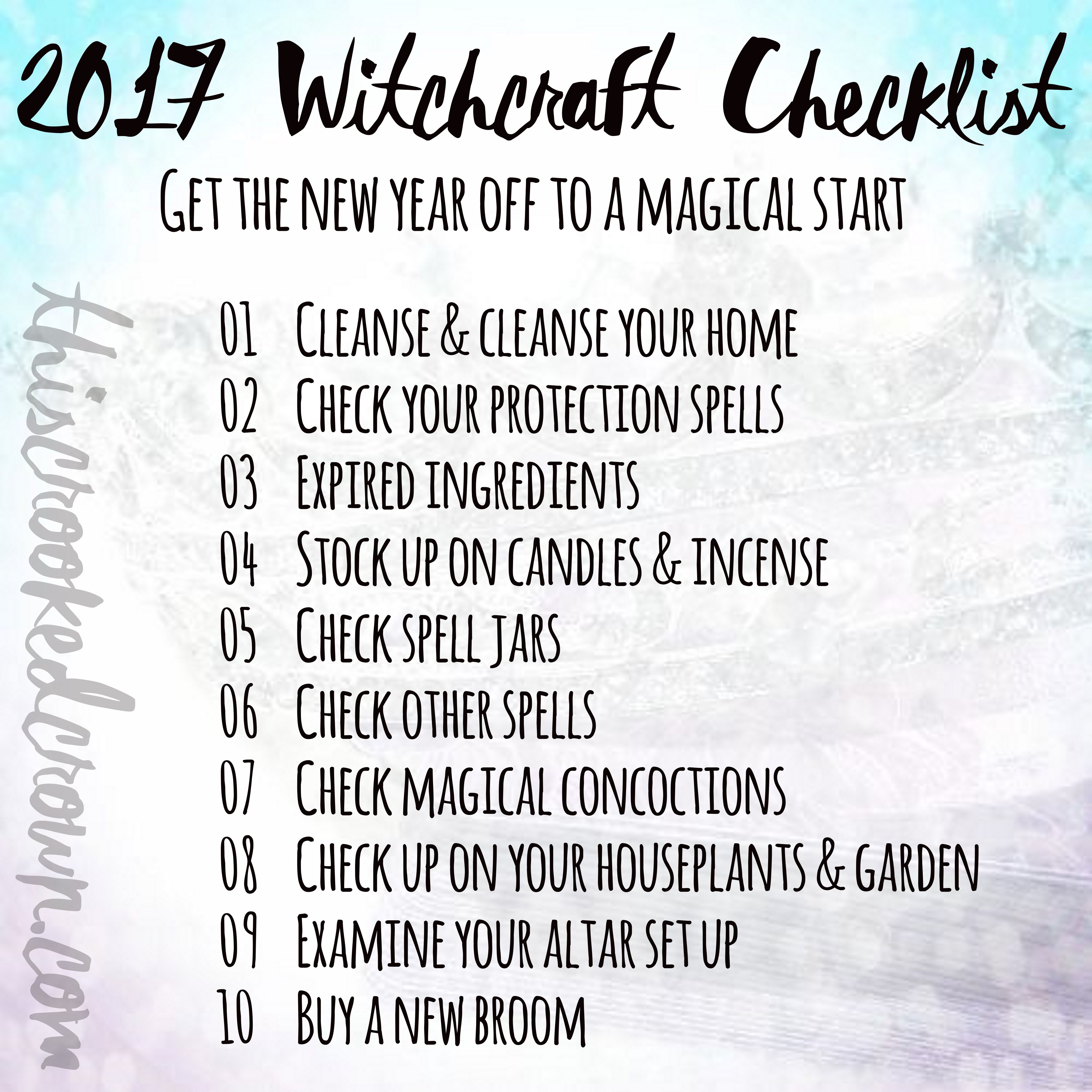
Witchcraft Checklist for 2017

2017 is nearly upon us. Are you ready yet? 2016 had been a tough year and I’m betting some of you aren’t enthusiastic for 2017 either. And some of you are so ready for it.

Whatever you’re feeling about the upcoming new year, here’s a list of witchcraft related chores and spells to get you on the right foot in the new year.


2017-witchcraft-checklist-by-this-crooked-crown


01 Cleanse & cleanse your home

This, really, should be the first thing on your to-do list come the new year.

January’s a great time to take part in a big household cleaning. You’ll get rid of all the junk you’ve held onto this long, you can re-home items you no longer want in your life (or holiday gifts you didn’t like), and starts the new year in a clean place. It also makes it far easier to keep up as the year goes on.

If you aren’t combining your cleansing and cleaning spells, you might want to do some. Check out Cleansing & Cleaning 101 for ideas and a how to or this ritual for cleansing.


02 Check your protection spells

Protection spells periodically should be checked, cleansed, and restored. Sometimes spells get worn and don’t protect as well as they should. Now’s a good time to go through your protection spells and cast them again.

It’s also a good time to set up new protection spells. Maybe you missed something in a previous protection spell or maybe circumstances have changed and your spells need to adapt. January’s a good time to do all of that.


03 Toss out expired ingredients

Herbs do expire. If you’re only using your herbs symbolically, then maybe the expiration doesn’t matter but if you also use them herbally or your consume them, you’re going to need to check over your herbs, spices, and other ingredients. Some of them might have become pale, lost flavor, or became moldy.

Many companies will have an expiration date listed on the packaging. Otherwise you might need a google search to give you a hand.

Toss or compost the expired ingredients and buy new ones. Did you discover a jar of herb that you rarely or never touched? Maybe skip buying that until you really need it.

This is also a good time to check any herbs you’ve had left out to dry and process them into a more handy size and bottle them. Remember to sanitize your bottles /jars and let them dry completely before use.


04 Stock up on candles & incense

Sort through your candles, incense, and related goodies. Put aside broken candles for melting down into new candles and make a list of what you’re out of or running low of so you can buy them next time they’re on sale. Remember to check scents, sizes, and colors for this.

Double check your candle holders and see if you have enough holders. Clean out any candle holders that are full of wax. A crappy knife and some oil make getting wax out a bit easier.

You’ll also want to consider putting aside anything you didn’t like using. Maybe a candle never burned properly or the scent of a certain incense was horrible to you. Put them aside and re-home them with another practitioner or friend. Remember to ask online. A lot of people are willing to pay shipping to get an item free and you’ll know it goes to a home that really wants it.

Stock up on lighters, matches, and non-flame candles too. LED lights might not burn stuff but they can be really handy in a pinch with some spells.


05 Check spell jars

Spell jars are some of the easiest forms of magic. Just throw a bunch of ingredients in a jar, seal it up, and call it a day. But, spell jars are also some of the easiest to screw up with.

Spell jars can get moldy if they were wet when the dry components were put in it. Or the wet components molded the jar. Or the ingredients became so noxious you risk yourself if it becomes broken.

Check the spell jars you’ve made. If they’re good, then put them back (or remake them). If they’re no longer needed or have become gross, dismantle them carefully! Use gloves if you have to. Toss the ingredients in the garbage and put the garbage outside. Wash the jar and sanitize it. If you don’t want to keep the jar, recycle it.


06 Check other spells

You might have a dream pillow that’s gone flat or an herbal sachet that no longer smells of anything but you. Time to get rid of them or remake those items.

Considering dismantling and burying all cursing poppets, spells, etc. It’s a new year and maybe it’s time to let that grudge die? If not, renew the curse.


07 Check magical concoctions

If you’re an intermediate or advanced practitioner, you’ve probably got a whole shelf of magical oils or waters you use or make.

Double check them all. They probably need a good shaking and to be topped off. You’ll also want to see if they’ve gone rancid, cloudy, or moldy. Toss what ones are no longer salvagable and re-bottle as needed.


08 Check up on your houseplants and garden

Check your plants. Which ones need re-potting or new soil? What plants need a little help?  Which ones died? This serves as a good reminder to care for your plants and consider how to better care for them in the future. Try not to re-pot anything until the thaw comes around. You’ll risk shocking the plant to death.

Make a list of what you’ll need for the upcoming spring. New soil? Bigger pots? A different type of basil? PH monitor? Making this list will allow you to get a jump on the spring sales when they come around.

This is also around the time that plant catalogs start coming out so planning your garden’s a good idea too.


09 Examine your altar set up

Check over your altar dishes and see if they need to be replaced. Maybe the rim of your glass chalice is chipped or cracked. You might need to save up for a new one so knowing ahead of time before sales pop up is a good thing.

Give your altar statuary a nice bath and/or dust them. Clean the glass and frames of hanging pictures and clear off the altar itself to wipe it down. When you set it up again, maybe place some fresh flowers on it to signal the new year in addition to a slightly larger than average offering.


10 Buy a new broom

Remember to enchant your household broom to cleanse and bring prosperity. Clean out the vacuum cleaner and do the same sorts of spells.


One of the Best Sacred Offerings: Charity

One of the best offerings to make to, well, anyone is charity. Donating to charity in your deity’s names is wonderful. Not only is it a perfectly acceptable offering for a great very many beings but you’re also helping out as well.


Think outside of the box when it comes to your donations and charity! You can donate to a beekeeping association to honor a deity of agriculture. Volunteer at a women’s shelter for an offering to a goddess. Those beings associated with health and healing probably will enjoy an offering of volunteer work with the homeless or LBGTQIA groups. Helping out the elderly could work beautifully as an ancestral offering. Worship animals or nature? Donate to a shelter or organize that support them!


You can do other things too. Business owner? You can donate some of your proceeds or products to charity. I offer up healing salves and tarot card readings where the proceeds directly go to a local charity. Do you knit or sew for charity? You can enchant that too for safety and warmth. I also routinely help clean the beach and parks because those places tend to get forgotten in the winter time. And that, too, is an offering.

There’s lots of things you can do to help others and use that act as a sacred act for your own deities. People say this is the season of giving, so why not give an offering or magic?


3 Tests to Strengthen Your Protection Spells

One of the questions I get from new witchlings is how they can know their protection spells are good enough. It’s a really important question to address. We all want to feel safe. It’s one of the things we need in order to survive. Our safety needs to be secure so we can flourish. But if you’re not sure on how good your protections are then things can get dicey.

3-tests-to-strengthen-your-protection-spells

But how DO you determine how strong your protection spells are? There’s not a device you can purchase that will do it for you and you’ll probably want to make sure that things are up to snuff before some big bad comes along.

Here’s three ways to test those protection spells of yours. Some might be doable right now as you sip your cup of coffee and others may need you to tap a friend.


Read up on others’ spells

This might seem like a weird suggestion to start off with but it’s actually the most useful one on the whole list.

Reading what other practitioners are doing may inspire you to add, alter, or adjust your protection spells to accommodate situations you may have never even heard of. Reading about their spells and techniques means you can hone your own abilities and spells to be as best as you can be.

There’s a second part to this. You should also read up on people’s curses and hexes. Let’s be completely honest here – people are going to curse other people. It’s been happening since the dawn of humanity and it will continue to happen until the dusk of it. You can elect not to use curses in your own practice but that’s not going to stop people from cursing you if they want to curse you.

So reading up on the potential curses they might use will help you program your spells against those curses. It’s a preventative measure that every practitioner, no matter who they are, might want to consider in their protection spells.


Set up an emergency protection kit

You know those storm kits or bug out bags you’re suppose to have? You know the one that contains food, water, and a whole bunch of stuff in case there’s some emergency or terrible storm? You can set one up for witchcraft too.

An emergency protection kit should include ingredients for protection spells, cleansing spells, and banishing spells. Everything should be prepared as much as it can be in advanced.

Use plastic bottles, even through they’re not as pretty as your glass. They’re not breakable, they’re lightweight, and you probably won’t damage much you need to hurl it at a spirit. I find the plastic spice jars are perfect for this. One container each for protection, banishing, and cleansing.

Handmade cone incense might be fantastic on the altar but shitty stick incense can be held, waved around, and stabbed into just about any relatively soft material to make it stand still (a cake, mud, rice, sand, etc.). Plus it’s cheap so you don’t need to be shy about using a bunch of it. Aim for one incense scent that can be used in all three scenario’s. I like Sandalwood but use whatever works for you.

Tealight candles are absolutely perfect for this. They’re short lasting but they have their own metal holders so you don’t have to deal with wax everywhere. Which is good because when shit goes down, who’s got the time to handle spilling wax?

Print out your spells. Even if you’re into handwriting all your spells out, type up the spells for these situations (just select a few; one or two for protection, banishing, and cleansing)

Throw in a quartz crystal, a cheap pendulum, a lighter, some string, a small bottle of water, and maybe a bell and you’re ready for all kinds of situations. I keep all of this in a zipper pouch in my witch kit but sticking it in a drawer works just as well. It saves time and you’re less likely to waste your more expensive ingredients when you’re in a hurry.


Write out your strengths and weaknesses

if you’re very self-aware, you probably can identify some strengths and weaknesses in your practice. I known mine, for example. Do you know yours?

If you don’t, try to come up with some. If you can’t, ask some friends what they think your personal weaknesses and strengths are and see how that compares to your practice. Sometimes they’re related.

Knowing what your weak at means that you can compensate for them and you can play to your strengths. Ideally, you should try and keep a balance but that’s not always easy.


Test them directly

Depending on what you’re protecting, you can go about this in a few ways.

If you’re alone and aiming to test household protections, leave the building and hurl a spell at it. Try a curse or some energy manipulations. See what happens. Since you’re the one casting the spell, you’ll be able to know what spell to unravel and dispel in case your protections fail.

If you have spirit friends, they can test your personal and household protections. Depending on what kind of protections you have set up, they may not even be able to pass through your protection spells, thus proving them effective. If they fail, your spirit friends may be able to offer advice or assistance in altering the spells.

If you have witchy friends, you can use them in a similar way as above to test your household and personal protection spells. How? Host a Faux Hex War or Faux Curse War. Also known as a witch war.

A curse of hex war is just like it sounds – it’s a war fought with curses and hexes. They can get nasty very quickly, especially when there’s more than two practitioners involved. Usually the ultimate goal is to destroy the other practitioner’s protections and damage them. Why? Who knows. Reasons vary. Maybe they don’t like each other personally or they’re morally opposed to something. People fight for lots of reasons.

Ideally, faux curse or hex wars will work similarly. Faux curse or hex wars will have you throwing out curses (or other damaging spells) at a specific target. Your target should deflect them and if that doesn’t happen, then you cease your attack and offer the counter-curse (or tell them what spell you used so they can counter it). Then they’ll do the same for you.

Some practitioners of this will specify what spells can and cannot be used, to be gain control in case one of the participants isn’t as trustworthy as others wish they were. It’s also a great way to test offensive spells. It’s something of a game and can be a lot of fun.

(By the way, you don’t need to use offensive spells. You can use witch wars to bless people too.)


If you feel you’re really, truly protected, then you’re probably safe. Sometimes overdoing protection spells will cause you to miss out on wonderful spirit opportunities. If you’re looking to talk to faeries or work with spirits, then making your house Fort Knox isn’t going to be very welcoming to them, is it?

But, it’s better to know what you can do to make yourself safe in case you feel like you need it. I hope you never do.

Inspired by my tumblr post here.