Water Divination – How to Fathom the Depths

Water divination is, hands down, one of my most favorite methods of divination. It’s not the first one I learned (crystal scrying was) but it’s definitely one that I go back to again and again.

You can scry with any kind of reflective surface. Mirrors are the most common but historically crystal, glass, water, blood, and oil have all been used. I’ve personally used window pane, turned off monitor screens, cell phone screens, and once, an incredibly shiny notebook.

Scrying isn’t like tarot card reading or even tea leaf reading. There aren’t any meaning you can go to and rarely is there anything to actually look at. Instead, you stare at the reflective surface and pay attention to what you sense in your mind. The thoughts that come to your brain and the images that form there. I’ve rarely actually seen images in the water. The reflective surfaces are more about allowing you to see what’s in yourself. No two scryers will see the same thing, after all, so it’s a lot of independence practice and trusting your intuition in order to get a reading.

Because of it’s a very intuitive art, some people will be better at it than others. Practice can even things out but the most important thing is to trust yourself. When I do divinations for myself, I rarely assume that what I’m seeing will absolutely come true. Instead, I view divinations as the most likely outcome, at this specific point in time, until something changes. Having a divination allows me to hedge my bets and set up contingencies. Since that’s how I view divinations, it means that I don’t mind using my intuition to make a decision because I probably have a back up plan outlined in my head.

Anyway, water divination is definitely old and definitely worth pursuing, especially if you feel connected to water in any way. Here’s how to do it.

Find a suitable vessel for the water. You can use anything but a shallow bowl or plate works well for beginners. The preferred color would be black but white or clear works well. If you’re using a clear bowl, make sure that the table you’ll be working on is cleaned and maybe drop a plain black cloth on the table. It’s up to you and experimenting will reveal the best results here. But for beginners, stick with a plain black bowl or clear bowl with black cloth under it.

Fill it most of the way with water. The water you use will depend on you and even your questions. When in doubt, use purified, spring, or tap water. Since I keep pitchers of purified water around, I usually just pour from that but if I need to get my serious witch game on then I go for the bottles of collected water.

Put the bowl before you, and sit in a chair that’s not too comfortable but not too uncomfortable either. You can do whatever you like with your hands. I usually put them on either side of the bowl, to ensure I don’t faceplant into the water (a definite risk for me that I’ll explain in a bit) but you can put them in your lap or on the bowl if you like.

water-sources

Now lean forward enough that you can see the reflection of the water but not your own reflection. This might be a bit tricky and you might need to play with any light sources nearby in order to get a good reflection without you. It won’t ruin your divination if you do find yourself in the reflection but I find staring at my own face distracting and end up embarrassed at whatever silly expression is on my face.

Think or say what you want to divine about. Describe it if you have to. Wait as long as you feel comfortable doing so. I find that after a few minutes I’ll drift closer to the water (hence the aforementioned faceplanting) and and my eyes will lose focus. That’s OK. Just let whatever come to mind happen.

Sometimes I’ll get particular sensations, like the color green or a snake. Other times I’ll see mini scenes in my brain like a movie reel but the people are faceless or stand-ins with people I know or even celebrities. Many times I’ll get a bunch of things all at once and I won’t be able to decipher it until later when writing it down. Don’t worry if it doesn’t make sense now or even after you’ve written it down. Scrying is one of those arts that is either incredibly, frustratingly vague or dead-on, scary accurate.

Talking aloud might help you find more and clarifying what you’re seeing but it also might disrupt your conversation. It’s a hit or miss thing for me. Sometimes I’ll talk and other times I won’t.

After a while, you’ll feel your concentration break. Maybe your mind slips into think what’s for dinner or you’ll feel the table edge pressing into your chest or your nose touches the water or something. It could be a phone ringing or the cat brushing against your leg. Whatever disrupts you concentration marks the end of that session.

Dump the water, clean the bowl and try again  at a later time. Don’t try to give it another go with the same question right away. It’s best to let what you’ve seen rest and sort itself out in your brain before trying again.

If you want to do more than one question at a time, you can use the same water or swap them out. It’s up to you. You can dump the water down the drain, drink it, or use it as an offering or water your plants. Whatever you want. I usually offer it to the garden as thanks but sometimes will pour it back to the source or down the drain.

And that’s it! It’s one of those easy to learn but difficult to master skills and one I think it’s super important to build up your belief in your own intuition. Give it a try and see how it works for you!

Why you might want to skip reading for yourself

Most diviners read for themselves. It’s a great way of learning, testing new spreads, and practicing various divination methods because who knows you better than you?

But there’s a small group of diviners out there that don’t read for themselves. Reasons vary but the most common one you’ll hear is that it’s hard to read for yourself.

How many times have you pulled some cards for yourself only for the cards to tell you exactly what you already know? (And let’s be totally honest here: the cards will probably tell you that information in the rudest or snarkiest manner possible.)

And I am entirely guilty of pulling a spread for myself only to not do a full in-depth reading. Usually, it’s like “Oh, the Four of Coins, Star, an Chariot. Awesome. It’s nap time then!” (I have totally done this.)

It’s hard to give yourself advice on being you. it’s hard to seriously take the advice the divination tool is giving you because you know what to expect. It’s already telling you what you know.

But is it? I mean, think about this logically. If you already know something, then why would you look beyond that? You’re seeing what you’re expecting to see, not the other possibilities. We’re somewhat blind to our own futures. We’re emotionally invested in our own futures, after all, and hope is a strong motivator to avoid unpleasantness.

It’s even somewhat hazardous. You could miss important info because you see what you want to see and not what’s actually there.  I’ve done it and it totally sucks. Afterwards you kind of just kick yourself.

Personally, I do read for myself. I’ll do serious readings because I’m self-aware enough to know I’m a hot mess at times. (Hey, we all are, right?) I’ll definitely read for myself when situations come up and I need answers, stat. But if I want a serious general reading or checkup reading, I’ll go to a trusted friend or reader. If I’m scared to read for myself because I’m so emotionally invested in whatever is going on, I tap a fellow reader to give me a good push.

Let’s be honest: Sometimes we all just need someone to lay out the hard truth on you so you can sit back and go, “Well, shit.”


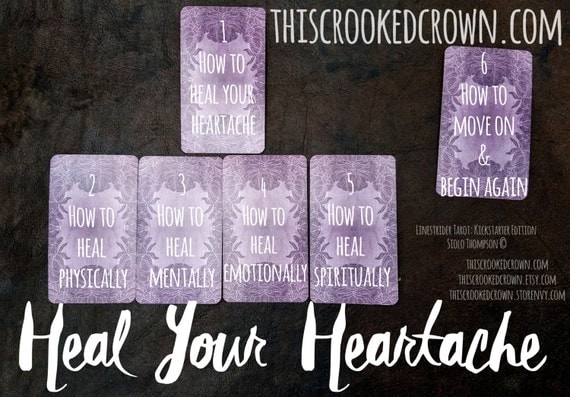
Heal Your Heartache Spread

Heal Your Heartache is a reading that focusing on helping you heal from heartbreak. Whether your hurt comes from a break up, crushed dreams, trauma, or simply being soul tired, Heal Your Heartache focuses on helping you heal and move on.

It’s a really great kind of reading that allows you to identify just where you’re hurting and what hurts are symptomatic or caused by some other issue elsewhere.

For example, maybe you’re feeling sick to your stomach but that’s actually caused by the stress you’ve been feeling for an upcoming deadline. The body reacts in whatever way is needs to to tell you something’s wrong. And when you’re feeling poorly emotionally, mentally, or spiritually, your body will react.

I’ve used this a dozen times or more to figure out exactly how I’m reacting to various stresses or what-have-you and look for solutions I can implement without adding additional stress.

Don’t get me wrong. This isn’t meant to replace medical or professional care in any capacity. It’s just suppose to be an eye-opener and provide clues to help you. It’s a tool, not a solution.

And yes, you can absolutely use this spread for yourself. I encourage it! Just make sure you credit me if you use it in blog posts or paid readings since it’s my original work.

If you’re not up to reading for yourself right now, this reading is available in my etsy and storenvy shops.

Enjoy!

Divination Tool Review: Fairy Lights Tarot

Fairy Lights Tarot by Lucia Mattioli. Published by Lo Scarabeo

Status: Currently reading with it

Best for: Spirit readings, astral or spiritual related readings, faerie readings, complicated social matters, daily draws, getting in touch with your intuition, and story-telling

Favorite cards: Six of Chalices, Eight of Wands, Five of Pentacles

Acquired from and date: Part of a barter with Kara Driscoll in March 2016

Fairy Lights was one of those decks I found absolutely beautiful so I put it on my Crown’s Witchy Wishlist. It sat there for a couple of years while I focused on getting some other great decks in my collection. Then it was gifted to me as part of a barter. I’m not wholly sure what I expected but Fairy Lights both did and didn’t meet my expectations.

I knew the art was soft and beautiful. It’s definitely a fairy deck both in feel and in depth. But for some reason, I didn’t get the same kind of instant pull towards the deck as I did with the other two decks I was given. In fact, out of the three, this one took the longest for me to want to work with. Which is an absolute shame because it photographs beautifully.

And that’s the thing. This deck IS beautiful and I found little to complain about. But it does require some work to get into the feel of it. I don’t deal much with faery courts in my practice but this definitely reminds me of a faery court – in a good way. Each card has a lot of personality so when you’re working with this deck, make sure to study each card closely in order to fully appreciate the deck.

This is an extremely beautiful and intricate deck. The art is very moody, very colorful, and very fluid. It reminds me strongly of some of the art that accompanied the fairy tales I read as a child. The art is soft and diffused. The gray borders might seem like a strange choice but I rather like it. I think it makes the image of the cards stand out, like a window into each little realm the card shows.

This is not a deck that’s all light and goodness, however. This takes a lot of inspiration from fairy-related stories so you’ll be able to recognize the stories within the images. Some I didn’t recognize the stories to, such as Two of Wands, so it might just be a fantastical image or I don’t know the story.

The colors are extremely bright and vivid, as you can see with the variety of photos but there’s a lot of dark images too. Lots of vibrant colors. Really, this is kind of the perfect blogger deck color-wise because there’s so much color and the palettes are really good.

Nudity is also commonplace but when nudity does appear, it fits the image. Justice, for example.There isn’t a huge amount of nudity but it does exist. I wouldn’t consider this a kid-friendly deck. The nudity here is chosen well. It means something rather than just being a part of the art style.

Content-wise, the deck doesn’t have anything that shocks you out of the deck.There isn’t a sudden modern image surrounded by medieval image. The Emperor was the only one that kind of threw me – it shows a conquistador and army at first glance but the more I looked at it the more I realized it could easily just be an explorer and army.

What I really liked is, except for the numbers, there’s zero script on the deck. The suits are separated by a physically shown sword, cup, wand, or coin. For the Court Cards, for example, there’s just a helm, horse, or crown to designate status. The Major Arcana has just the numbers.

But that’s also a challenge. While the symbols for the Court Cards make searching for those cards in the deck easy peasy, it also means that you have to recognize those symbols for those cards.

Same thing with the suits themselves. They’re fairly self-explanatory when you’re looking at the four suits together but sometimes I forget the sword is represented by an actually swords and not the wand. It’s a silly mistake on my part but it’s one with noting.

The deck back is absolutely beautiful. It fits in very well with the deck and makes this a great deck for adult festivals and events because it’s interesting no matter what side is being shown. The image isn’t a mirror reverse, however, so you will be able to tell the subtle difference between a reversed card and a right side up card.

Not that I think reverses matter with this deck. I’m hit or miss on whether I read a deck with reverses but this one I wouldn’t. Or, rather, I wouldn’t for most readings. I think it would be extremely situational. There may be some merit to remembering that this is a view of a faery court which is othered, separate, somewhere else. Upside down is a common indication of this realm. So, if you read with reverses, you might want to keep that idea in mind.

I think this deck could have really benefited from a companion book. The LWB included in the deck is fairly useless. I’m usually one to give the LWB a chance but this one is a fairly standard LWB so it’s kind of a waste. The box is your standard tuck box so it’s nothing exciting in that terms.

This deck isn’t one I’d overly recommend to beginners. If you love the art and are willing to learn, go for it. But the lack of words and the lack of recognizable imagery can make it a tough deck to learn with. If you’re familiar with RWS style decks, you’ll definitely pick up on the placement and shared imagery that occurs with RWS decks but otherwise, it doesn’t stand out.

When it comes to deck size and shape, the deck is narrow in width. I think some of this is a trick of the eye due to the borders but the  cards are actually 2 1/2 inches in width. The deck is almost half an inch more narrow than my Dreaming Ways Tarot. In fact, my Classic Tarot, which fits inside a cloth eyeglass sleeve, is probably the same size as this deck. Height-wise, they’re about average. This is definitely one of those decks I would have preferred larger cards though. The art is so intricate and lovely that a larger size would be good to really soak in the details without straining your eyes.

The paper stock is a bit thin. It makes the deck very easy to shuffle but the thinness has me concerned for the deck’s lifespan. Actually, the deck shuffles extremely well. Actually, I found the card somewhat slippery right out of the box. I want my cards to slid easily but not slip out of my hands when just moving the deck about.

I really like this deck. The more I use it, the more I like it. It’s not as playful as my other faery decks but I feel like it makes up for it with the lack of humans. The faeries aren’t just humans without wings. Some aren’t even humanoid and I love that. I’m a big fan of representing things as they appear in the spirit realms and this definitely has that feel to it.

Overall, would I get this again? Yes. It’s a great deck and has a lot of heart the more you look at it.


Fairy Lights Tarot by Lucia Mattioli © Lo Scarabeo

The King’s Divination Sample Reading

Here’s a sample of what a reading using my personal divination method known as the King’s Divination looks like.

Note, all photos for your readings are personal and never shared on social media.


The King’s Divination reveals that your most immediate concern should be getting organized. You’ll want to review your schedule and make sure that you’re getting back on track. Not just because you have stuff to do but because you want to. For personal empowerment and to be able to cleanse yourself from the muck and negativity you’re surrounded by right now.

The most important aspect right now to consider is yourself. You are your most powerful tool. Your instincts, intuition, and self is key to your whole future right now. You are your best motivation and best friend. Remember to listen to yourself. Listen to your heart and spirit. It will guide you where you need to go.

Your relationships with others are very important right now. Allow yourself to trust your heart to others. Don’t lock up your heart tightly. Allow yourself to meet people and befriend those around you. In doing this, you’ll gain great personal power and enrich your life. It will make things much more vibrant and pleasant for you.

Success is possible for you, just avoid making mistakes. Allow yourself to be confident. Modesty and humility won’t help you right now. Embrace what you have and show it off.

Delusions rule over you right now. Get rid of the false illusions you allow and cleanse your spirit. You’ll want to be ready for what’s coming and separating yourself from toxic and negative things will only help you move forward.

Your life is rather split right now. There’s the relationships section of your life which is entirely separate from your success section of your life. Both hold importance to you but you are slightly leaning towards needing more people in your life. You’re probably feeling lonely or isolated right now. You’ve allowed yourself to get into that position so don’t be surprised that it’s happened. You’re responsible for your heart so take responsibility for it. Conquer those people-related fears and move forward.

The first step is with the self and on the mundane level. Follow that up with being true to yourself and you can’t go wrong.


The King’s Divination is an additional option to my etsy readings (the “cards + divination” option) and adds a different perspective on things.

The King’s Divination is also largely impersonal so it doesn’t get sassy like other divination methods do. It tells the truth as it sees it, firm and sincere but not unkind.

You want your own divination reading? Head over to my shop!

Divination Tool Review: The Heart of the Faerie Oracle

The Heart of the Faerie Oracle by Brian and Wendy Froud with Robert Gould © Harry N. Abrams

Status: Currently reading with it

Best for: Everyday questions, as this deck loves attention but relationship and spirit-relation questions are favored.

Favorite decks: The Rox, The Fixer, The Dreaming

Acquired from: A gift from a follower on tumblr back in 2012.

01

A gift from a follower who has since left the community. This is one of my favorite decks and certainly one of the easiest to work with. This deck can be snarky, a bit dark, and have more depth and meaning than you might assume right off the bat.

While this deck was designed for relationships (not just romantic but in general) and for introspection but there’s very little that this deck won’t do for me. This deck can be mischievous, blatantly and sometimes painfully obvious, and have hidden depths that can be easily missed by other readers. If you love faeries, this is the deck to chose, no matter what your question is.

It should be noted that this is an oracle deck, not a tarot and does not follow the tarot meanings in any way. Each card has its own meaning that as been written by the deck’s creators Brian and Wendy Froud. That being said, as with all divination tools, it’s up to the reader to divine the proper answer from the cards.

The book’s published by Abrams publishing so I’m assuming the deck is published there as well or outsourced accordingly. The printing quality is very good although the card stock is a bit on the thin side. Not paper thin but slightly thinner than your average tarot card or playing card.

The card stock still retains a sheen, even after years of abuse, although the sheen isn’t shiny but rather matte. This means that light doesn’t reflect off the cards but you will get a glare on the cards. It’s the same kind of coating playing cards use I believe. Due to the sheen, you’ll be able to tell under close inspection there’s scratches on the card but unless it’s a deep gouge, the card image itself probably won’t be damaged.

The cards are somewhat larger than average tarot cards, making the cards occasionally difficult to shuffle for those with small hands. The rounded edges are slightly more round than a normal tarot card I’d say, more along the lines of a playing card.

For some reason, this deck doesn’t really shuffle super well. Because of the size, I can bend the cards to shuffle the riffle-style but they tend to clump together in chunks, even after years. I’m assuming this is due to the size and card stock coating. I remember it having been difficult to shuffle when I first got the deck. Fanning powder wouldn’t go amiss here or just shuffling often to keep the cards moving smoothly.

The cards hold up well over time. I’ve used this deck on an almost weekly basis for years and only the edges where I shuffle are a little worn. It even holds up well in travel which is good because it’s gone across the country and around town in a handbag dozens of times.

The deck came in a large, flimsy cardboard box, not unlike a cracker box. I abhors tiny items in large boxes for seemingly no good reason, largely because with smart packaging design, it would save so much shipping cost and waste. In this case, the box size was largely created due to the companion book size.

I tend to keep the boxes because I have the space but I don’t store it with the book or deck. It’s stuck under a shelf actually. Instead, the book sits on a bookshelf with other divination books and the cards in a bag I crocheted for it.

This deck does come with a lengthy, hard-covered companion book (as does Brian Froud’s other oracle deck, the Faerie Oracle). There’s a ballpark of 137 pages (including the “notes” section). The book is broken up into sections such as “Queens”, “Queens’ Consorts”, “Archetypes”, “Tricksters”, and “The Journey” among others. Each card has it’s own page or two, with a red-toned image of the card in question and since easy card is numbered, it’s easy to look up the card’s meaning in the book. The cards are give a few key meanings (usually three) and a paragraph or two of some more in-depth things to look for. Since the deck is geared towards relationships and personal introspection, the questions or musings will pertain mostly to that. If you’ve read Froud’s work before, you’ll recognize how the faeries are described, not as images on a page but living people that are speaking to you through the artwork.

Little drawings from Froud are scattered throughout the book making it a pleasure for even just Froud fans to flip through. Additionally, there’s a few pages in the back for notes (as well as ample space in the pages’ margins). There’s also a little introduction in the beginning as well as a oracle how-to and interview session in the back with Frouds about the deck. There’s also a few scattered mystical quotes throughout. One spread is described in the back of the book but it’s entirely words so visual-oriented people might be displeased.

Overall, the book’s pretty handy and almost necessary at first but you’ll find yourself using it less and less over the years. I tend to only glance at it when my brain blanks out or I know there’s a keyword that I want for a specific reading and can’t remember it.

02

Art-wise, it’s Froud so expect some uniquely Froud designs. The large borders around the cards sort of disappear after a while because the colors of the borders at least go with the theme of the deck. It would be pretty hard to cut down the borders on this deck due to the typography and images.

The deck backs are colorful and remind me a bit of Sailor Moon. They’re very pretty and go along with the general theme of the deck. They’re also consistent mirrors so you can’t immediately tell if something’s reversed unless the card’s damaged in some way.

The art’s consistent in the sense it all has the same theme and it’s all very Froud. However, some cards are super fantasy-vibrant and others are dulled or almost folk-like. There’s a few cards that come off as sketches such as Oh No! and Of Two Minds This is all very on purpose however rather than feeling unfinished.

Color-wise, you get a pretty wide variance. Some cards like the Queen of the Night are dark while Oh No! and Of Two Minds have a greyscale sketch art. Elaborate backgrounds are everywhere here so there’s always some detail to look at in the cards. Some cards will strongly remind one of the Faerie Oracle such as The Faerie of Naughtiness or the Star Faerie in the sense that it’s more light and swirls than clear cut images. Expect a lot of dark purples, browns, blues, and black with splashes of lavender, white, gray, tan, and red.

03

The lettering is capital print in white and stands out nicely with the cards, making it easy to read. Usually you’re looking at the images. Sometimes the lettering can be difficult if there’s a super busy background in the card because the background can be distracting more than the lettering is difficult to read.

Nudity is pretty common in the deck and while genitals aren’t showcased, buttocks and breasts are fairly prominent. It reads entirely as art though and not pornography. It is something to be aware of when reading for others.

04

The content of the cards are very consistent as well. You know you’re looking at faeries. Some have more presence than others. Hope reads not as a subject where the faerie is key but the situation the faerie is in. In the Question or The Leaving, there’s a scene offered where in the Star Faerie, is a lot of glowy light in the vague shape of a faerie reminiscence of the Faerie Oracle. Generally speaking, there’s a main faerie on display with some amazingly busy and often muted backgrounds. Each card is very specifically and purposefully designed so it can be just as important to look at the background as it can be to look at the words or the main image.

With cards like “Lady of Joy”, “Queen of Bedlam”, and “Oh No!” you can easily use these cards in daily draws to remind yourself of what to keep in mind throughout the day. There’s a TON of hidden meaning though so you’re going to find some deeper, secondary meaning that might not be as positive or friendly as one might assume off the bat. The Shape Shifter, for example, as a few wings and two faeries. The whole flightiness, hard to pin down, and ever-shifting moodiness is obvious but the flip side is also obvious – seeing through it all with piercing eyes, capturing someone who is trying to run away. Look at what the faeries are holding or doing because there’s more insight there for you to find.

Generally speaking, when combined with the card titles, you can easily get to the card’s meaning but some are just curious. The first card “Queen of the Golden Bough” might give one pause when coming up with an immediate meaning. You might find yourself looking closer to the background or even diving for the book in a reading for the meaning. Some cards sort of end up with the same meaning with slight variances, depending on how you reading so you might want to keep that in mind when reading. How does The Lady of Joy differentiate from The Blessing or The Child? Or the Lady of Song and The Song?As archetypes, they’re similar enough so what makes them so different?

Most of the faeries have varying colored skin and some are larger women versus small slips of girls but by and large, they read mostly as white with a few exceptions. There are a TON of heterosexual and binary sort of thinking here. The Queens are all feminine presenting and the Queens’ Consorts are all masculine presenting. Since when are faeries so entirely binary or heterosexual? The less humanoid the faerie, the less binary (and more colorful) they get. Which leads me to thinking this: does this deck unintentionally present that the more solid and humanoid you are, the more binary or heterosexual you are? Or the more geared towards procreation? I find myself sometimes wishing for more in these terms in this deck.

And then, there’s some cards like the Hero that shows a long haired human in the main role. The image could be gender neutral but generally provokes a female-presenting image. The book in this case discusses how love can be a determinate factor in journeys. Yet cards like The Pan and The Boy are about adventures and are clearly masculine. This was probably intentional. It certainly brings up ideas like the movie the Labyrinth and books like Peter Pan.

Additionally, there’s the Lord of the Forest and the Lady of the Forest. I’m not overly thrilled with the humanization and binary gendering of these cards. I expected, honestly, a buck or some other sort of impressive beast-based faerie for the Lord and maybe some sort of water-based faerie or, even better, a large hunting predator-based faerie. These too would adhere to the gender binary, make no mistake, but at least they wouldn’t be extremely human looking. I don’t know. I don’t really have a solution for this specific problem but I do know they’re some of my least favorite cards in the deck.

This is certainly an oracle deck and reads very much like it but you can find correlation to tarot easily enough if you look for it (but so could everything if you look hard enough). It can be incredibly easy to learn but may throw you through a loop at times, especially if you miss some background image or side meaning that you wouldn’t normally jump right to. It can be read in a shallow manner at times, especially if you’re moving quickly and looking at the titles of the cards rather than the words. The duality of the cards in this sense is something that keeps me coming back to the deck but if you don’t connect immediately or aren’t a visual person, then the deck might not be a good choice for you.

05

This is one of my favorite decks so it’s on my “would definitely buy again” list. It does what it says on the tin. It’s an oracle deck about faeries and dives into the heart of matters and matters of the heart. It’s an excellent option for those looking for an oracle that can handle mystical questions but also divine about whether that cute barista is single or if today is the kind of day that you want to crawl back into bed. It’s not afraid of laying down some serious truth but can and will throw you a curve ball. It’s a keeper.


All images are copyrighted to: Heart of the Faerie Oracle by Brian Froud and Wendy Froud with Robert Gould © Harry N. Abrams

Ouija Boards 101 or “Are Ouija Boards Dangerous?”

Every couple of months I get this question “are Ouija boards dangerous?”. The answer, in short, is no. Not any more than any other tool at least. Then I get a whole slue of questions on how to use a Ouija board safely or properly. If you’ve ever asked those questions yourself, this is the post for you.

I use Ouija boards on occasion. I find they’re tools and that they are no more dangerous than anything else and like anything else they may become dangerous when used improperly or foolishly.

Ouija boards were originally designed as a toy, a game. (Not that something being a game originally means anything. Tarot it based off the game tarrochi after all.) And I find that the excessive fear of Ouija comes from the media or passed along stories rather than first hand accounts. And I do mean fear. People are afraid of these things which seems silly as most buy them in the toy section of Wal-Mart. I’ve come into possession of several Ouija boards simply by the previous owners being too scared of the boards and worried that they couldn’t get rid of it properly or that it wouldn’t burn or would come back if thrown away. (And these are learned individuals in the science and medical field). It’s fear-mongering, pushed by people who prefer to see tools as evil or to continue to parrot information without thinking on what that tool could mean or actually do. I often find people who say such things have never even touched a Ouija board in their life so I question their information and fear or demonizing of something they’ve never used or touched.

Honestly though. What the fuck makes people think Ouija boards are dangerous? What? Do you think Hasbro has spirits locked in a room somewhere that influenced the creation? Or they sandwich the spirits in between the paper and the cardboard?

Any tool can be used to contact a spirit. Any tool has the danger of being used to contact a “negative” or “bad” spirit. Any tool.

The whole idea that the board can be possessed by a spirit is legitimate, as spirits can possess things, but why bother with a piece of cardboard instead of say, a doll which had the capability to be mobile? I think the fear of Ouija stems from the very point of the board – to pass messages along from the spirit world. And to that I have to ask why anyone who claims or wants to work with spirits would fear such a thing. Isn’t that the point? If you get guidance from a spirit or deity, this is the exact same thing. The only difference is that there is no visual representation for you to converse with – which may actually work in your favor because there is no reason a spirit can’t fool your eyes and appear as something else, as this is traditionally an ability many spirits possess in folklore and mythology.

Realistically speaking, pendulums are more dangerous than Ouija boards. One method of using pendulums is to have spirits influence the pendulum and follow where that leads (if using it as a searching device) which is infinitely more dangerous than sitting in your living room with another person and sliding a plachette across a piece of cardboard. The implied information here is that a spirit would be more powerful to physically push or influence the pendulum (or the human hand holding the pendulum) than one influencing two humans to push the plachette around (and humans are, as science has proven, incredibly susceptible to suggestion).

It the end it comes to this: Ouija boards are misunderstood and demonized for truly bewildering and contrary reasons that makes me instantly suspect the speaker, especially if said speaker claims to or has worked with or is working with spirits. Claims that the boards aren’t useful in witchcraft, are extraordinarily dangerous, or evil are often employed by the uneducated or fearmongers.

Now that we have that covered, let’s move onto actually using an Ouija board!

Ouija boards spells out things by have a plachette (pointer) move around the letters. Each person participating should lay a hand or at least a finger on the plachette and focus during the moment the question is being asked on the question itself. In theory, the plachette spells out the answers to the questions.

Make no mistake: the plachette is moved around by people. Each person slightly moves the plachette around without noticing and another person responds. It’s OK to totally admit this. In fact, I find going into the procedure knowing that actually helps determine whether someone’s just messing around or if they’re channeling something. It also helps because it can calm you down when you start to get worked up (because groups of people can get worked up very easily when scared or excited.) Now, the question that should be asked is this: are they moving the plachette that way because a spirit suggests it or they intuitively know the answer? That’s something you’ll have to determine for yourself.

Here’s some tips to get the best enjoyment out of your Ouija board session:

Take breaks often. A lot of getting spooked happens when people build on experiences – it all rolls together and excitement builds to a point that anything’s possible. It especially happens when using it with other people and I believe is related to mob mentality – which creates a us vs them dichotomy, paranoia, and is often aggressive (which will chase away milder spirits). Taking breaks gives you a moment to pause and consider what’s happened before starting up again.

Eat and drink something but avoid excessive amounts of refined sugar, caffeine, alcohol, or stimulating drugs as these substances can create a sense of paranoia and in extreme amounts, hallucinations. Foods like bread and pasta are good but whatever works best for you is good.

Keep notes and write down information and responses given. Go back through those notes and repeat those same questions at a later date to help verification. Asking questions where you think you already know the answer will help from getting too excited because nothing new’s been added.

Atmosphere is fun and all but can create a sense of false importance of a situation. So lighting the candles and holding session in a darkened room may be part of your process but shake it up sometimes if you feel like that might be contributing to getting spooked.

Put some music on. I’d recommend music without lyrics as lyrics may be able to subconsciously influence your answers and create interference.

Putting out an offering, even just a glass of water, may add a sobering effect to your sessions but that depends on your particular perspective. An offering is polite though so it may attract more of whom you’re looking to speak to.

Time your sessions. If something goes on for a long time, it can build until you’re spooked out. Maybe only ask five questions at a time or ask questions for twenty minutes then take a break.

To end a session, go ahead and thank anyone that showed up (both humans and spirits alike), even if some scary stuff happened. It’s only polite. You may wish to cleanse the room and check protection wards afterward.

As mentioned above, eat something after the session and chat among yourself. Give everyone time to calm down before they go home or whatever. Again, it reduces the fear factor.

There you go! A quick 101 on ouija boards. Have fun!

This post is based on these tumblr posts here, here, and here.

Free Twitter Tuesday Tarot Reading at @crookedcrown

Did you know I have a twitter? Well, I do! Mostly it contains community comments or shop updates but is it legit the fastest way to find out what’s up for This Crooked Crown at the moment.

But what if it was more?

ONE free tarot or oracle card reading will be given away every Tuesday for FREE via twitter @crookedcrown. Check @crookedcrown every Tuesday to see if you got this week’s free reading!

Each reading will be about 100 characters so they are going to be super mini readings! If you’re looking for something more in-depth, you’ll want to consider buying a larger reading.

How do you sign up for this kind of awesome?

Step 1: Sign up or log into twitter and find my twitter account @crookedcrown

Step 2: Send a private message to me via twitter (direct message) with your question and the acronym FTTTR so I know it’s for Free Twitter Tuesday Tarot Reading and not just you sending me a random question.

So a potential message might look like this: “Hi! FTTTR pls Will I get this promotion? TY!”

Step 3: Wait to see if you’re selected for that Tuesday’s Free Twitter Tuesday Tarot Reading!

That’s it!

If I don’t have any requests that week, then I’ll just pull a card for my followers as a whole. So it may still apply to you.

I have the right to select from the questions which one I want to answer that day so it’s somewhat first come first serve but also depends on my mood. I may not answer your question at all if I don’t feel it’s appropriate. Generally speaking, if you send in a question, I will eventually get around to answering it.

I do not accept questions on any other medium source nor do I give readings away anywhere else. This is it. This is your chance for a free reading. Please do not send a tumblr ask, email, or paper airplane with your question. I won’t answer it.

Privacy of Tarot Readings

When you get a tarot reading you’re asking someone else to sit down and read your most intimate parts of yourself. The reader might not know all the nitty gritty details, but they’re still involved with something personal, something private.

This is why I hold my client’s tarot readings (and purchases in general) as private and under the most strict confidence. It’s also why I don’t show my client’s readings or give context such as spread names or full photo shots for the rare photo I do show. Because it’s not my business to share and sharing client readings (especially without permission) is considered a faux pas for me. Your readings are yours and they are private. The same way that your purchases are private and your emails and convos are private. Asks are a little different as often their asking for advice or commenting on a community discussion but nine times out of ten I’ll reply to an ask privately if I’m able to. Because that’s a private interaction.

It’s a rather common practice to see tarot readers show off spreads or client readings. It’s a great way to get your services out there and it’s a great boost of confidence for those who are learning to read to see the readings in practice. And that’s exactly why I’m all for showing my own personal readings or the readings of clients who give the OK. Because showing off your readings and skill can be such a great boon for both you, your readers, and your clients. I share my own personal readings fairly often. I’ll share client posts, reviews, photos, and videos because they’ve shared them first.

I think the crux of the situation is that clients aren’t often even asked if their readings can be shared. As mentioned above, tarot readings are personal to the person so not asking is kind of like snooping through someone’s mail to me. You might not know the context of the bills or letters but you can make some pretty educated guesses just from the names on the envelopes. It’s one thing if you decide to tell someone what’s in the envelope (or the reading) and you’re welcome to share that with the world as the client but for the reader to share your private reading publicly without your permission first… I would see that as a breach of trust personally.

It’s not uncommon for people to forget that their clients are people too. You see this startlingly often in the medical field where doctors and nurses forget their patient’s comfort because to them it’s just another case or just another flu or broken arm. They forget that to the patient, to you, this is a big deal. And that carries over with readers as well. To you this might be just another reading but to the client, it could be vitally important. To forget that and share the reading reduces them to just another person and makes their interactions with you less personal and important.

Not sharing readings means that you have more work on your hands to get your name and business out there however. People can’t see how you read and don’t know what environment they’re in. Testimonials and sample readings can help alleviate that burden as can social media promoting. Simply sending an email to someone and asking for their permission can give you a great response. If a client says yes they’ll probably be exceptionally pleased that you even thought to ask and that might even be a talking point for them when they recommend you. You can also say something like “hey, I had a few great client readings today now here’s one for myself!” And then show a reading you did for yourself or something similar. It still gets your services out there but it doesn’t share your client’s privacy.

I was pleased to see this discussed by Freya Ray in her book The Ethical Psychic (review to come at a later date). Her opinions strongly mirror mine and I know a few other readers who also hold their client’s readings as private first. I know it’s been discussed before but I haven’t seen it come up recently. I think this is a discussion the tarot community should be having as we live in a world of instant gratification and it’s so easy to snap a shot of a client’s reading while at a coffee shop and post it to six different social media sources at once.

I think asking a client if you can share their reading should at least be an industry courtesy if not an industry standard. What do you think?

Gensoumaden Saiyuki Tarot Deck Review

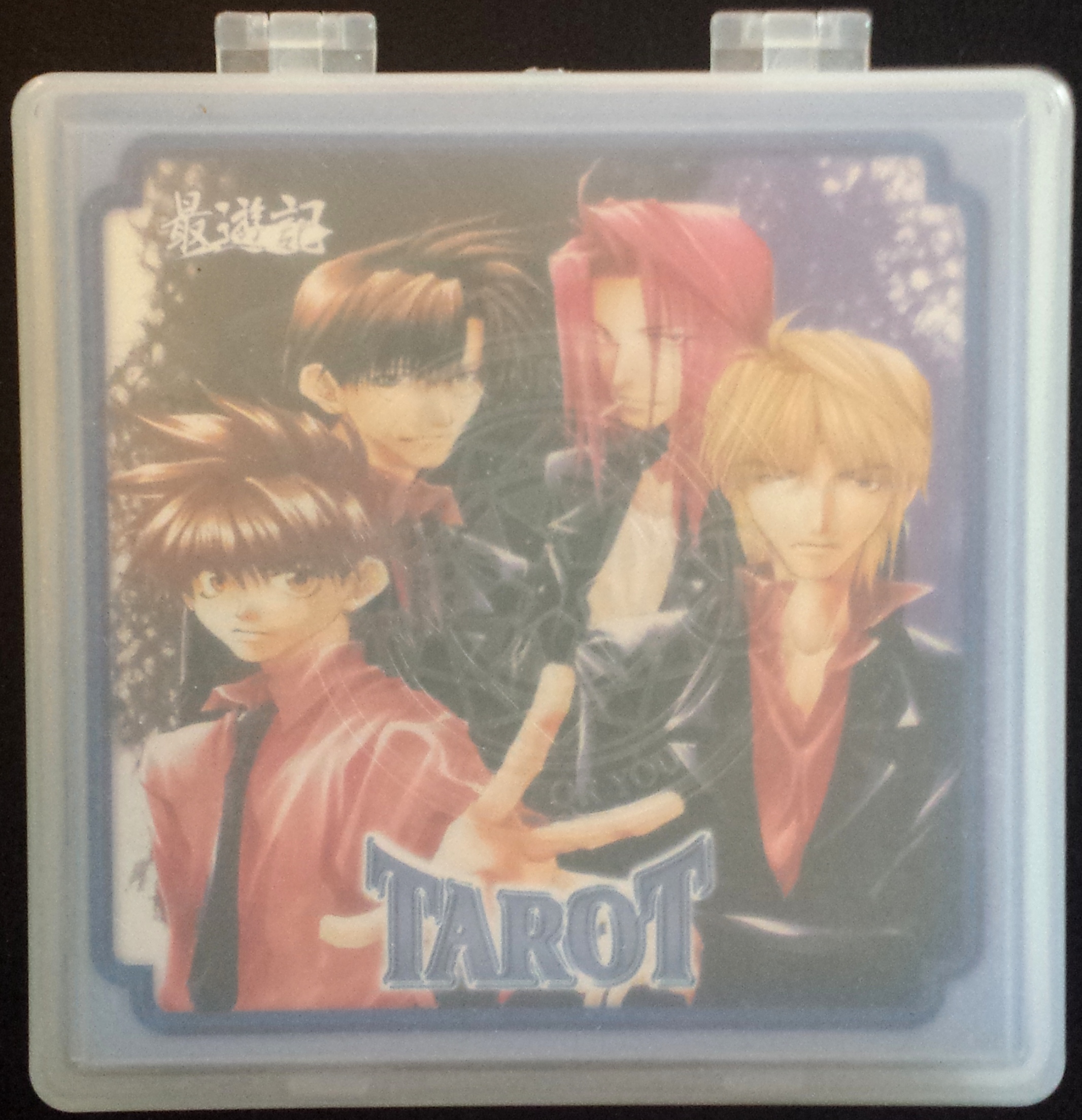
The Gensoumaden Saiyuki Tarot, complete in box.

The Gensoumaden Saiyuki Tarot, complete in box.

The Gensoumaden Saiyuki Tarot by Minekura Kazuya

Status: Rare; Not reading with it.

Best for: Fans

Favorite cards: Don’t have any.

The Gensoumaden Saiyuki Tarot deck was a rare find that I scored for a mere $15 on eBay back in 2005. A full 78 card deck in a hard plastic case (possibly the best tarot box I’ve ever seen a deck come in) in full color. The cards and book are in Japanese but at the time I didn’t care because while I was fairly mediocre at understanding Japanese I had the patience to sit through my dictionaries and find the meaning of the words I didn’t know. I’m severely out of practice right now to the point of uselessness so the deck just sits and is loved from a distance. (I’m relearning Japanese but it is slow going and myriad in heartbreaking nostalgia.)

A card by itself. This image is from manga.

A card by itself. This image is from manga.

The Gensoumaden Saiyuki is primarily useful for only fans of Minekura’s work. The art comes from all sources from manga splash pages and covers to art books she’s produced. There’s also a mix of characters from other manga she’s produced. I didn’t mind this surprise since I’m a fan of her work as a whole but it’s something to note. For those completely unknown to the series. It’s a retelling of the Chinese classic Journey to the West (which I’m also a fan of) and is not only a fairly long-run manga but also an anime. There’s also at least one novel running around too and several audio CDs.

The deck compared to your average sized Sharpie.

The deck compared to your average sized Sharpie.

The series itself holds a special place in my hear and I’d say was a catalyst for how I matured into an adult. It never bordered on pop culture paganism or magician status but still held incredible importance to me at one point in time and will have lingering affects throughout the rest of my life to be sure. That being said, I don’t really involve myself in the series anymore outside of keeping up with new updates as a whole.

The deck compared to a standard size Tarot deck, here the Chrysalis Tarot. You can even see how the cards arch in the box to the left.

The deck compared to a standard size Tarot deck, here the Chrysalis Tarot. You can even see how the cards arch in the box to the left.

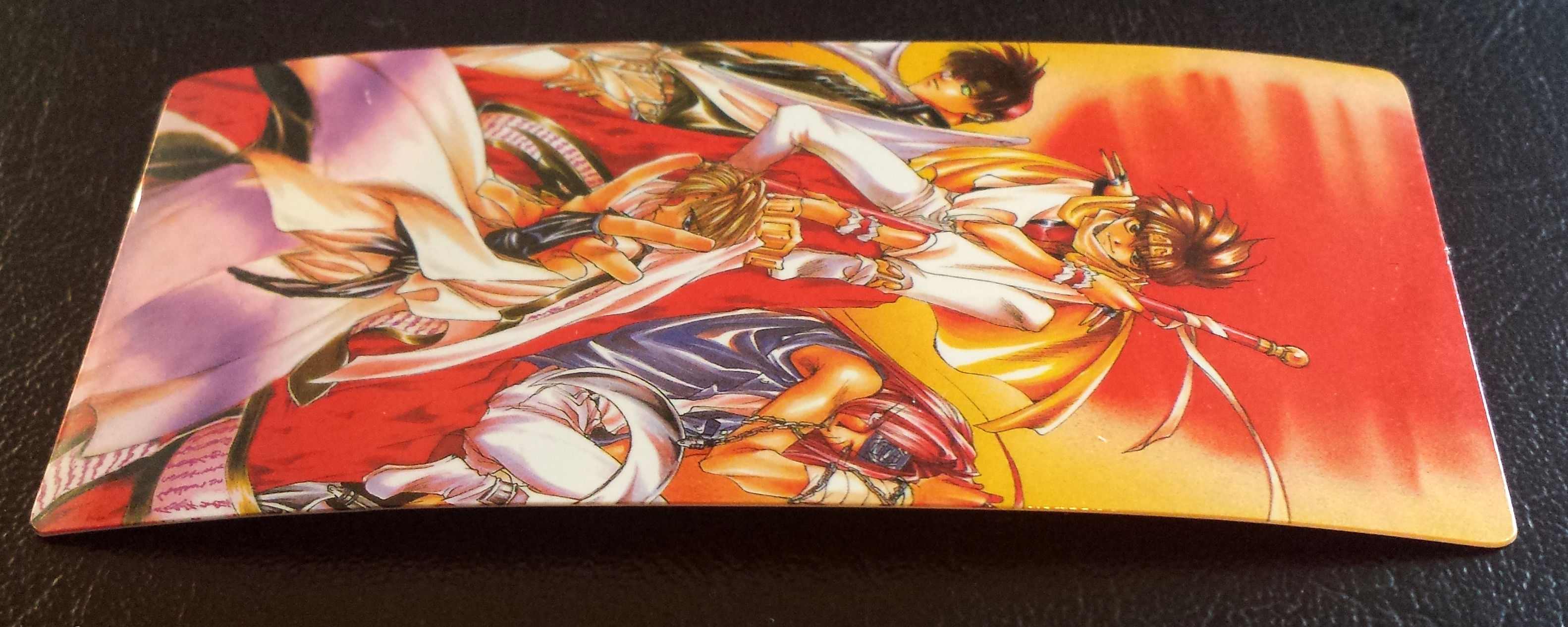
The deck itself is a full 78 card deck. The cards are small though and very narrow. Length-wise, there’s the same height as a standard tarot deck but they’re almost half the size width-wise. The card stock’s OK. The backs are smooth and slick, coated perhaps in a plastic covering not unlike playing cards but the reverse side with the card image feels like the card stock of an average greeting card. My deck also as little flaws like a remnant at the top where the cards were once connected and there’s a mar on the card backs from the printing.

The largest physical flaw is the cards do not lie flat. You can see that plainly in the photos. They could be pressed into being flat if one cared to do so. I didn’t bothered. I believe it would be a futile struggle. I think the shape of the cards help facilitate the curve. Shuffling’s pretty much a nightmare due to the curve and I don’t think the card would last long under constant usage.

Look how the card curve and arcs here. That's  due to the shape and card stock rather than usage which is more typical in tarot card curving.

Look how the card curve and arcs here. That’s due to the shape and card stock rather than usage which is more typical in tarot card curving.

The art isn’t entirely consistent either. As I mentioned, the art for the deck was collected from various sources over the course of Minekura’s career. The art quality varies accordingly. This is good for fans of her artwork and story telling as a whole because they can see often forgotten series showcased a bit (sadly, not my favorite Stigma which is gorgeous but I digress). You can see some of that in the photos but it’s fairly random what’s featured. I’m fairly certain the images were just grabbed from her artbooks which is A-OK as far as I’m concerned. This wasn’t specifically a project she set out to make but rather something that was produced in her series’ name.

The booklet that comes with the deck. (LWB)

The booklet that comes with the deck. (LWB)

Inside the booklet. Yup, still Japanese.

Inside the booklet. Yup, still Japanese.

It comes with a LWB that comes with spreads in it. However, I recall the book itself being a generic printing from the publishing company. Still, I remember being rather surprised the deck was even standard and had a book. It was fairly rare to run across at the time (from my experience).

As mentioned above, the deck and book is written in Japanese. However, don’t let that deter you if you want to use it oracle style. It could be easily done. But it is meant to be a tarot deck with the fairly traditional meanings. Would I crack open Waite’s A Pictorial Key to the Tarot to read these cards? Nope. I’d rather just go with what feels right. It has that kind of feel to it.

This is the kind of case you can toss in your bag with no worries about your cards. Perfect.

This is the kind of case you can toss in your bag with no worries about your cards. Perfect.

The best part of the deck in my opinion is the card box. I mean, the cards are great, especially for fans but the box can withstand some serious damage. Hard clear plastic, it’s divided into two size and fits perfectly. I do think the plastic box doesn’t help with the card shape however which is something to keep in mind.

However, this is a great box and I wish more companies produced boxes like this! It keeps the cards nice and safe, secured. Not only that, this box can take some damage. It’s not the easily cracked plastic that CD cases are made out of but not the super hard acrylic that baseball cards are kept in. it’s somewhere in between. Absolutely great for storing cards or tossing them in your bag where you know for sure that they’ll be safe from all kinds of damage like pen tips and even dampness.

A selection of cards from the deck. Note the art variations and even characters.

A selection of cards from the deck. Note the art variations and even characters not from the Saiyuki series (third from the right). Some of the cards aren’t even a north to south oriented card (second card from the left).

The deck also is lacking in soul. Decks that are created with divination in mind tend to have a more noticeable and outspoken soul to them. As an animist, I think anything can develop a soul and mine certainly have but you may feel a curious emptiness when handling the deck at first. This happens when decks are cobbled together and mass produced. (This isn’t to say mass printed decks aren’t good. Almost all of mine are mass printed and are perfectly wonderful. It’s just something I notice with decks that have the aforementioned criteria combined.) I actually doubt Minekura’s aware of the deck any more than she’s aware of her other series-related products. However, that doesn’t remove the personality from the art itself and the more you know of Minekura and the worlds she creates with her stories, the more the deck speaks to you. (Also, my heart goes out to Minekura. She’s had terrible luck with her health and I’m always hoping that she heals swiftly and surely.)

It does read well, however. As mentioned above, I tend to side more towards oracle style of reading than full tarot for this deck because of what I know about the series in question, the artist, and color symbolism. That’s just me though. I find it offers a clean, “no bullshit” sort of reading. Careful for word traps. The deck also tends to linger on self doubts and traumas more than you’d expect given the card images. (That relates more towards the deck’s subject material than anything else, in my opinion.)

Would I buy the deck again? Absolutely, if only for sentimental value and the fact that I haven’t run across it again online or in person. Would I use the deck? No. The cards won’t last long with usage. It’s one of the view decks that I’ve only used a few times for personal readings and won’t likely do so again. An updated version wouldn’t go amiss, especially since Minekura’s back to drawing and creating. However, this deck’s fun and worth picking up if you see it around, you’re a fan, and you read Japanese.