Rhode Island, where I live, was hit wit a blizzard a week or so back. It dumped more than a foot of snow on us and everyone had a Saturday off but that was that. Except for having to dig ourselves out that Sunday.
I actually like shoveling snow. It gives me a chance to just put music on and do something mindless with my body. It’s good exercise. It’s a form of meditation. It’s also good alone-time because who the hell is going to bother someone who’s shoveling snow?
The snow from this blizzard is perfect for snowmen. It’s fluffy but packs well. Then, because it’s the natural evolution of thought for me, I thought “snowmen poppets”.
What is a snowman poppet? It’s a snowman that you imbue with magic like you would a poppet.
Ideally, given the nature of snow, you’ll pick a spell to cast with the poppet that will fade away in time. A temporary protection or a healing spell is common. Success and wealth spells are also great choices here, especially for businesses, because snowmen can be seen an observed. Like magical advertising.
To make one, you need to make a snowman. Dress them with clothing from the target of your spell. Burying a bit of the target’s hair, fingernail clippings, or a photo of them in the snow is also a great way to link up to the poppet. Once your poppet is made, stand in front of your poppet and work your spell. Ta-da! All done!
It’s pretty simple, but I think it’s a clever way of doing hiding magic and could be a lot of fun with kids.
What do you think? Is your next snowman destined to be a poppet?
Rootandrock’s musing post got me thinking. I have several clients that come to me in need of an unhexing, counter-curse, or exorcism. I almost always recommend a cleansing because that helps open oneself up and clears out the muck. Sometimes though that isn’t enough and an uncrossing is needed.
What is an uncrossing?
Rootandrock said it best but essentially sometimes we are so use to living with the bad stuff that even when it’s going we don’t know how to live without that bad stuff so we keep repeating the same patterns and behaviors we were doing before – and essentially creating our own bad stuff all over again. This cycle must break. This is what an uncrossing does.
I tend to like to combine unblocking spells and techniques as well, as many of my clients want to be able to reconnect with the spiritual. Unblocking is just like it sounds – breaking the blockages are typically caused by too much negative crap in your life weighing you down and making you feel fuzzy. Sometimes they’re caused by curses or spirits. Realistically, unblocking spells are a subcategory of uncrossing techniques but that’s not really the point here.
So how do you do the thing?
Mundane measures:
Cleaning.
I always recommend a deep cleaning of the house and your living and working spaces (including your car!) during deep cleansings. The same goes for uncrossings. This isn’t just sweeping and mopping the floor. Change the atmosphere of your living and working arrangements as best you can to help yourself.
This doesn’t have to be an expensive process. Just burning a scented candle, baking a delicious dessert, opening up the curtains and letting in a lot of natural light would help. Rearrange rugs, art on the walls, and/or furniture. Clean out your cupboards and get rid of anything you don’t routinely use (especially if it’s unhealthy) if you can. Focus on areas that you first see when you walk into a room – counter tops, tables, chairs, the floor. Sort though your closet and donate what you don’t need (or refashion it).
For those of you who want a more permanent solution or can purchase things, add mirrors opposite of windows to extend and expand the natural light of the room and increase the size of the room. Have a different set of curtains, blankets, rugs, and even pictures to rotate in and out seasonally.
Why do this? It shakes up the energy of the room. Many magical practitioners don’t do this often if they can help it because it messes with the energy of a room. I did it just the other day – rearranged every corner of my house – and my servitors and spirits grumped about it for half of the next day. It also breaks up routine and adds something new to your life without having to do something.
I’m stuck! Having trouble doing this? Is your house too cluttered? Afraid that it would take too long or is a hopeless cause? Are you simply not able to get up the energy to do this? Check out Unfuck Your Habitat (especially if you don’t have the energy or your home is too cluttered) and HabitRPG (for you gaming type).
How do you do it? I use to be a huge mess until I was seriously shamed by an aunt as a kid. It made me want to show her I could be better than she expected. Since then I’ve been pretty neat. I burn incense and candles to change the smells of the room. In the summer I put away my rugs and comforters and leave the windows open to let air in. In the winter, I put down lots of area rugs, double up on curtains to keep the warmth in (and let the act of pushing those curtains aside to let in precious light feel all the more important), and lay on blankets in both size, warmth, and texture to give the room a better feel. I also find getting things off the ground helps with cleaning. Another huge thing I do is Do-It-Yourself projects. I’m a big DIYer and I love repurposing things. I find creating and making things for yourself lets me learn new skills, build a solid connection with whatever I’m making, and learn to love it (and myself) more. Every time I get a compliment on something I’ve made, I feel awesome.
Take a vacation
I don’t just mean book a cruise to Bermuda. Even taking a Sunday afternoon to sit or walk through a large park and breath in the fresh air is enough. Leave your cellphone on silent and maybe bring a sketchbook or a book to read. Combined with a spa day (even at home spa treatments) and a luxurious breakfast, fresh and crisp lunch, and satisfying dinner this can replenish you. The most important bit is to break your cycle.
If you’re a super busy officer worker and you live your life by a strict schedule, don’t schedule a thing during your vacation – go with the flow. If you’re the opposite, keep a strict schedule and have some sort of reason to keep to that schedule. Breaking your cycle of bad behavior is key. It will not be easy. You’ve formed habits and connections with these bad behaviors. You’ll have to actively work to change them.
Why do this? Routine is easy to follow. When the routine is broken, we begin to look at the whys, hows, and whats of things. This is important. If you continually have no energy and change your diet accordingly, but never do anything with the potential new energy, you’ll feel restless and caged. Similarly, if you do the same workout routine three days a week, you’ll never work out or strengthen other parts of your body. Change things up and inspire yourself. Decompress and stretch your body and spirit.
I’m stuck! Set up a reward/punishment system. For example, I use HabitRPG for a reward/punishment system to keep myself on track. If I’ve done something really good, I’ll make a special dessert for myself or buy myself something. If I’ve done something bad, I do something I don’t like such as weeding the garden, an hour at the gym, etc. (Although, this means I cement the idea that those activities are “bad” – so there’s inherent flaws in the system.) If the reward/punishment system doesn’t work for you, or you can’t think of a good enough threat, rope in a friend or set up alarms on your computer/cell phone to pester you to break the routine.
How do you do it? I take a roadtrip. This happen every couple of years, but a roadtrip gives me hours of just me by myself and lets me decompress. If that doesn’t work or isn’t available, I go to the ocean. It’s an instant fix. I don’t live by a schedule or routine so forcing myself to adhere to one, even if only for a few weeks, is a huge change.
Stop buying things/start buying things
This obviously will only apply to some of you.
I know when I’m broke, I spent absolutely zero money on anything. That keeps me home and stressed due to lack of money. To break this cycle I save even as little as 50 cents a week and buy myself something – a new shirt, a coffee, whatever. It brings a little bit of pleasure and makes everything that much more special.
When you’re a materialistic person and buy a lot of stuff – stop. There will always be sales and you’ll probably be able to find whatever you want to buy on Amazon or eBay at a later date. Stop trying to fill the hole in yourself with stuff. If you go out a lot, stay in and try a new recipe or bake a frozen pizza or something. Change up your life.
Why do this? We live in a very instant, very demanding, very materialistic world. Switching off your impulse to buy things (or to hoard what little money you have and have the lack of ability to buy and keep up with the impulse buys) creates a new change in behavior at what is now a fundamental level of society – money and how we spend it. As mentioned above, it creates the break in behavior and allows you to evaluate how, what, what, and when you’re doing something.
How do you do it? I hoard money. When I have it, I spend it. I’m not a saver. However, because I am my own source of income, I hoard my money now and dislike spending it unless I have a cushion to fall back on – which is rare in this economy. So every couple of months I buy something new. New fabric or yarn for a piece of clothing I want to make, a new pair of shoes, pick up a new hobby, or join a club or event.
Change you.
This one’s a bit harder and would be if you seriously need some uncrossing. Changing you is the hardest part. There will always be bits of you that will never change. However, it can be a superficial change. Get a new haircut, buy, make, or restyle a new wardrobe, toss clutter that has sentimental value but things you wouldn’t miss (let’s be honest, there’s stuff most of us keep that might remind us of an event or thing but isn’t the only thing we have from great grandma – that’s what I’m talking about). If you can’t toss it, box it up and stick it in a closet. If you don’t miss it or think of it by the time you rediscover the box again, get rid of it. I pretty much only keep awards, yearbooks, etc or things I can use again (theatre programs I’ve designed as a part my resume). Change your style, if possible, or the way you walk, talk, or act in public. Again, this will not be easy and will be a difficult choice to make.
Why do this? If you’re so caught up in muck that you can’t break free, shed your skin and start anew. It sounds as harsh as it’s meant to be. This potentially is the most difficult advice I could offer because it requires you to discover a new you. It’s more than a breaking of the cycle – it’s breaking the old your and birthing a new one.
How do you do it? I’ve only done this a few times and each time it was making a truly difficult choice to modify my behavior. One time it gained me friends and a whole new lifestyle. Another time was to break the toxicity that lifestyle contained. I regret neither but it was hard at the time to deal with the overwhelming new situation – breaking through my shyness and expressing my opinions to strangers and then to break away from fair-weather friends and toxic situations. (And no, I know not everyone can remove themselves from toxic people or situations but it you can do so.)
Magical and spiritual measures:
Petition an entity, join a new religion, or become a follower of a new deity.
Sometimes we need help. Petitioning a deity or joining a new religion is a great way of getting a helping hand. It’s not just deities but also spirits, saints, and other beings. This is a very common practice but if you aren’t doing it or haven’t in a while, it may be time to give it a try.
Working with these beings can be as simple as asking for a blessing or sign and then receiving it. Ask for guidance or a path to follow, the power and strength to succeed on that path and finally the physical, mental, and spiritual health and will to do so.
Any deity or spirit can be a source of help but the following are especially known as potential sources of unblocking and uncrossing assistance or to see a better way of dealing with the problem (just be wary of cultural appropriation):
Papa Legba (source 1)
Ganesha (source 1)
Hecate (source 1)
Ogun (source 1)
Yemaya (source 1)
Anubis (source 2)
Dosojin (source 2)
Akasagarbha or Kokuzo (source 2)
Lubana (source 2)
Sarutahiko (source 2)
Amaterasu
Uzume
Amatsumara
Why do this? As mentioned, sometimes help is needed. Perhaps you need someone to throw you a floating device when you’re drowning. It’s not weakness to ask for help.
I’m stuck! If you’re not getting answers when petitioning a specific deity, send out a general, universal distress call but be VERY sure to read all the fine print before agreeing to anything. Please also remember that a deity can be communication with you without you directly hearing their voices or receiving a obvious sign. Deities can live within the everyday – you just have to find something that strikes you as meaningful.
What do you do? I’ve worked with a malevolent spirit before as well as two Norse deities indirectly and pop culture entities. The deities and pop culture entities were gentle guidance in an off-hand manner – I found solace in their stories than them as beings. The spirit and I came to an agreement of sorts but that’s not really a story I want to tell. I don’t tend to turn to deities when I’m in trouble. I’m independent, however I’ve taken a lot of inspiration and guidance from the aforementioned. I literally could not say where I would be without the pop culture entities. I never worked with them as spirits or deities but their stories helped create the person I am today.
Divination.
Typically divination is used to diagnose a problem but it can also be used for insight to figure out way around a problem. Meditating with the meaning of a card or using the card’s deep meaning to help you understand a way out of or through your problem. Some cards can be used to progress through the problem (the Tower for example is a personal favorite). Some people even use cards in spells. If you do you can literally choose cards from your current status moving in realistic steps towards your uncrossed goal.
Why do this? Primarily, it helps identify and offers solutions to the problem. As a secondary measure it can be used directly to affect change on yourself as a spell.
I’m stuck! Get a reader to do a reading for you. In fact, ask a few different readers for advice, if you can. There are plenty of people that will give a free reading. Try it yourself, if you’re able. Find people use use different techniques if you’re only selecting tarot cards.
What do you do? I’m a seer so I do divination daily. However, I’ve used the aforementioned spread to work through a problem and help write a spell for change. (I personally don’t like using my cards in spells as it adds energy the cards don’t need.)
Chakras and Reiki
I’m not trained in Reiki (although I know the basic principles, premises, and techniques) and there’s a lot of information out there. I recommend seeking out a certified practitioner. I can name a few very good ones for you. Otherwise, Google is your friend. Reiki is a defined practice with a specific education, rankings, and certified teachers and practitioners. The theory of of Reiki is more widespread but actual Reiki is pretty defined.
You can also cleanse your chakras and enable you to move forward. There’s a variety of ways to do that and, again, I recommend a certified Reiki practitioner or taking a Reiki class.
Why do this? Cleansing the body and chakras is a good way of resetting and refreshing the body. Reiki can also heal you which would be ideal for those with bodily afflictions.
I’m stuck! Please seek a certified Reiki master.
What do you do? As mentioned I’m familiar with Reiki as a practice so I usually do a session for myself. If I really needed a cleansing or assistance, I would contact one of the Reiki masters I know and have them assist.
Astral Uncrossing and/or Spiritual Uncrossing or Meditation or Shadow Work
This is especially useful it you’re being afflicted by a spirit or entity. You must first cross into the astral/fade/spirit realms, find the source of the negative muckery, and destroy it. Sometimes this will involve diving deep into the afflicted person’s psyche and spirit to rid them of the affliction. If you’re doing this on yourself, you’ll have to either lucid dream or meditation to achieve a deep enough state to rend yourself apart, rid yourself of the negativity, and patch yourself up. This is similar to Reiki’s techniques and . It’s not unlike Reiki in a cleansing but instead of energy, it’s more forceful and takes place either in your mind or in the astral. it can be very harsh and cautious must be made of clearing out too much negativity too soon as you’ll need to recover.
For meditation and shadow work, you’ll need to dive into yourself in a deep meditation state an discover the parts of you that are “bad” or “negative” and either come to terms with them or change them in ways to better yourself.
Why do this? This is, as mentioned, useful for when this is a state afflicted on you or it has set deep inside of you. This is excellent for people who are powerful spirit workers or are more powerful in their mind or in the astral than elsewhere.
I’m stuck! Some practitioners may assist you in this. Guided meditation may also be useful.
What do you do? Depending on the circumstances I either tear into the issue in the spirit realms or use my Mind Room (read: Mind Palace) to clear out the junk and fix myself.
Select Spells and Techniques
These are spells and techniques used specifically for uncrossing and unblocking. If you haven’t already tried a cleansing spell or technique, try that first.
Uncrossing Oil (source 1, page 1056-1057)
Essential oil of hyssop
Essential oil of angelica
Essential oil of frankincense
Pinch of sea salt
Pinch of black pepper
Pinch of cayenne pepper
Sprig of rue
Sliver of fresh garlic
Section of broken chain
Castor oil and jojoba oil base
Add ingredients. The chain and angelica are the most important elements. Angelica has photosensitive properties so be careful of the sun if you use it on the body.
[Crown’s Notes: You can absolutely mix this spell up. I use different oil bases and herbs in my recipe.]
Crown’s Too Heavy a Cross Spell
Make a cross with two sticks and some twine. If you’re really burdened, add more sticks. Really pour your problems into the sticks as you make it. Douse is in Uncrossing Oil (recipe above). If there’s a specific area being affected, brush the over the area. Envision your negative energy and experiences as you set it on fire and watch it burn.
Scents and materials to use:
Benzoin (burn as needed to remove blockages)
Citrus (as described in the cleansing post, but all the citrus scented or flavored things! watch for the sun and photosensitivity)
Vetiver (boil, steep, let cool, add to bathwater for nine consecutive days)
Devil’s Shoestring (boil, strain, let cool, pour over yourself, air dry, for seven days)
Larch (burn to unblock yourself)
Peridot (charge and carry)
Sardonyx (charge and carry)
Quartz crystal (charge and carry)
Frankincense (burn as needed)
Rosemary (charge and carry or burn as needed or add steeped liquid to bath water)
Wahoo bark (infusion)
OK! I’ve done an uncrossing. Now what?
How do you feel? Better? No different? Either can be true and if you feel don’t feel different that doesn’t mean it isn’t working. Your next steps could be any of the following:
Healing spells
Protection and warding spells (for you and your home)
Luck spells
Financial assistance spells
Binding and banish spells (if a person or entity is involved)
This jar spell is meant to attract affection and/or romance. It can be used to bring willing romantic partners to you or encourage new friends or better family relations. The best part of this jar spell? It can sit right out in the open and, depending on the ingredients, can be a long-term sustained spell.
What you’ll need:
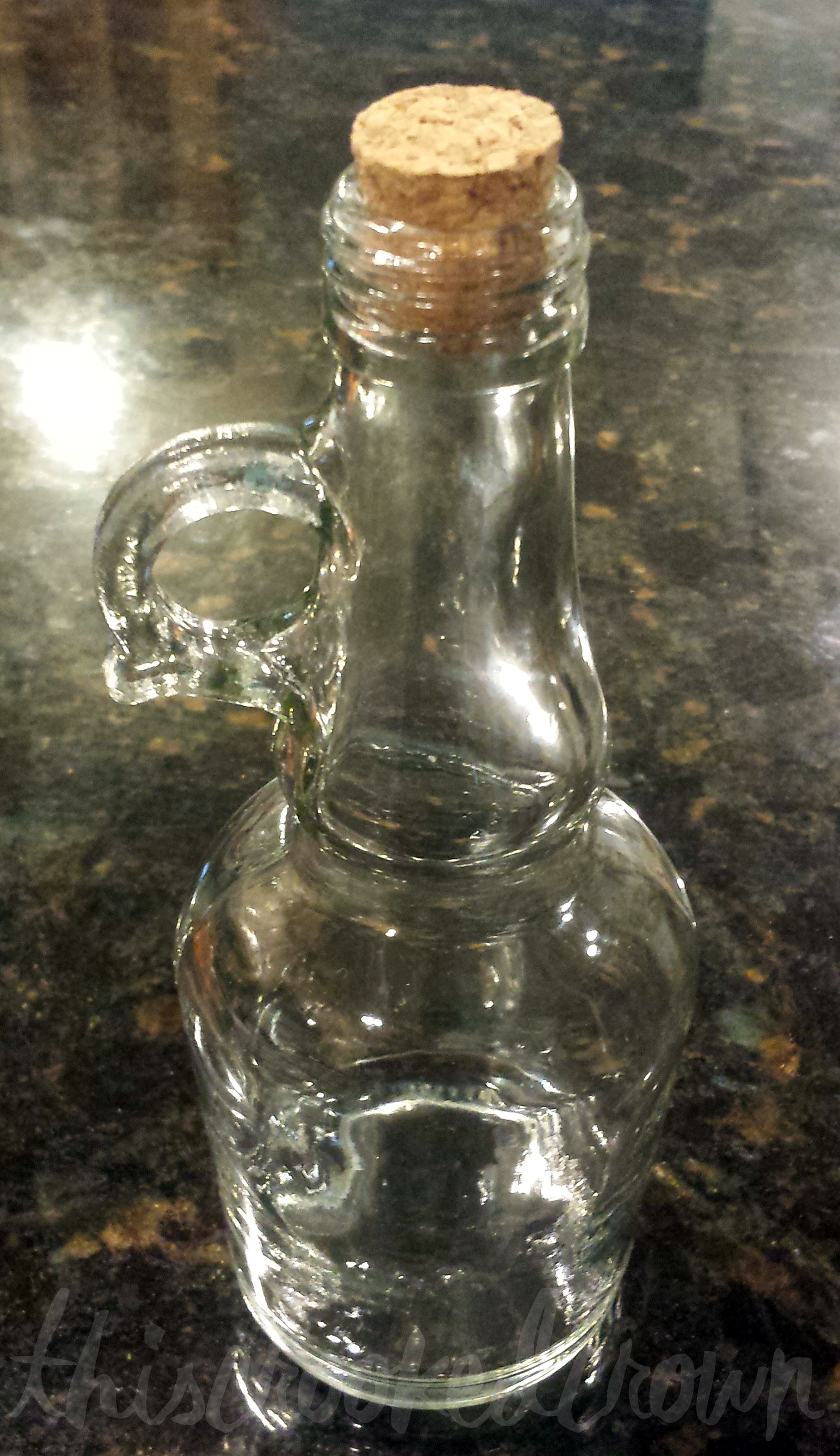
A jar, bottle, or some other clear container that can seal (A mason jar, pickle jar, water bottle, etc.)
Herbs & ingredients for your purpose (see below)
Key items you associate with your purpose (A friendship bracelet to rekindle a friendship long past, a business card from a place you’d like to hang out in with your new friends, a rose for romance, photo of your family to boost happy home spells, quartz for more power, etc)
Key ingredients for what you want to happen (Coffee so you go out on coffee dates, coaster from a club you’d like to go to with new friends, etc.)
Filler such as sand, corn flour, ashes, saw dust, sugar, etc. (optional)
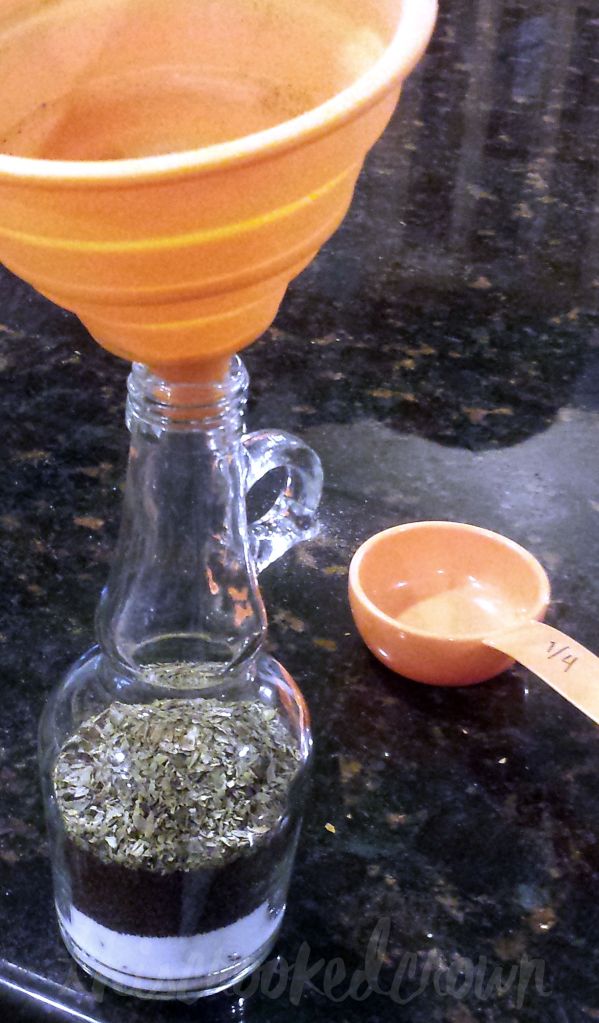
Funnel for pouring ingredients (optional)
Herbs and ingredients to use will depend largely on your personal practice and paradigm. Select items that has some sort of folkloric meaning akin to your purpose or that item reminds you of friendship or love.
Here’s a short list for romance:
chocolate or cocoa
roses
apples
carnations
aster
jasmine
A short list for friendship:
buttercups
lilacs
vanilla
oranges
tea
daisies
Filler ingredients are good for people who want a full-looking jar and don’t have enough ingredients to add to the jar or want to hide ingredients from view. I’d recommend picking a filler that means something to you. I’d pick sand, for example, but you might pick campfire ash so you can find camping buddies, or sugar to sweeten current friendships and find new non-toxic friends.
Cleanse your jar and empower it with your purpose. This mean you can add energy to it, tell it your purpose in a couplet or verbally, or hold the jar and envision the future you want this jar to help you achieve happening now.
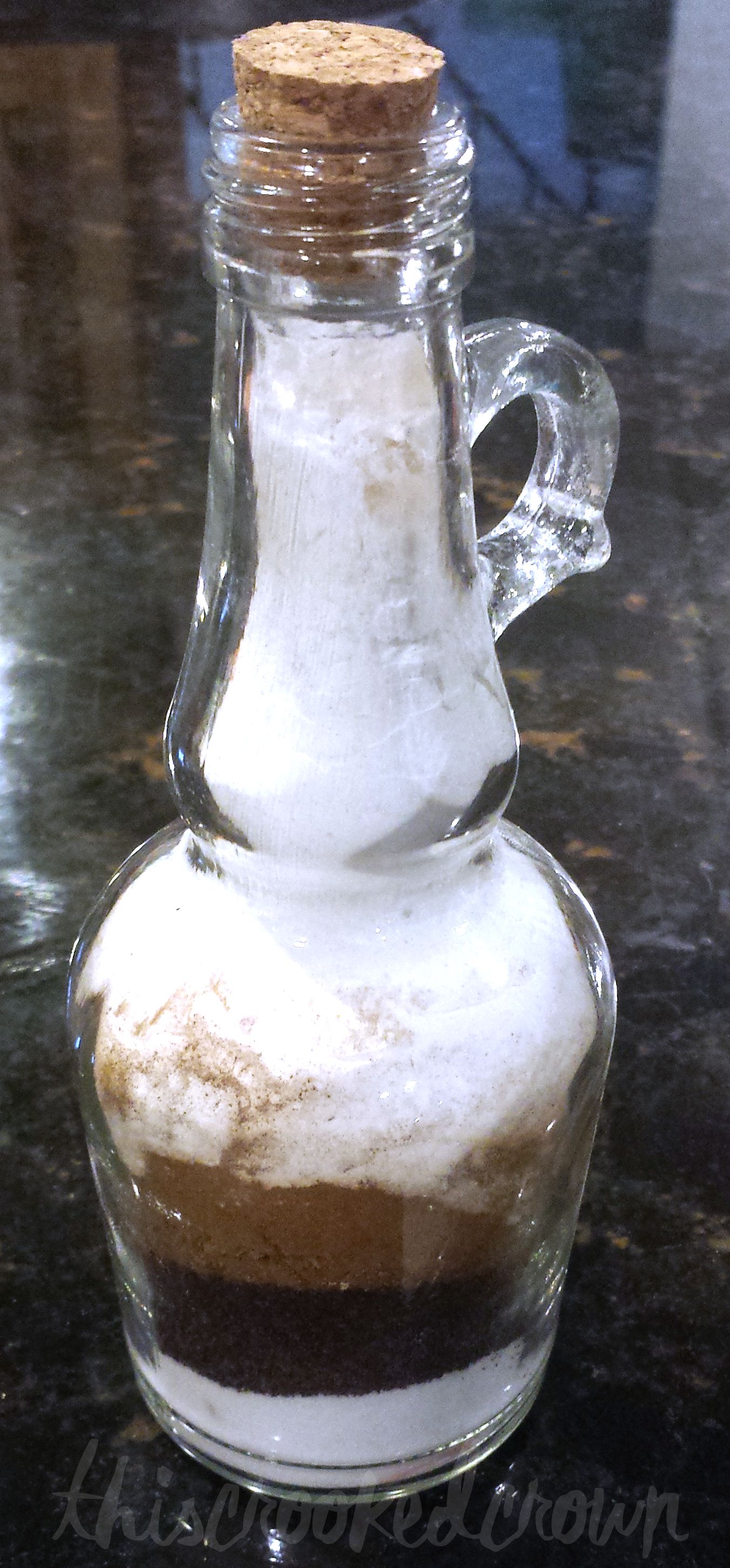
Gather all your ingredients together and layer them in the jar however you wish. Be as artful or not as you like. As you add them, you can say either verbally or in your head what you’re adding them to the jar for.
Once you’ve run out of ingredients or you’re happy with the jar, go ahead and close it up.
Mason jars are popular but fancy bottles are great too
Midway through the bottle
Just place on a shelf!
Notes:
This spell will work best if you carefully think about your purpose before casting the spell and use care in picking your ingredients.
Many jar spells require shaking to “wake up” or empower the spell. This one doesn’t but you can shake it if you want.
You can add ingredients whenever you want but don’t take out an ingredient.
If you do, just scrap the whole jar and start again. If your ingredients start to get moldy, toss them, wash the jar out (boiling water, soap and water, salt water, or vinegar in any combination.)
When you want the spell to end, just toss the ingredients (don’t bury them) and wash the jar out.
I’m very much a spontaneous kind of spell caster. I rarely plan out full rituals, but when I do, prep is an important step.
One of the steps that’s easy to forget to do is eating before the ritual. Truthfully, if you’re going to be using your own energy for a ritual (rather than channeling fully from elsewhere) you should be eating something both before and after the ritual. So you have a lot of energy to start with and to restore the energy you consumed during the ritual.
So an hour or so before the ritual, these are what I reach for:
Fresh fruit, such as strawberries, apples, oranges, bananas, raspberries, blueberries, pomegranates, and grapes
Fresh vegetables, such as cucumbers, tomatoes (yes, yes technically a fruit), carrots, broccoli, radishes, and celery.
Fresh salad, usually with lots of variation but not as much salad dressing, cheese, meat, or croutons as I might normally like.
Seeds and nuts, like sunflower seeds, pumpkin seeds, honeyed peanuts. I try to keep the amount I eat on the smaller side here, as sometimes too many nuts and seeds can feel heavy.
A small sandwich or wrap, heavily on the vegetables and flavors. Think afternoon tea sandwich size.
Yogurt
Smoothies
Tea
Water
Fruit juice, often watered down
Sweet alcohol, fruit-based alcohol
Wine or harsher spirits. I usually go with this when I need to jump directly into some sort of alternative stage of consciousness or drop inhibitions (ie feeling self-conscious) as quickly as possible.
As you can see, I tend to reach for fresh foods before a ritual, usually light on meat and bread. I’m not particular when it comes to my diet – the only thing I really steer away from is organ meat and diary – but I like to go with a light meal usually paired with tea or sweet alcohol before a ritual.
I find this helps keep the energy up and still allows me to move freely during a ritual – very important with how I tend to cast rituals – and not weigh me down. They also can usually be consumed while I go over my ritual notes or do other prep work before the ritual.
This isn’t to say that you MUST eat one of these foods before a ritual. It really does depend on a person and their personal taste. Let your body guide you to the best choices for you.
It should be noted that, for some rituals, I will intentionally skip this step. I won’t eat before vigils for example where I need to do a lot of spirit work and often do trances during that time. I will often skip food beforehand when I perform oracles or medium work. I personally find that I work better that way, but it’s not something I recommend without knowing exactly how to fast safely.
That being said, I do recommend to try and ensure that you’re taking care of yourself before your rituals as much as afterwards and consider trying different food combinations to see what gives you the best results with your magical and spiritual work.
A wish jar is part meditation, part spell work, part law of attraction. It’s a jar is used to manifest whatever you’re looking for and can be used for any purpose. You could call it a dream jar, but I actually define those two differently.
For this project, you’ll need to get some sort of vessel with a lid. A jar’s easy, but a pretty box works too. I have a ceramic lidded pot I use. Ideally, this vessel should be opaque, so it’s “out of sight, out of mind” but dealer’s choice in my opinion. If seeing what’s inside is more of a reminder to re-up the energy, then do that.
Once you’ve acquired your vessel, clean and cleanse it in whatever method you prefer. I typically use cleansing water, but do whatever works for you.
Enchanting your wish jar is the next big step. I tend to dump a lot of energy into the box and say something that gives that energy a direction – a command.
For most people, I’d recommend some sort of wording such as “my wishes manifest into reality”. I usually use “the wishes that go in this box become truths”. It’s kind of weird phrasing and you’ll need to think of exactly how you want to word any verbal chants for yourself. What kind of wishes are you putting in this vessel? Is it going to be mostly law of attraction stuff, like “Let’s go viral on tiktok”? Or is it “I invite a puppy into my life”? How you phrase your wishes will depend on how you enchant the vessel. Think about how you usually verbalize your spells. I have a fairly specific if unusual way of speaking, almost left-field nonsensical at times, so my wording is often just plain weird.
Once you’ve got your wish jar enchanted, stick is somewhere you visit daily. I recommend the bathroom counter, a vanity, on top of a dresser, your altar, in the kitchen, or by the door. These are good place because they’re probably places you visit frequently with a bit of time on your hands.
You can pick up the vessel and pour excess energy into it, empowering all the wishes in the box. Or you can pull out the wishes (I’ll get to that in a bit) and read them over, envisioning each wish coming to fruition, before returning the to the vessel.
To add a wish to the vessel, simply write down what you want on a slip of paper. You can also open the jar and whisper your wish inside of it, but writing it down allows you to pull the paper out and reread it. I’ve also used wooden popsicle sticks with the wish written on it. When the wish comes true, you can either bury or burn the paper or stick, depending on your preference.
Ideally, you should power the wish jar every day and charge it under the full moon or celestially important events (like eclipses or days where the planets line up right or equinoxes).
BUT, let’s be real. We’re all busy people and most of us have tried looking for our cell phones while it’s in our hands, so don’t fret about it too much if you forget for a while. This thing borders on both law of attraction and chaos style magic, so if you forget about it, it probably won’t harm it much, if at all. It’s not “set it and forget it”, but it’s not “oh dear gods, I forgot my wish jar, all my hopes and dreams are ash”. Find your middle point and do what works for you.
It’s kind of a weird little witchy thing. It’s not quite a standard spell because it’s so personalized it barely has instructions. But it’s not-not a spell either, you know? I find it a fun technique and magic experiment. It’s a good way of easing the witchy adjacent and children into magic thinking. And, if you spent time focusing each day on something like this, it serves as a sort of meditation. Mostly, it’s just a bit of fun that will hopefully manifest big results for you.
Ever try water divination? It’s possibly one of the most accessible forms of divination, but one of the hardest to master.
Water Divination: How to scry with water | thiscrookedcrown.com
It’s a form of scrying. Scrying is a type of divination using some sort of usually reflective medium to derive hidden secrets or future events. Crystal ball reading is the most famous form of scrying, but scrying can be done in water, glass, oil, crystal, shiny metal, mirrors, or other reflective surfaces.
If you’re a good hand at scrying, then water divination is probably in reach. If you’re new to scrying, it’s a very intuitive based divination practice. It’s not for everyone (lots of people find it blurry or frustrating), but if you enjoy it, it can be fun.
There’s a lot of different ways to perform water divination. This one is mine.
Find an ideal vessel.
I prefer to use a flattish bowl or a plate with large edges. A tea cup saucer is usually pretty good for this, but a salad or spaghetti bowl are also good. Any bowl, plate, or cup can be used, but I find having a bowl that have a wide surface for the water is ideal.
I find it’s more important to have the bottom of the vessel to be clean. A bowl with writing on the bottom isn’t really ideal when you first get started. Vessels with scraps or scratches from silverware also aren’t ideal in the very beginning. They can be distracting.
Of course, once you get more adept, you may find that those scratches or writing may help.
You don’t need to have a dedicated vessel. I often use my morning cup of tea or the water in my water bottles. But I also have a dedicated black tea cup saucer and a copper bowl I use for more dedicated readings.
Choose your water source
I often use filtered water, either from a filtering pitcher or some other means. I often use tap water / well water as well, because that’s easiest. It’s totally fine to use tap.
I may also pour out some sort of enchanted water, like moon water. Or I might infuse herbs to make a tisane and use that.
Coffee, tea, juice, oil, blood, soda, and any other liquid you can think of can be used in the exact same manner as water. Or you can drip some of these liquids into a vessel filled with water and see what patterns form. (Oil scrying is often done in this manner.)
This means that yes, you can totally scry in your morning cup of coffee.
I do find there’s some variation on the results depending on the water source. Purified water tends to give me clearer results for most questions, but if I’m doing shadow work or some sort of soul-searching, I use ocean water or blood because that’s best for me. Juices and teas tend to edge the results in certain directions. The same results, but from a slightly different perspective.
Again, none of that is bad. Experimenting may give you different results, but I will tailor what I’m working with depending on the results I want. If I’m doing a reading regarding a business decision, I’ll use a cup of coffee for the divination, but if I want to know if I should date someone, then I might use a tea made with herbs related to love.
Bodies of water
You can also use bodies of water for divination. The water source should be calm or have a little movement in it. A river, lake, ocean, swimming pool, koi pond, or even a fish tank can be used in the above described manner.
You can use an active source of water, even a waterfall, but it’s the churning of the water or the sound that water source makes that will be used for the divination. It’s a somewhat different form of divination.
Divining in your water
Whatever mediums you’re using, the actual divination method is simple enough.
Look into the water, but do it in a way that doesn’t reflect your face or head. I find being able to stare into your own face can be very distracting.
Stare until your eyes become unfocused and your mind starts to drift. Pay attention to what you’re seeing in your mind’s eye and thinking. What thoughts appear? What mental images?
It can be completely random. Maybe a song pops into your head. Or you hear multiple conversation snippets. Or there’s a total Hollywood style vision playing out in the surface of the water.
While doing this, pay attention to what’s happening around you. Are there ripples in the water? Did something fall in it or move in it? Did the wind change direction or did a passerby’s conversation suddenly become clear? Did you cat change position or your dog suddenly start to whine.
All of those things need to be gathered together to form an entire reading. At first, it’s not going to make a lot of sense. With practice and time, you’ll start to see how the water scrying can give you results and information.
I find that have a voice recorder going helps me describe what I’m seeing as I’m seeing it. Later, I’ll transcribe the recorded session onto paper. Paper is also ideal as you can sketch out what you’re seeing or describe it.
And that’s it. It really is that easy. Divination with water may be easy to do, but since it’s a form of scrying, it can be difficult to master. Give it a try and see if you like it.
It’s a rare magical practitioner that hasn’t had to adapt a spell at one time or another. Usually it’s for personal practice reasons or ingredient reasons, but it can simply be that it’s too cold to walk outside or they just don’t like the spell’s steps or wording.
Adapting spells can be really easy – but it can be a challenge too. It’s okay if it’s a challenging or daunting task for you! It really is. Spell casting is a lot like cooking and baking; for some people, it’s easy to moderately okay and for others, it’s a daunting task.
Cooking and baking are relatively subjective. Things need to turn out a certain way to be properly edible and taste good, but not everything is going to taste great to the same people. Spells are a lot like that. There are some things that just won’t work quite as well for you as for others and some ingredients (like some foods) that you just don’t want to work with.
Like a recipe, there’s a way of approaching a spell that you need to adapt. Here’s how.
Step One: Read & Analyze
Read through the spell completely, including any notes the author or other practitioners may have made. Take notes yourself as needed, marking what things you’d need to purchase or procure in some manner. Also know any timing events that need to be marked on your calendar (such as the next full moon).
If you plan on making any adaptations, write it down clearly. You’re swapping this ingredient for that. If you don’t know what ingredient to swap something for, then you need to really sit down and analyze that spell. What purpose does that ingredient serve in the spell? If you can’t see an obvious reason, it’s probably best to assume it’s there for a correspondence reason. To help with that, check out correspondence charts.
How this compares to a recipe: When you make a new dish, it’s always a good idea to read through the recipe. It may need a special pan you don’t have or an ingredient that’s not listed in the ingredient list above. It may need the butter or eggs to be room temperature or it could be the baking is thrown off on cold days. There may be a reason that ingredient is specific to the recipe – without it, the puff pastry won’t rise or the chemical reaction you need for the yum factor doesn’t happen. Research helps mitigate this before you’re elbows deep in ingredients and realize you’re up a creek without a paddle and a storm is brewing on the horizon.
Step Two: Double check that you have everything
There’s little reason to try a spell or recipe when you’re missing half the stuff – it’s not the same thing at that point. You may be able to create something wonderful, but it’s a brand new spell or recipe. Not the same thing. That’s not a bad thing! Just make sure you write it down. But if you’re intention is to cast a specific spell, be cautious of exchanging too many ingredients or you’ll wind up with something different than the original intention.
That being said, I’m firmly in the camp of winging it. If you want to try and spell and need to adapt it, do it. Take notes on what you’ve changed (in case it works better than the original spell or goes terribly wrong), but try it anyway.
Step Three: Make your changes
Now’s the time for the adaptations. You’ve taken your notes and you have a good idea of what you want to do. Now to make the changes.
Sometimes swapping an item can be easy. You need something to represent luck, well, here’s four other herbs that do exactly that. When things have symbolic meanings or magical correspondences, they can often be easily swapped.
But not always. If you really want to be diligent, a quick google search with the ingredient plus something like “folklore” or “magical correspondence” can lead you to why that ingredient is considered lucky. This may be critical at times. Sure, an herb might be lucky, but only for gamblers. That isn’t going to help too much when you want luck taking an exam.
You also have to be aware of herbal associations. Some spells, especially the edible kind, have herbal combinations meant to do something actually physical to the body. It’s not symbolic in meaning, but science. So you can’t just swap in something with a magical correspondence when the concoction is herbal medicine in nature. Plus, herbs can be dangerous – they can counter to one another, they can react with medication or current medical conditions, and they can be toxic. So you have to be very careful when doing something that’s meant to be consumed.
Now for some people, they stay away from herbalism and stick with magical correspondences only. That’s perfectly okay! But be aware that many herbal connections come from herbalism. Even the weird ones. So knowing why something has that association may be important.
And none of that may matter at all. People can work intuitively with ingredients and make up their own correspondences and associations. That’s a great way to go about it too.
You also have to consider the purpose of the item in the spell. Swapping a red candle for a white one is easy since white is seen as a universal color or something of a blank slate. But when you start thinking, “well, I don’t think this makes a good candle spell. What if I skip the candle?” And for some spells, you can absolutely do that. The candle is superficial or is being used as a focus object (ie, something to look at and hold) For others, the candle is being used as a conduit (ie, the spell verse might have “as this candle burns”) or the candle has a practical purpose (ie, burning a piece of paper with writing on it). It’s harder to swap out items that are practical or are a conduit.
In short, there can be more to adaptations than just “this is the ingredient on the list that I have”.
Step Four: Do the spell
Go for it. Just try the spell. When you’re casting, you may need to change things up on the fly. Maybe the candle won’t stay lit or your neighbor is being nosy. Maybe the dog starts barking because she needs to pee or your phone goes off non-stop with notifications. Sometimes the wording is just plain weird and doesn’t work for you.
Adapting on the fly happens. Finish the spell. Even if you lose momentum or the build up of energy. Even if you feel rushed, judged, or things get weird. Finish your spell. Not finishing it can lead to weirdness and energy drains, at the least.
Use the words that work best clearly for you. Yeah, that old timey wording looks great, but if you’re not feeling it, use your plain ol’ normal words instead. Speak or think honestly and clearly when you need to make wording changes.
Step Five: Record
You’ve been taking notes all along. Now record what happened. How’d the spell casting go? Over the next few days and weeks, you’ll probably begin to see results. What are they? How do they meet your expectations? Do you think your adaptations changed how the spell worked?
As you progress with your practice, you may find that you don’t want to, need to, or like to write things down. I’ll be honest, as someone who spends a LOT of my time writing, I rarely write down the spells I routinely do or do off the cuff unless it’s really good. Mostly, I write down stuff I’m tinkering with. That’s my personal preference. You don’t need to have meticulous records, but they very much help.
I know a lot of this advice sounds like “just write it down!” and, honestly, keeping notes as a beginner can be really key. I am well-known for winging it in just about all my personal spells, but I take notes for myself on spells I’m working on. It can really help, especially when you’re doing an important working or you’re making adaptations.
We dove into some magical theory with handwriting as sympathetic magic. The post talks about how your handwriting and signature is as good as a poppet or hair in a spell. Also gives tips on how to disguise your handwriting / signature from this very thing.
What is it? A series of spells and rituals cast in your name by me (a professional witch) for 2020. It’s designed to be relatively secular and integrate with your own magic and spells. The spells are meant to clear out the old from 2019 and bring in new energy. If you’ve done your 2020 prep and think you need a bit more of a push, this is a good choice.
The package includes the following:
Sigil made just for you
Energy cleansing of the home and body
Invoking purifying elements and energy
Banish negative elements, such as bad luck and negativity
Invoking protection, abundance, prosperity, good health, and good luck.
Blessings of the sun, moon, stars, and elements (earth, air, fire, water).
Handmade cleansing and protection herbal salt.
Handmade herbal charm to encourage abundance, protection, luck, and health.
Handmade blessed and enchanted unscented jar candle with light herbal elements.
Written detailed account of how the spells went when casting and what you might expect to see as a result.
If interested, snap up your spot today. There’s a limited number of slots available for this package.
Also, if you’re looking to find someone special for Valentine’s next month, consider the Beckon Me A Lover spell. A combo love attracting spell and ego-boosting confidence spell, the spell’s intended to draw a lover towards you.
To buy, you’ll need to drop me an email here. You can read more about the spells available for purchase or request a custom made spell here.
Patreon
If you haven’t popped over to the Patreon recently, you might want to. I’ve launched the first chapter of my Patreon exclusive novel Artifice. It’s a LGBTQA+ fantasy novel about magic, alchemy, court political games, and love. You can read a bit of it here.
Patreon members get access to short stories, novels, and the inner workings of This Crooked Crown. You’ll also get monthly exclusive spells, articles, energy castings, and divination readings.
Your support means I can spend days researching new topics and spells to give all of my wonderful followers and it’s always very appreciated.
That’s it for this month! I hope the start of your 2020 was wonderful. Don’t give up if things haven’t worked perfectly throughout the month. You can always start again! Best wishes and safe journeys! See you in February!
Sympathetic magic is the umbrella term for magic spells or techniques that a person or thing can be affected through their name or an object that represents them. The most common form of this is poppet magic.
There’s two facets of this type of magic. The first is imitation, such as that of a poppet, where the object is created to imitate the target. The second is contagion or contact, where the object has been touched or comes from the target, such as hair or a shirt.
These terms originate from Sir James George Frazer of The Golden Bough fame. But sympathetic is a fairly worldwide phenomena and has been evidenced since prehistoric times. Archaeologist and anthropologists are studying modern hunter and gatherer peoples to partially inform over the actions of previous hunter /gatherer peoples. In short, there is a theory that some cave paintings are linked to sympathetic magic or were at least created by magicians and/or shamans in trance states (where they probably would be working sympathetic magics).
As said, poppets and hair are the most common forms of sympathetic magic, but there are many others. The soil from a footprint, someone’s pillow case, a shirt, fingernails, blood, skin, a favorite book, urine, underwear, jewelry, eyeglasses, and so much more. Pretty much anything can be used in this fashion. Including handwriting.
While the lore behind names carries a great many magical rules, such as don’t share your name with spirits. In fact, the fear of someone’s name being used against them magically is one of the reason magical practitioners take on false or magical names. Other reasons include anonymity, safety reasons, initiation rites, and magical ritualization (ie, the shedding of the modern self or of the mundane skin for magical acts), among others.
Handwriting is a very weird and rarely used magical component, but it can be so incredibly useful – and dangerous.
Think about it: you write your name out and your signature is your key and gateway to a great many things. You sign contracts, you sign checks, you sign a variety of things to something as being true. As recognizing it as something you’re agreeing to. It is the very essence of magic, in its own way. If someone has your signature, then it’s proof of your agreement. It’s held as a representation of you, in the mundane world. So your signature is as good as your hair or blood in the magical world. And it can be attached to any kind of spell and used against you.
Makes you think twice, doesn’t it?
Digital signatures should be counter in this, assuming that the signature is true to form. (Or as true as possible) Digital signatures are notoriously hard to get accurate compared to pen and paper signatures, so it may be that you’re automatically safe simply because you can’t actively replicate your own signature digitally.
Of course, you still wrote it and it was still accepted as a signature, so it could probably be still used against you, even if the affect isn’t as strong.
On the same vein of thought, handwriting is uniquely personal. You can probably tell who’s who just from the handwriting alone. This was especially true in the days before computers. It’s so personal that handwriting, such as a handwritten note, can be used in place of hair or a poppet in a sympathetic spell.
It has a variety of usages when one starts thinking of it, including but not limited to the following:
Love letters can be used in any number of love spells, including marriage, drawing a certain person towards you, or fidelity charms.
A signature or letter can be used to protect someone.
Career or success spells can be done by signing your name as the new title you want to achieve.
Write your name with your partner’s surname to encourage a relationship or even marriage. (Never thought that kind of school daydream doodling would come back at you like this, did you?)
If a patient writes down their symptoms, the written notes can be used in healing spells.
A landlord may use a handwritten note or contract to get rid of a renter who refuses to pay.
An IOU can be used to compel a repaying of favors.
A businessman could use a handwritten contract or signature to get rid of a bad client.
A customer can get back at a bad sales agreement or business by a mutually signed contract.
The signatures on a badly negotiated contract can be used to fix or create a new contract.
A vast number of curses.
So how can you protect your signature or handwriting? There’s a few ways.
First, you can take on a magical name, one that you use exclusively in dealings with the magical world. Like an online handle. You’re known by that and that alone. Sign magical dealings with that name. It’s still you, but there’s a degree of separation that might help mitigate magical spells against you.
You can also purposely write differently than you normally do when dealing with magical things. A good example would be writing a note to a fellow magical practitioner. Maybe you change how you write a few letters, just enough so that it throws off the sympathetic magic and disrupts it.
You can also consider writing in anti-magic ink. Essentially, this is handmade ink created with anti-magic or anti-witchcraft properties. Anything written in this would work like normal ink, but if used in a spell, the ink should counteract or at least mess up the spell in question. Of course, that holds true for your own spells, so be aware of that.
It’s something to think of. Magicians and practitioners tend to do a lot of handwriting, as part of our crafts and practices. It may be a good idea to keep track of how you write or who you share your handwriting with.
It’s also a good idea to think of how you can use your handwriting to represent you. Maybe writing out those affirmations will have more meaning that simply saying them aloud. Maybe you can write yourself a better, happier, healthier future. It’s worth exploring.
Heat magic is a form of magic using heat as a conductor of or influence to spells. In short, it’s hot as balls, so might as well cast some spells.
Heat magic is, for real, any time you work magic invoking or using heat as an element within the spell or working. So if you’re using the heat of a flame in a spell, that’s both heat and fire magic. It can be really useful, which I’ll talk about a bit later.
First, let’s talk about heat, in general. (Warning for casual and probably ill-explained science ahead). When we’re talking about how hot it is for our bodies in regards to the weather, we’re actually not just referring to the temperature. I mean, yes, we do say “how hot is it out there?” And we know from the number thrown at us that it’s hot. But, heat doesn’t exist alone, so there’s some other things you need to calculate.
We also need to factor in the sun’s brightness (because standing in bright sunlight is nice for about 5 seconds until it’s not) You also need to calculate the wind’s strength and where that wind’s coming from and how hot the wind is (because hot, stale wind on your face is just gross is like the earth’s breathing on you.)
You also need to add in the most important thing: the humidity amount. Humidity affects humans because we cool our bodies by condensation (we sweat). When it’s hot and dry, the water joins the air and goes on a wonderful journey that is Somewhere Else beyond your body and you’d care more if it wasn’t so bloody hot. That doesn’t happen when the humidity is high. When the humidity is high, there’s so much water grossness in the air, it’s like a swamp. Seriously, imagine a swamp – that’s what the air is when it’s humid out. It can make a cooler temperature in general, so much more miserable and hot, because there’s so much humidity in the air.
Additionally, one must remember that we acclimate to our regions and environments. So while someone in South Cali is like “110 today? Huh, it was hotter yesterday” and sneers at someone in New York is complaining about the 90 degrees in their area, one must remember that 1) the regional weather is not the same, so it might actually feel like 110 in New York, even if the weather app says otherwise. 2) While it might be normal for South Cali to experience that kind of heat, but it may not be in New York. People aren’t prepared for unusual weather patterns in their regions. This is why, when it snows in Florida, people lose their damn minds. And 3) people have different needs and therefore some people get more uncomfortable in certain kinds of weather than other people. And 4) that mocking people for complaining about the weather, a thing we all experience, is pretty fucking shitty among strangers on the internet. So let’s ease up people.
(By the way, all of the above, also hold true for cold temperatures. Just an FYI).
How you imagine heat will change depending on what kind of heat you’re accustom to. In Rhode Island, we have high humidity regularly pretty much all year long. It often rains and the humidity stays right where it is, which is a kick in the teeth, let me tell you. It’s like “oh, it might rain today! Yay!” Thunderstorms rolls in for forty minutes, spitting warm water at you, then rolls out. “Oh, it made no difference at all, except it’s wet now. ” It’s fun.
When I imagine heat, I imagine it in three ways. Heat from fire and ovens, which is smoldering and directionally hot. Another is from heat in general, like standing in the sun and soaking in that warmth like a cat. The third is humid warmth where everything is a hot soupy swamp and no amount of iced coffee can help it.
Depending on your goal, pick a day embodied by your form of heat magic. Healing spells I’ll use sunny days, but I’ll reserve high humidity days for curses or spells that need extra energy.
Why heat magic? Well, it’s as natural as it comes. It’s a form of nature and weather. Controlling fire is one of the key discoveries of humankind, so working with fire magic is a good way to connect to older energies or ancestor worship. It’s also super low-key and needs no tools. You don’t need a cup of water like you might with water magic or a handful of dirt like in earth magic. You just need to open a window or step outside. (And then be miserable because HOT). It’s also a good way to work regionally within your practice, because your weather is localized to your direct environment.
Heat magic can be used in the same way you might use magic during a storm. You can simply cast the spell on the heat-soaked day. You can also use the heat as an ingredient, by “capturing” the heat in a jar (it will literally be a jar of air). It can be invoked (IE “by the heat of the day”. It can be directed, like opening up an oven, and saying your spell with the heat blasting your face.
There’s lots of ways heat magic can be useful. You might have already given heat magic a try, by using the heat from a candle in a spell. If you haven’t, see what kind of spells you can come up with that might use heat magic. Who knows, you may find a new favorite spell medium and if not, at least you’ll have something else to do when it’s too hot to move or care.









 This Crooked Crown